Princeton University Guide for Canadian Applicants (2026)
Most Canadian families assume Princeton is financially out of reach. They're wrong — and the math is worth running before you rule it out. Canadian students apply as international students, but Princeton is one of the only universities in the world that is fully need-blind for international applicants and covers 100% of demonstrated need through grants.

What Princeton University Looks for in Canadian Applicants
Princeton evaluates Canadian applicants using the same criteria as US applicants — no country preference, no separate process. The overall acceptance rate is 4–5%. Two application rounds exist: Restrictive Early Action (REA, November 1) and Regular Decision (January 1).
Canadian applicants go through the international student stream. According to Princeton's admissions office, there's no preference or advantage given to any particular country or education system — your passport doesn't help or hurt you.
Princeton doesn't publish country-specific data, so there's no official "Canadian acceptance rate" to cite.
REA is non-binding but restrictive: you cannot apply early to other private US universities simultaneously. Students who want to hedge with Georgetown or Vanderbilt need to think carefully before choosing REA.
We've worked with students from York House, Crofton House, and Sentinel who've gone through this process. The ones who struggle aren't the ones with slightly lower grades — they're the ones who treat Princeton like any other application.
Canadian students often underestimate how much leadership in school clubs, community work, or sustained personal projects matters — Princeton is reading for intellectual character, not just credentials.
Canadian Applicants Submit the Same Materials as US Applicants
There is no separate international application form. Canadian applicants submit the same materials as US applicants:
- Common App personal essay
- Princeton supplement essays
- Two teacher recommendations
- School report from your guidance counselor
- Official transcripts
- Standardized test scores (SAT or ACT)
- Graded written paper
That last item surprises most families.
Optional additions include an arts portfolio and one extra recommendation letter. Don't submit optional materials unless they genuinely strengthen your file — admissions readers notice padding.
If you're unsure which optional materials strengthen your file, our Common App activities list guide covers how to frame your extracurricular record strategically.
Understanding Princeton's Application Requirements
What Is the Graded Written Paper Requirement?
This is an actual academic paper from one of your classes, returned with your teacher's comments and a grade visible on the page. Not a personal essay. Not a writing sample you drafted fresh.
In practice, Grade 11 or 12 English essays work well, as do history papers or any humanities or social science assignment. For Canadian students enrolled in IB, an extended essay is an excellent choice — it shows sustained academic argument and already has examiner feedback attached. Scan it as a PDF and upload directly; the grade and instructor comments must be legible.
AP essays from class (not the exam itself) also work, provided they carry teacher annotation.
To be concrete: a Grade 12 English essay on Macbeth with your teacher's margin comments and an 87% at the top of the page is exactly right. A clean, unmarked copy of the same essay — even if it's excellent work — does not satisfy the requirement. A five-paragraph book report from Grade 10 does not either.
Teacher Recommendations and School Reports for Canadian Students
Two teacher recommendations are required: one from a humanities teacher, one from a STEM teacher. Ask them in September. (Yes, September of Grade 12 — not October, not "when you get around to it.") Canadian school years align well with this timeline, and teachers appreciate six to eight weeks of lead time.
The school report comes from your guidance counselor via the Common App. Here's a real issue: many counselors at Canadian high schools — even strong ones like Magee or Burnaby North — have never submitted a Common App school report before. Give your counselor Princeton's official counselor guide early. Don't assume they know the process.
Mid-year school reports are due February 1 for Regular Decision applicants. That aligns almost perfectly with the end of semester one in BC and Ontario.
Canadian High School Transcripts and How Princeton Evaluates Them
Princeton receives transcripts from every Canadian provincial system and reads them in context. Admissions officers understand that 90% in Ontario is not the same arithmetic as a 4.0 GPA, but it is understood as high achievement within its system.
Submit an unofficial transcript at application time. Official transcripts are required only upon admission.
How Princeton Views Canadian Provincial Curricula
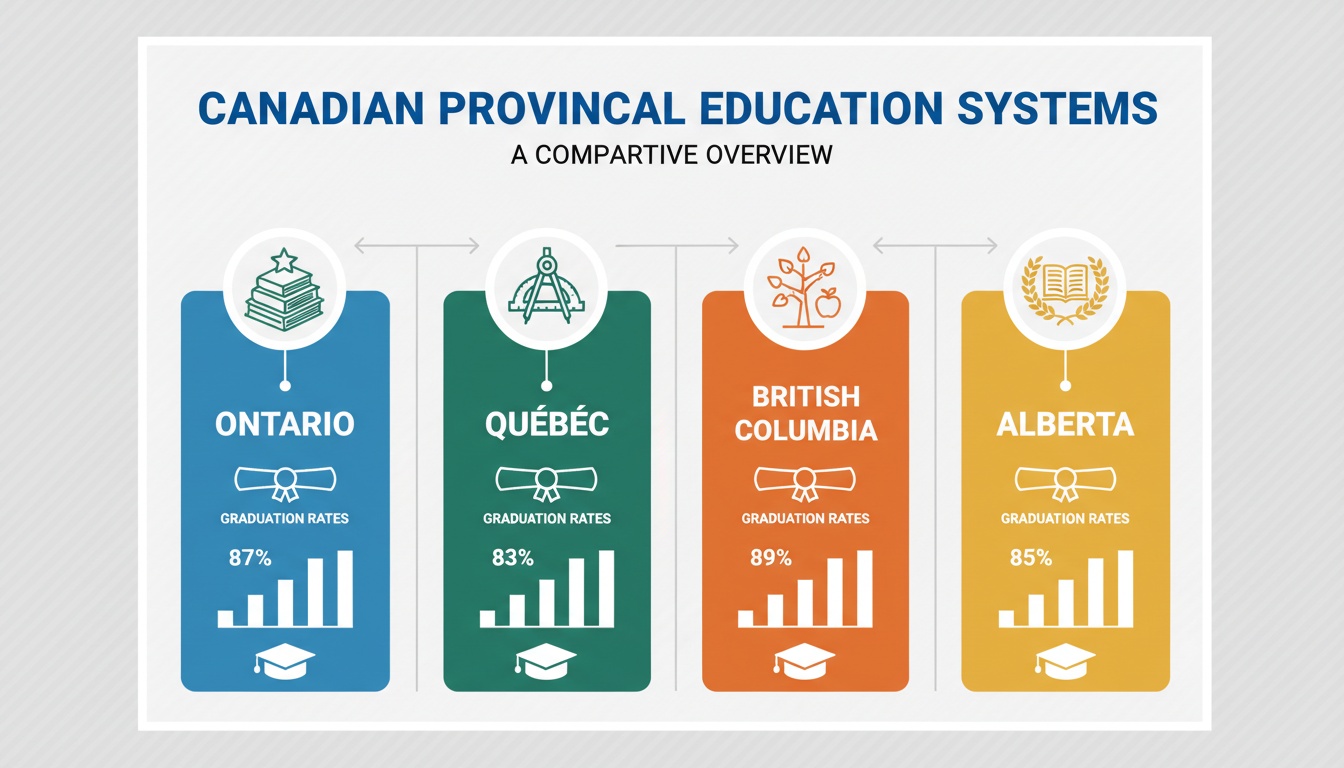
We've seen Quebec students get this wrong more than any other province — applying after Secondary V and then having to defer a year. Here's how Princeton reads each provincial system:
| Province | Grading Context | External Validation | Key Note |
|---|---|---|---|
| Ontario (OSSD) | Grade 11–12 U and M courses; 90% = high achievement | School profile required to explain grading scale | Ask counselor to include profile with submission |
| British Columbia | Dogwood Diploma well-regarded | Provincial exam results carry weight | School profile helps; context is understood |
| Alberta | School grades + Diploma exam scores | Diploma exams provide independent check | Strong position — dual validation is exactly what Princeton wants |
| Quebec | Secondary V ≈ Grade 11 elsewhere | DEC program (CÉGEP) preferred | Apply after at least one year of CÉGEP; Secondary V alone is insufficient |
Regardless of province, ask your counselor to attach a school profile to your transcript submission — this is the single most preventable error we see from strong applicants.
IB Diploma students are in a strong position across all provinces. Strong HL grades (6–7) signal the academic rigor Princeton looks for. Note that Princeton doesn't grant credit for IB scores post-admission, but the curriculum itself signals preparedness.
Taking AP Calculus BC at U Hill or AP Chemistry at West Point Grey Academy tells a story about intellectual appetite. Princeton grants no credit for AP scores, but the coursework itself matters.
A note on transfer applicants: Princeton does not offer transfer admission. Students who complete a year of CÉGEP or first-year university at a Canadian institution cannot transfer into Princeton — you must apply as a first-year undergraduate applicant.
SAT vs. ACT: Testing Requirements and What Princeton Expects
Princeton reinstated standardized testing requirements for the Class of 2029. Students applying in fall 2026 are applying for the Class of 2030 — testing is required for this cohort as well. The test-optional era is over.
Both tests are accepted equally. SAT test centres operate in Vancouver, Toronto, Calgary, Montreal, and Ottawa, among other cities — check College Board's test centre locator for current availability. ACT testing is similarly available across Canada.
Competitive scores for Princeton applicants run 1500–1580+ on the SAT and 34–36 on the ACT, based on recent admitted student profiles. Scoring below 1450 doesn't automatically disqualify you, but it creates a gap your application needs to close elsewhere — see our Common App activities list guide for how to frame your extracurricular record strategically.
One misconception worth clearing up: BC's provincial exams are not substitutes for the SAT or ACT. They serve different purposes and Princeton does not treat them as testing alternatives.
Some Canadian students find the ACT's science reasoning section more intuitive than the SAT's structure. That's worth exploring before you commit to one format.
When to Take the SAT or ACT: A Grade-by-Grade Timeline
- Grades 10–11: Write a practice SAT or baseline ACT to understand your starting point
- Spring Grade 11: First official SAT or ACT sitting
- Fall Grade 12 (September–October): Final sitting before the November 1 REA deadline
- June or August before Grade 12: Option for students targeting Regular Decision only
Financial Aid and Scholarships for Canadian Students at Princeton
This is the section most Canadian families skip — and it's the one that changes the math entirely.
If you've assumed Princeton is financially out of reach, this is where that assumption falls apart. Princeton is need-blind for all international applicants, including Canadians. According to Princeton's admissions office directly: "Your family's ability to pay for your university education is not a factor in Princeton's admission decision."
Princeton meets 100% of demonstrated financial need for every admitted student — domestic or international. All of it comes as grants. Not loans. Nothing to repay. For many middle-income Canadian families, the actual cost of attending Princeton is lower than attending a Canadian university once aid is factored in.
There are no merit scholarships. None. Athletic scholarships don't exist either. All financial aid is need-based. For middle-income Canadian families who assume they won't qualify for aid at a school like Princeton, this is worth revisiting carefully — the calculation is often more favorable than expected.
Princeton's Net Price Calculator (available on their financial aid page) lets your family estimate the actual expected contribution based on your specific income and assets — use it before assuming you won't qualify.
According to Princeton, it is one of only a handful of schools in the country that does not limit financial aid for international undergraduates.
To apply for aid: submit the CSS Profile through College Board plus Princeton's own financial aid application. Deadlines mirror the application deadlines — November 1 for REA, February 1 for RD.
One important limitation: Canadian provincial student loans (OSAP, StudentAid BC, Alberta Student Aid) don't apply to US universities. Tuition is billed in USD, so factor the exchange rate into your family's planning. External Canadian scholarships like the Loran Award are prestigious but designated for Canadian universities — search specifically for portable scholarships if you're hoping to layer additional funding.
Application Timeline and Key Deadlines
Getting the sequence right matters as much as the application itself.
- Spring Grade 11 (April–June): First SAT or ACT sitting; confirm IB or AP enrollment; start building your extracurricular record with intention
- Summer before Grade 12 (July–August): Draft your Common App essay; research Princeton's academic programs. Princeton admissions officers attend EducationUSA college fairs in Toronto and Vancouver most years — check EducationUSA Canada's event calendar in spring. If you can't attend in person, Princeton's virtual information sessions run September through November and are worth attending before you finalize your supplement essays.
- September Grade 12: Open your Common App account; ask teachers for recommendations immediately
- October 15: Princeton's supplement typically opens; finalize all essays
- November 1: REA deadline — Common App, Princeton supplement, CSS Profile, and financial aid application all due
- December: REA decisions released; deferred students should prepare a brief update letter
- January 1: Regular Decision deadline
- February 1: Mid-year school report due — semester one grades from Canadian schools land right on schedule
- March/April: RD notifications
- May 1: National Reply Date; commit to Princeton
The Canadian school calendar actually aligns better with Princeton's deadlines than most families realize.
Three Mistakes That Sink Otherwise Strong Applications
1. Submitting the graded written paper without visible teacher comments.
Many students scan only the clean final copy of their essay. The requirement specifically asks for the returned, annotated version — with your teacher's handwritten or typed comments and the grade legible on the page. A clean copy without markup doesn't satisfy the requirement.
2. Sending a school report without a school profile.
Princeton's readers evaluate hundreds of transcripts from dozens of countries. A counselor who submits your BC or Ontario transcript without a school profile explaining the grading scale forces the admissions reader to guess. Include a profile. This is one of the most preventable errors we see from otherwise strong applicants at schools like Sentinel or U Hill.
3. Applying REA without understanding the restriction.
REA is non-binding — you can decline Princeton's offer. But while your application is under REA consideration, you cannot apply early action or early decision to other private US universities. Students who want to hedge with Georgetown, Vanderbilt, or other private schools need to apply Regular Decision instead, or choose one school for binding ED and skip REA entirely.
If you're uncertain which path fits your situation, book a free consultation to avoid these mistakes.
English Language Proficiency: Do Canadian Students Need TOEFL or IELTS?
Most Canadian applicants don't need to submit any English language proficiency test. According to Princeton's policy: if you've spent at least three years at a secondary school where English is the primary language of instruction, you're exempt from TOEFL, IELTS, the Duolingo English Test, and PTE Academic.
Ontario, BC, Alberta, and most other provinces: you're exempt.
French-language schools in Quebec or New Brunswick are a different situation. If your school's primary language of instruction is French, Princeton requires TOEFL iBT, IELTS Academic, or an equivalent. Aim well above the minimum thresholds rather than treating them as targets.
Even if you're exempt, your essays and graded written paper serve as de facto English proficiency evidence. Write them well.
Visa and Post-Admission Steps for Canadian Students
Canadian citizens need an F-1 student visa to study full-time in the US. This surprises some families who assume the Canada-US border relationship simplifies things — it doesn't for degree-seeking students.
After Princeton admits you, the Office of International Students and Scholars (OISS) issues your I-20 form. You need that document before you can apply for the F-1 visa. The application process involves completing the DS-160 form online and attending a visa interview at a US consulate or embassy, available in Toronto, Vancouver, Calgary, Montreal, and Halifax. Processing times and requirements are subject to change; verify current requirements at travel.state.gov before applying.
Canadian applicants historically have short processing times. Start the process as soon as you receive your I-20.
Your provincial health plan (OHIP, MSP, AHCIP) does not cover US medical expenses. Princeton requires enrollment in its student health plan, which is a real cost to factor into your planning.
If you're a student or parent in the Lower Mainland navigating this process — whether you're at Sentinel, U Hill, or a DL program — the details above are the starting point, not the finish line. Every application has variables that a checklist can't capture.
For guidance tailored to your specific academic record, extracurricular profile, and family financial situation, book a consultation with our team. Talk to a Vancouver-based admissions consultant about your Princeton application timeline, how your transcript will be evaluated, and whether your family qualifies for need-based aid.
Also worth reading:
- Harvard application requirements and checklist
- Yale University admissions complete guide
- Common App activities list guide
Key Takeaways
- Princeton is need-blind for international applicants and meets 100% of demonstrated financial need through grants — no loans, nothing to repay.
- According to Princeton, it is one of only a handful of schools in the country that does not limit financial aid for international undergraduates.
- Canadian applicants submit the same materials as US applicants through the Common App; there is no separate international application process.
- The graded written paper requirement catches many Canadian families off guard — submit an annotated Grade 11 or 12 academic essay with teacher comments visible.
- Include a school profile with your transcript; Princeton's readers need context to interpret BC, Ontario, and Alberta grading scales.
- Quebec applicants should typically apply after CÉGEP year one, not after Secondary V — and Princeton does not offer transfer admission from Canadian universities.
- Submit the CSS Profile by November 1 (REA) or February 1 (RD) to be considered for financial aid.