Columbia University Core Curriculum: Complete Guide (2026)
Every Columbia College student reads the same Homer. The same Plato. The same Toni Morrison — whether they're pre-med, studying computer science, or majoring in art history. That's not a metaphor for shared values. It's literally the same book, the same seminar, the same Tuesday morning argument about Achilles.
The Core Curriculum is Columbia College's mandatory, shared sequence of required courses — the same texts, seminars, and intellectual framework for every student, regardless of major.
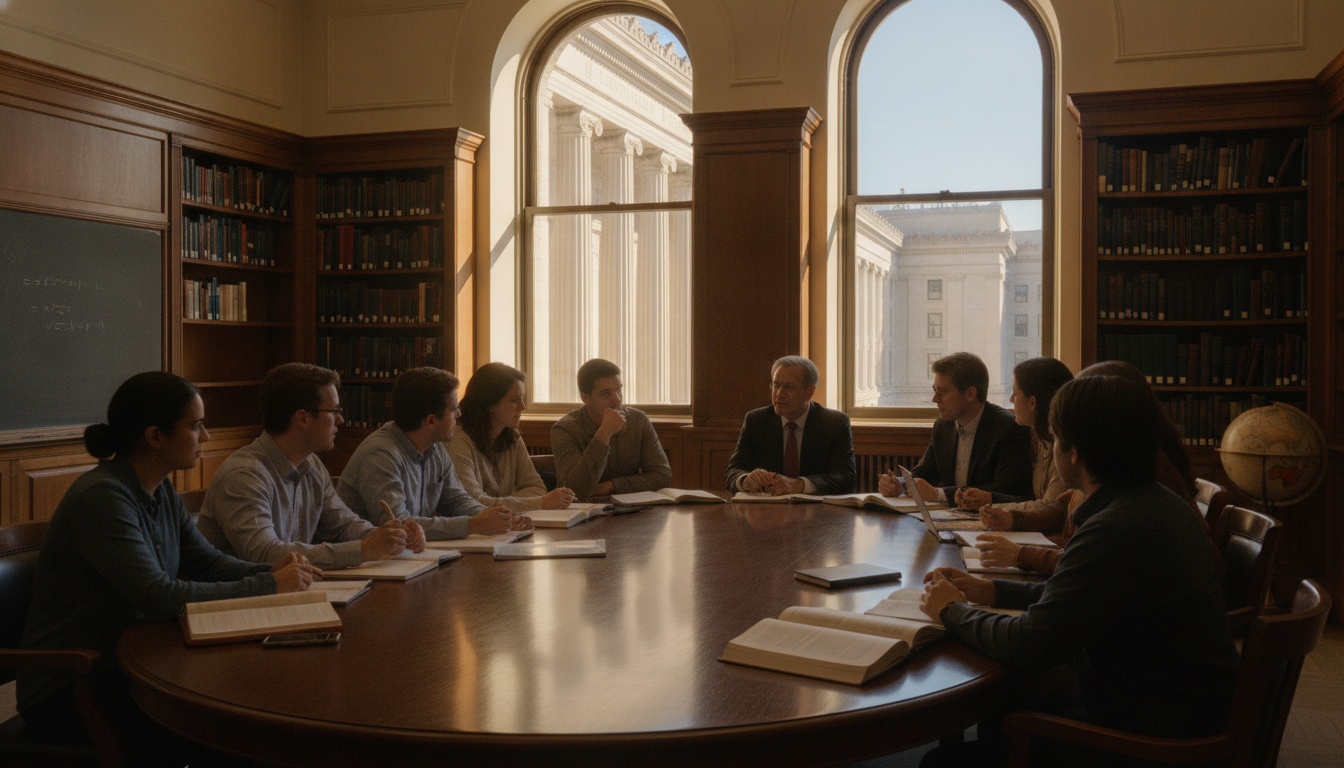
What Is Columbia's Core Curriculum?
The Core Curriculum is not a collection of electives you pick from a menu. Every Columbia College undergraduate takes the same required sequence of courses — the same texts, the same seminar format, the same intellectual framework — regardless of their intended major.
That's the part most prospective students miss.
At most universities, "general education" means choosing from a list of approved courses across broad categories. You pick a history class, a science class, a writing class, and you're done. Columbia's model is structurally different: the Core mandates a common syllabus shared by the entire college. A chemistry major and a comparative literature major read the same Homer. They sit in the same seminar. They argue about the same Plato.
Each Core seminar caps at 12 students — no exceptions, no lecture-hall versions. Professors know who you are. You cannot fake engagement in a room of 12 people. That's the mechanism: close reading, direct argument, no passive path through the material.
The philosophy driving the Core holds that undergraduate education happens through dialogue with primary sources, not textbooks summarizing Aristotle. Aristotle himself. You're forced to defend a reading, change your mind publicly, and sit with ideas that resist easy answers.
Columbia College students complete the full Core. Students in the Fu Foundation School of Engineering and Applied Science (SEAS) complete a customized, lighter variant — roughly half the Core requirements, according to Columbia's current undergraduate bulletin. The School of General Studies has its own adapted version. If you're deciding between Columbia College and SEAS, this distinction matters more than most applicants realize.
How Columbia's Core Evolved From a War Course to America's Most Rigorous Gen Ed Program
The Core didn't emerge from an abstract philosophy seminar. It emerged from a war.
In 1917, the U.S. Army commissioned Columbia to develop a "War Issues" course — a crash course in Western civilization designed to help soldiers understand what they were fighting for. That course evolved into Contemporary Civilization by 1919, making Columbia's Core widely recognized as the first general education program of its kind at any American university, per Columbia's own institutional history.
The Core has never stopped changing since.
How the Core Has Changed Since 1919
The timeline answers the "is this just a buzzword" skepticism directly. In 1920, a "General Honors" course was added, then discontinued in 1929. A "Colloquium in Important Books" was revived in 1932. Literature Humanities joined the Core in 1937. Art Humanities and Music Humanities followed in 1947 — the same year Wm. Theodore de Bary established "Oriental Humanities" (later renamed Asian Humanities), which eventually fed into the Global Core requirement.
Contemporary Civilization was expanded into a two-year sequence in 1928. The Extended Core, addressing non-Western traditions, was formalized in 1990 following de Bary's influential faculty report. "Major Cultures" was replaced by the current Global Core structure in 2008. Frontiers of Science launched as a Core requirement in 2004.
The reading lists have shifted too. Jane Austen's Pride and Prejudice entered Literature Humanities in 1985, according to Columbia's curriculum records. Toni Morrison's Song of Solomon was added in 2015. These aren't cosmetic changes. They reflect genuine, sometimes contentious faculty debates about whose voices belong in a shared intellectual canon.
The Core Committee continues to review the Lit Hum and CC reading lists annually. Faculty debates about which texts to add or remove are ongoing and occasionally contentious, reflecting broader cultural conversations about canon formation.
That's not spin. The Core is a living curriculum. Anyone who dismisses it as a relic of 1919 hasn't looked at what's actually on the syllabus.
The 9 Core Classes Explained: What You'll Actually Read and Why It Matters
The Core consists of nine required components spanning literature, philosophy, history, science, music, and the visual arts. Most are taken in the first two years. Some are assigned; others involve limited student choice within a defined framework.

Literature Humanities (Lit Hum)
Lit Hum is a two-semester sequence covering roughly 2,500 years of literary and philosophical development, from Homer's Iliad through Virginia Woolf. Every Columbia College student takes Lit Hum in their first year. The syllabus is common across all sections, though individual professors bring different emphases to the same texts.
The reading list runs from Homer's Iliad and Odyssey through Sappho, Aeschylus, Plato's Symposium, Virgil, Dante, Boccaccio, Montaigne, Shakespeare, Austen, Dostoevsky, Kafka, and Virginia Woolf — among others.
The Lit Hum Reading List: Year by Year
For students who want to know exactly what they're signing up for, here's how the sequence typically runs (exact ordering varies by section; the Core Committee's annual review means the list can shift):
Year 1:
- Homer — Iliad, Odyssey
- Sappho
- Aeschylus
- Plato — Symposium, Republic (overlaps with CC)
- Virgil — Aeneid
- Ovid
- Augustine — Confessions
- Dante — Inferno
- Boccaccio
- Montaigne
- Shakespeare
Year 2: Modern period texts — Dostoevsky, Kafka, Woolf, Morrison, and others as the Core Committee's annual review determines.
Contemporary Civilization (CC)
CC is the other two-semester anchor of the Core. Where Lit Hum focuses on literature and philosophy through primary texts, CC covers political philosophy, ethics, and social theory.
The reading list runs from Plato's Republic through Augustine, Machiavelli, Hobbes, Locke, Rousseau, Kant, Marx, and Mill — and doesn't stop there. Thinkers up to the present are included. Sophomores take CC. By the time students hit Rawls or Du Bois in the spring semester, most have stopped treating it as a course requirement they're tolerating.
Frontiers of Science
Frontiers of Science is a one-semester, interdisciplinary course structured as four three-week units — two from physical sciences, two from life sciences. It teaches scientific habits of mind rather than discipline-specific content, focusing on how scientists know what they know.
Not a lab course. Closer to epistemology applied to scientific reasoning — and that skill transfers to any field, from medicine to finance.
University Writing
One semester of writing as intellectual practice. The emphasis is on argument construction and revision, tied directly to the close reading the other Core classes demand. Students who treat this as a grammar course are surprised by how much it resembles philosophy.
Global Core, Art Humanities, Music Humanities, and Physical Education
The Global Core (formalized in 2008) requires engagement with non-Western intellectual traditions. It's the Core's most explicit acknowledgment that the Western canon isn't the whole story — and the site of ongoing faculty debate about whether it goes far enough.
Art Humanities covers visual arts history and analysis; students learn to read images the way Lit Hum teaches them to read texts. Music Humanities covers Western music from Gregorian chant through the 20th century — one semester each.
Physical Education requires two semesters of activity courses. And yes — students must pass a swimming test before receiving their diplomas. That's not a rumor.
What Core Students Actually Experience: Workload, Challenges, and the Moment It Clicks
The First-Year Shock
Here's what the admissions page won't tell you: Lit Hum alone involves substantial primary text reading each week. Not secondary commentary. Not summaries. The actual Iliad, in translation, for Monday morning.
A CC '25 graduate we spoke with — a neuroscience major who'd never read Homer before college — described her first Lit Hum seminar this way: "The most embarrassed I've ever been in an academic setting. The professor asked what I thought Achilles actually wanted, and I realized I had no idea. I'd read every word and understood nothing." By December, she was writing her best paper of the semester on the Odyssey.
A second perspective, from a computer science student in the same cohort: "I was taking calculus and two Core seminars simultaneously. The reading load wasn't the problem — it was that the seminars expected you to have thought about what you read, not just gotten through it. That took about six weeks to figure out."
Around the Dante unit, something shifts.
Students consistently report a moment where the texts start talking to each other across centuries — where something in The Brothers Karamazov illuminates something they read in Augustine months earlier. That's not accidental. It's what the common syllabus is designed to produce.
Common Criticisms Worth Knowing
The Core generates real debate — not just in admissions brochures but in student forums and faculty meetings. The most persistent criticism is Eurocentric bias: despite the Global Core requirement, the two-semester anchors (Lit Hum and CC) remain heavily weighted toward Western texts. Some students argue the Global Core functions as an add-on rather than a genuine integration of non-Western intellectual traditions.
The swim test draws a different kind of criticism — equity concerns about students with limited prior access to swimming instruction. Columbia has addressed this through remedial swim instruction, but the requirement remains.
Academic rigor is also a genuine pressure point. The Core's demands don't flex around your major's demands. A SEAS student taking calculus, physics, and two Core seminars simultaneously is managing a genuinely heavy load.
Why Is Columbia's Core Curriculum Unique?
Unlike distribution requirements at peer schools, Columbia's Core mandates the same texts for every student, taught in seminars of no more than 12 people. This creates a shared intellectual language across the entire college. Any two Columbia College alumni, regardless of graduation year or major, can discuss the Iliad and mean the same book, the same arguments, the same characters.
That's not a marketing line. It's structurally true.
The contrarian view: some students find the common syllabus constraining. Spending two semesters on a prescribed reading list — however rich — means two semesters not spent on texts you'd choose yourself. For students with deep, specific intellectual interests, that trade-off is real. Whether it's worth it depends on what you think undergraduate education is for.
Columbia vs. Harvard vs. Yale: Why Columbia's Core Is Structurally Different
Here's how that structure compares to peer institutions:
| School | Model | Common Texts? | Seminar Format? | Credits (approx.; verify with each institution's current bulletin) |
|---|---|---|---|---|
| Columbia College | Mandatory Core sequence | Yes — fully shared | Yes | ~30cr (~25% of degree) |
| University of Chicago | Core sequence | Largely shared | Yes | ~21 courses |
| Harvard | Distributional Gen Ed | No | Varies | ~8 courses (student-selected) |
| Yale | Distributional requirements | No | Varies | ~12 courses (student-selected) |
| Princeton | Distribution + Writing Sem | No | Partial | Varies by major |
Columbia and the University of Chicago are the two major research universities that still mandate a genuinely common curriculum. Harvard's General Education program offers a menu of courses across broad categories — students choose which courses fulfill each requirement, so no two students read the same books. Yale's distributional system is even more open-ended.
Trying to decide between Columbia College and SEAS? See how the Core requirements differ by school.
Is Columbia Harder Than Harvard?
Columbia's Core is structurally more demanding than Harvard's General Education program — not because the texts are harder, but because the format is. Harvard students choose from a menu of approved courses; Columbia students have no choice, and the 12-person seminar with mandatory discussion grades means there's no passive path.
That said, "harder" depends on what you're measuring. Harvard's concentration requirements and research expectations are rigorous in their own right. The difference is specifically in general education: Columbia requires more of every student, regardless of major, than any peer institution except Chicago.
For a student deciding between Columbia College and SEAS, the Core difference is significant. SEAS students complete approximately half the Core requirements. If the shared intellectual experience is a primary draw, CC is the choice. If you want more flexibility for technical coursework, SEAS offers it — but you're trading away a substantial portion of the Core in exchange.
Columbia College Core Curriculum official bulletin
How to Register for Core Classes and Actually Succeed
Registration Strategy
Some Core courses are assigned; others involve student choice within a structured framework. Lit Hum, University Writing, and Frontiers of Science are required in the first year — you don't select these so much as get placed into sections via Columbia's SSOL registration system. CC follows in sophomore year, again with section assignment rather than open registration.
The Global Core, Art Humanities, and Music Humanities involve more flexibility. Students choose which specific courses fulfill these requirements from an approved list, which gives some room to match personal interests. Waitlists are common for popular Global Core sections — register early.
What Actually Helps
On managing the reading load: Annotation is not optional. Students who read passively — highlighting without writing — consistently fall behind when seminar discussion demands specific textual evidence. Write in the margins. Argue with the text. The seminar will reward it.
On office hours: Core professors hold regular office hours, and the seminar format means they know who you are. Using office hours before papers are due — not after — changes outcomes noticeably.
On seminar participation: Columbia's Core seminars grade discussion. Not on quantity, but on quality and engagement. Showing up with one genuinely prepared observation is worth more than five generic comments.
For students whose first language isn't English — a meaningful portion of any Columbia College cohort — the archaic cadences of Homer in translation or the dense 19th-century prose of Dostoevsky can be genuinely disorienting in week one. The advice from students who've navigated this: read secondary context after the primary text, not before. Let the text be strange first.
The Center for the Core Curriculum is located in Hamilton Hall (verify the current room number and location with Columbia's directory) and offers academic support resources specifically tied to Core coursework.
Columbia Core Curriculum student resources
What the Core Actually Gives You: Skills That Transfer to Law School, Medicine, and Beyond
The skills the Core builds — close reading, written argumentation, ethical reasoning, comfort with ambiguity — transfer across fields in ways that are specific and recognizable.
Law school applicants who've written multiple Core essays know how to construct an argument under pressure. Medical students who spent a semester with Aristotle's ethics arrive with a framework for bioethical reasoning. Finance professionals describe the Core as where they learned to read a document critically rather than just efficiently.
Alumni perspectives on the Core tend to follow a consistent arc: mild resentment during sophomore year, grudging appreciation by senior year, genuine gratitude roughly ten years after graduation. That pattern appears consistently in alumni forums and anecdotal accounts from graduates across decades, though Columbia hasn't published comprehensive longitudinal survey figures.
The Core also prepares students for the advanced seminars, thesis writing, and graduate-level reading that Columbia's upper-division courses demand. Students who engaged seriously with Lit Hum and CC arrive in their junior seminars already knowing how to work with a difficult primary source.
Personal growth is harder to measure. But exposure to texts you wouldn't self-select — Beloved, the Confessions, The Symposium — does something that no major-specific undergraduate curriculum can replicate. In our view, the "uncomfortable growth" argument for the Core is its strongest one.
Columbia University undergraduate admissions: Core Curriculum
If you're weighing Columbia College admissions against other schools — or trying to understand what the Core means for your student's academic experience — talk to our admissions team about how the Core fits your goals.
Frequently Asked Questions About Columbia's Core Curriculum
Can I test out of Core requirements? No. The Core is mandatory for all Columbia College students. AP or IB scores don't exempt you from Lit Hum or CC — the seminar experience is the point, not the content alone.
What happens if I transfer into Columbia College? Transfer students complete Core requirements on an adjusted timeline. The Core Committee works with transfer advisors to sequence requirements around credits already earned.
Do SEAS students take any Core classes? Yes. SEAS students complete approximately half the Core requirements, including University Writing and a modified science sequence, according to Columbia's current undergraduate bulletin.
Is the swim test really required? Yes. Students must pass a swimming proficiency test before receiving their diploma. Columbia offers remedial swim instruction for students who need it.
Key Takeaways
- Columbia's Core, launched in 1919, is widely recognized as the first general education program of its kind at any American university
- Core seminars cap at 12 students — no lecture-hall versions exist
- The nine Core components span literature, philosophy, history, science, visual arts, music, and global traditions
- Literature Humanities and Contemporary Civilization are the two-semester anchors; both involve dense primary text reading at a pace that surprises most first-year students
- SEAS students complete approximately half the Core requirements; the full experience is specific to Columbia College
- The Core has genuinely evolved since 1919: Toni Morrison entered the Lit Hum syllabus in 2015, the Global Core replaced Major Cultures in 2008, and Frontiers of Science launched in 2004
- The Core Committee continues its annual review of the Lit Hum and CC reading lists
- Students who engage seriously — annotation, office hours, real preparation — report significantly better experiences than those who treat it as a hurdle
- The shared intellectual experience the Core creates is Columbia College's most distinctive feature, and its most durable one
- Still deciding between Columbia College and SEAS? Get personalized guidance on how the Core fits your goals