Vancouver Public Schools & US Colleges: Complete Guide
Type 'Vancouver public schools us college' into Google and you'll get results for two different countries. This guide covers the American side.
We explore Clark College and WSU Vancouver, the only publicly funded higher education institutions in Vancouver, Washington. If you landed here looking for BC options, jump to the Canada section at the bottom — but stay if you want the full picture on Southwest Washington's college pipeline.
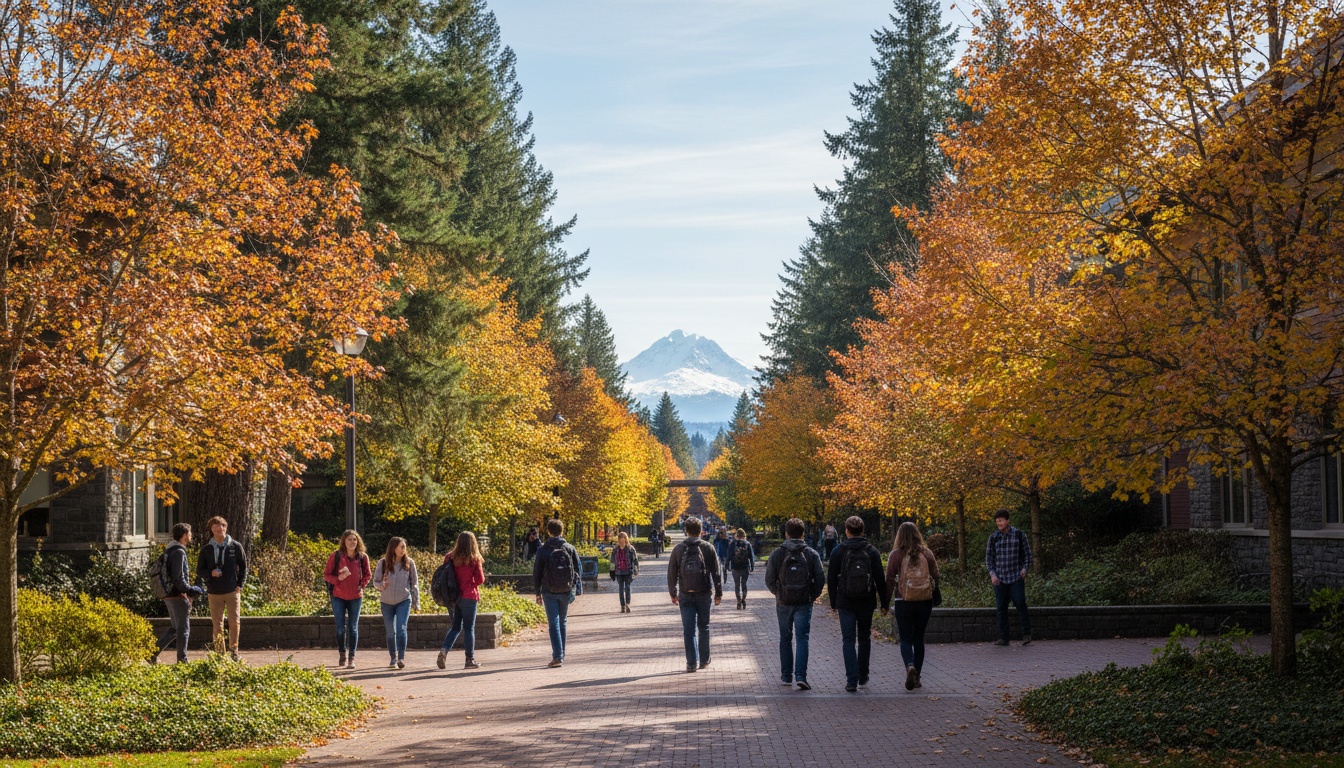
What Are the Public Colleges in Vancouver, WA?
The two primary public colleges in Vancouver, Washington are Clark College and WSU Vancouver.
| Institution | Type | Degrees Offered | Housing |
|---|---|---|---|
| Clark College | Public Community College | Associate, Certificates | None |
| WSU Vancouver | Public University | Bachelor's, Master's, PhD | None |
| Lower Columbia College | Public Community College | Associate, Certificates | None |
Clark College operates as an open admission community college. They accept all applicants with a high school diploma, providing associate degrees alongside workforce training certificates.
WSU Vancouver is one of six campuses within the Washington State University system. They offer 27 bachelor's programs alongside dozens of graduate degrees. A large share of their alumni remain locally to live and work in the region.
Student demographics shape the academic programs at both institutions. Clark College's student body skews toward working adults. The median student age is in the mid-to-upper twenties, and a majority attend part-time. WSU Vancouver draws traditional-age students. These undergraduates pursue upper-division coursework with higher full-time enrollment rates.
Lower Columbia College in Longview, located about 45 minutes north of Vancouver, participates in the exact same Direct Transfer Agreement network as the local schools. Students at LCC can follow the same AA-DTA pathway to WSU Vancouver as Clark students. You get the exact same junior standing and credit acceptance.
From Vancouver Public Schools to College: Running Start and Transfer Pathways
High school juniors and seniors have excellent options. They can access the Running Start program to accelerate their transition into higher education. The initiative lets local teenagers take college classes tuition-free.
How Running Start works in Vancouver, WA:
- Confirm eligibility with your Vancouver Public Schools counselor (typically grades 11–12, minimum 3.0 GPA recommended by Clark).
- Apply to Clark College's Running Start program.
- Coordinate your high school schedule to avoid conflicts with your new college classes.
- Earn college credits that count toward both your high school diploma and future university transfer requirements at the same time.
- Track your progress: confirm with both your high school and Clark that credits are being applied correctly each semester.
In practice, students who enter Running Start without coordinating their high school schedule first often find themselves scrambling. Confirm your counselor has mapped out the credit overlap before you register.
AA-DTA transfer students enter WSU Vancouver with full junior standing and a substantial block of accepted credits, according to Clark College's institutional research. The tuition math is straightforward: two years at Clark's $4,200 rate before transferring saves significant tuition costs compared to four full years at WSU Vancouver.
Running Start Tip: Students who complete an AA-DTA at Clark College can save significant money in tuition before transferring to WSU Vancouver.
Unsure which pathway fits your situation? Our college planning guide for high school students walks through the decision step by step.
What Are the Ratings for Public Schools in Vancouver, WA?
Clark College has a 47% graduation and transfer rate for full-time students (based on IPEDS data; confirm the most recent publicly released cycle at the IPEDS Data Center). WSU Vancouver's 6-year graduation rate is approximately 58%, with graduates earning a median salary within two years that varies by program (College Scorecard data).
You should review these median earnings directly on the College Scorecard website.
What Does It Cost? Tuition, Residency, and Financial Aid at Vancouver's Public Colleges
Washington residents pay approximately $4,200 per year in tuition at Clark College (2026–27 academic year rates). In-state undergraduates pay roughly $13,000 at WSU Vancouver. Oregon commuters pay out-of-state rates at both institutions unless they qualify for border waivers.
The rule applies to everyone.
Oregon residents: run the numbers before assuming Portland-area schools are cheaper. On the flip side, out-of-state students might access the Western Undergraduate Exchange (WUE) discount. This regional program caps tuition at 150% of the in-state rate for eligible applicants from participating western states.
FAFSA processing timelines have faced delays in recent cycles. Local Washington state financial aid offices strongly recommend submitting your application early — typically by your school's stated priority deadline, often in November or December — to ensure you receive priority consideration for available state and federal grants. Doing so avoids delays that can push award letters past spring enrollment deadlines (which is a massive headache if you miss it).
Turns out, many middle-class families incorrectly assume they earn too much money to qualify for state assistance. The Washington College Grant provides major funding. You must apply as early as possible to secure these limited funds.
Decision Checklist:
- Washington Resident? → Clark College AA then transfer saves substantially on tuition over two years at current rates.
- Oregon Commuter? → Factor in out-of-state rate vs. Portland-area options.
- Out-of-State? → Check WUE eligibility at WSU Vancouver.
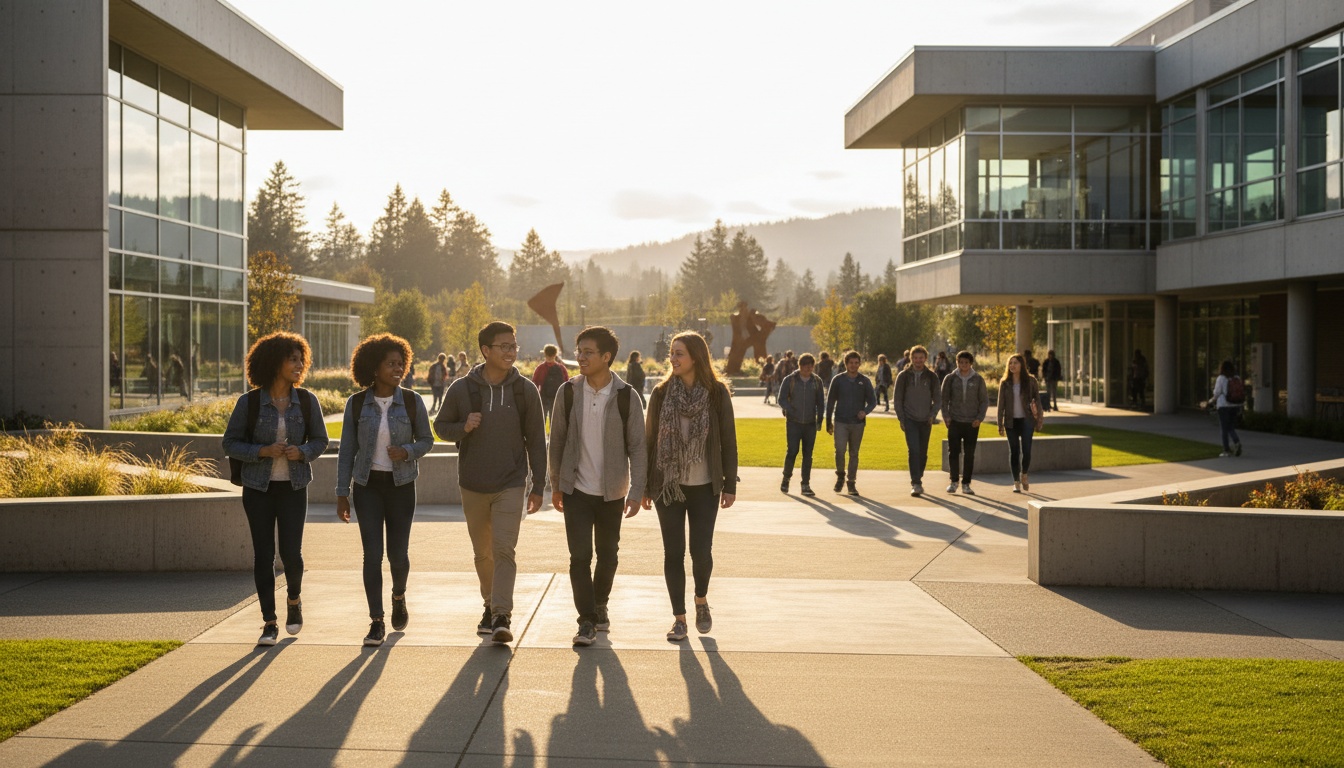
Choosing Your College: Comparing Outcomes, Campus Life, and Commuting in Vancouver
Clark College is a commuter campus — full stop. They lack dormitories. That is the reality for most community colleges in urban settings across the country.
WSU Vancouver feels different: smaller cohorts, upper-division seminars, and a waterfront campus that actually encourages you to stay past your last class. View their official campus map online. The lack of on-campus housing catches many incoming freshmen off guard.
Is Columbia University a public or private college? Columbia University in New York is a private Ivy League university. It is completely unrelated to Clark County's local Columbia College, which also operates as a private entity. Neither should be confused with public colleges in Vancouver, WA.
Getting There: Commuting and Transit Options
That said, commuting from Portland requires dealing with heavy I-5 traffic daily. Both campuses connect easily via C-TRAN bus routes. Route 60 serves WSU Vancouver. Route 25 drops you at Clark College.
Vancouver, BC Public Colleges: A Quick Reference for Canadian Searches
Everything above applies to Washington State. If you landed here looking for British Columbia options, here's what you actually need.
According to Yocket, Vancouver Community College offers excellent diploma programs for incoming international students arriving in the city. Tuition costs vary by program and academic track; check VCC's current international student fee schedule for up-to-date figures.
They provide specialized training in accounting and graphic design. Intakes occur during the winter and fall semesters. Langara College feeds into major provincial universities. Tuition for international students varies by year and program; consult Langara's current fee schedule for the most accurate figures.
The University of British Columbia operates as a public research institution funded by the provincial government. It is not affiliated with any institution in Washington State.
BC Students Applying to US Colleges
Whether you attend Magee, Sentinel, or Burnaby North, BC transcripts use percentage grades. The catch is, US colleges handle these transcripts in different ways — some convert to a 4.0 GPA scale, others evaluate percentage grades directly — and the approach varies by institution. Check each school's policy before assuming your 85% translates to a 3.5, because admissions officers will recalculate your transcript based on their own internal institutional rubrics.
Course equivalencies for AP or IB credits also vary by institution, even if you self-studied using Khan Academy. Check each US college's transfer credit policy before finalizing your DL courses.
If you live in Richmond, Burnaby, or West Van and are applying to US colleges, check our updated resources carefully. Read our US admissions changes for Canadian students before finalizing your high school academic schedule this semester.
Families must also understand test-optional policies for US universities. Please read our Common App guide for 2026–27 before submitting your applications.
Ready to plan your path? Book a free consultation to talk through Running Start timing, transfer strategy, or US admissions from BC.
Key Takeaways
- The two public colleges in Vancouver, Washington are Clark College and WSU Vancouver.
- High school students in Vancouver Public Schools can earn dual credit tuition-free through the Running Start program at Clark College.
- A direct transfer pathway allows students to finish an associate degree at Clark College and enter WSU Vancouver with junior standing.
- Oregon commuters pay out-of-state tuition at both colleges unless they qualify for border waivers.
- Washington residents pay in-state rates: ~$4,200/year at Clark, ~$13,000 at WSU Vancouver.
- Canadian institutions like Vancouver Community College and Langara College operate in British Columbia and are completely unrelated to the Washington State education system.
Ultimately, the choice comes down to geography and budget. If you live in Southwest Washington, the Clark-to-WSU pipeline is an unbeatable financial deal. But if you are a BC student eyeing American schools, ignore the local Washington options entirely and focus on mapping your percentage grades to the US 4.0 scale.