Vancouver Private Schools & US College Admissions: 2026 Guide
Eleven St. George's graduates received offers from top-30 US universities in the 2025 admissions cycle, according to the school's published placement data. (2026 cycle placement data had not yet been published at time of writing.) York House reported placing eight students in a similar tier.
If you're a Vancouver family mapping this path, the school your kid attends in Grade 8 or 9 isn't just a tuition decision — it's the first move in a four-year admissions strategy.
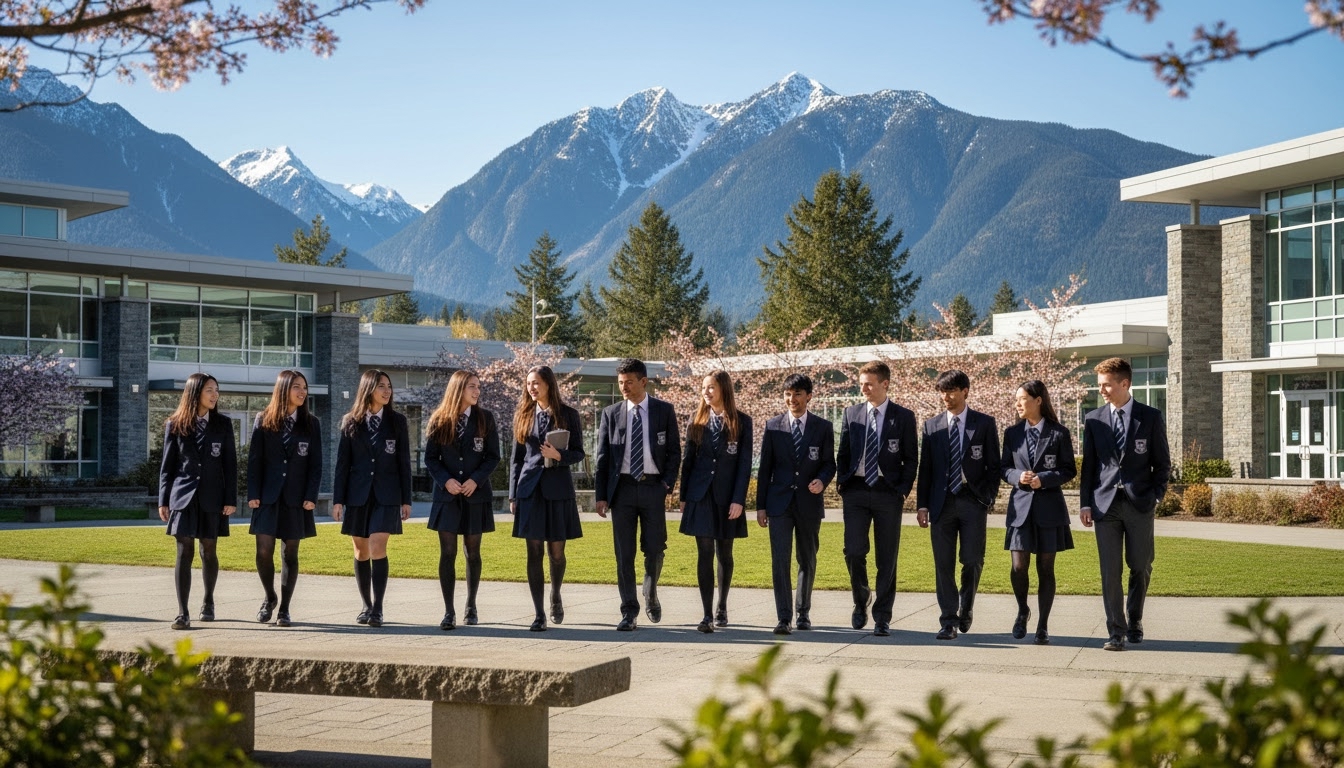
What Are Private Schools in Vancouver, and Do They Prepare Students for US Colleges?
In BC, private schools are called independent schools — institutions outside the public system that charge tuition and offer specialized academic tracks. Well-regarded options for US college preparation include Crofton House, York House, St. George's, Mulgrave, and Collingwood. All three curriculum tracks (IB, AP, Dogwood) are recognized by US admissions offices.
How BC Independent Schools Are Structured
Students pursue the rigorous International Baccalaureate Diploma or Advanced Placement courses. Every graduating senior ultimately earns the standard BC Dogwood Diploma, regulated by the BC Ministry of Education.
The catch is, Canadian applicants are classified as international students at American universities. This official designation restricts financial aid eligibility and makes the visa process much more complicated. (Many parents assume Canadians get domestic tuition rates in the US, but they absolutely do not.) Crofton House graduates have received offers from schools including Wellesley, Barnard, and UChicago in recent cycles.
Note: Do not confuse independent K-12 academies with public colleges like Vancouver Community College (VCC) or Capilano University, which are publicly funded post-secondary institutions.
Top Vancouver Private Schools for US College Admissions
School-by-School Breakdown
Crofton House operates as an all-girls institution offering the IB Diploma. York House offers AP and IB. St. George's is an all-boys academy with both AP and IB tracks, running a successful athletic recruitment pipeline for American colleges.
Bodwell has a notably large international student population. Mulgrave operates as a full IB World School with a dedicated college counseling team. Collingwood School offers strong AP/IB programming. Southridge emphasizes university advising beginning in the early high school years.
| School | Curriculum | Annual Tuition (CAD) | US College Counseling | Co-ed/Single-sex |
|---|---|---|---|---|
| Vancouver College | AP / Dogwood | ~$18,000 | Yes | All-boys |
| Southridge | AP / Dogwood | ~$30,000–$35,000 | Yes | Co-ed |
| Crofton House | IB / Dogwood | ~$26,000 | Yes | All-girls |
| York House | AP / IB / Dogwood | ~$26,000 | Yes | All-girls |
| Bodwell | IB / Dogwood | ~$27,000 | Yes | Co-ed |
| St. George's | AP / IB / Dogwood | ~$28,000 | Yes | All-boys |
| Mulgrave | IB / Dogwood | ~$29,000 | Yes | Co-ed |
| Collingwood | AP / Dogwood | ~$32,000–$38,000 | Yes | Co-ed |
Figures are approximate and subject to change. Confirm current rates directly with each school.
Does your teenager actually need an expensive independent school to get into Stanford?
"Here's something most private school counselors won't say out loud: a 95% average from a strong public school like Sentinel or Lord Byng, combined with a 1500+ SAT and genuine extracurriculars, will outperform an 88% average from a prestigious independent school. The school name on your transcript matters less than what you did there."
Parent Checklist: Questions to Ask a Vancouver Private School About US College Prep
- What is your exact placement record at American universities in the last 3 years?
- Do you employ a dedicated US college counselor?
- Do you offer SAT/ACT prep or coordinate test dates?
- How do your advisors handle the Common Application process?
- What is your historical IB or AP pass rate?
These questions can feel like a lot to manage alone. If you want a structured answer to each one for your specific school shortlist, book a strategy session.
How Vancouver Students Apply to US Colleges: Requirements, Tests, and Timeline
Transcripts, Test Scores, and What US Offices Actually See
Canadian students use the Common Application. You will be evaluated entirely in the international applicant pool, which changes the math on acceptance rates. BC transcripts show percentages, not GPAs.
Turns out, American admissions offices have been reading these for decades — they know that 92% from Crofton House is not the same as 92% from a school with grade inflation, and they adjust accordingly. IB predicted grades carry real weight too. Scoring a 4 or 5 on AP exams can give you a real admissions advantage and earn college credit.
The SAT or ACT question comes up. Vancouver students typically test at Britannia Secondary, Eric Hamber, or one of the UBC campus locations. Seats at the October and November SAT dates fill quickly — register as soon as registration opens, not the week after.
Several schools that went test-optional during COVID have reinstated score requirements in recent cycles. Check each school's current policy directly. Read our detailed guide on how to register for the SAT in BC.
Review the official SAT exam dates in Canada for 2026–27 test dates. We published a full breakdown of test-optional policies — policies in this area continue to shift, so confirm the current status for your specific application cycle.
- Grade 9–10: Map your curriculum track and extracurricular strategy with your college counselor.
- Grade 10: Take a preliminary SAT to establish a baseline.
- Grade 11: Complete your first SAT or ACT sitting.
- Grade 11 summer: Visit target campuses across the border.
- Grade 12 August 1: The Common Application officially opens.
- Grade 12 September–November: Submit Early Decision or Early Action applications.
- Grade 12 January: Submit applications for Regular Decision deadlines.
- Grade 12 May: Sit for final IB or AP exams.
- May–June: Accept an offer and immediately begin your F-1 student visa process.
Canadians do not need a visa to visit the States as tourists. Full-time study requires an F-1 student visa. To complete enrollment, you'll pay the SEVIS fee (confirm the current amount at the time of application) and process your I-20 through your university's international student office — the EXTERNAL_REF: US Department of State F-1 Visa requirements link covers the full State Department requirements.
A Mulgrave family we worked with didn't realize the school counselor has to submit a separate Secondary School Report through the Common App portal — independently of the student's application. Their daughter had submitted everything on her end two weeks before the deadline. The counselor report was still sitting in draft. That near-miss happens annually.
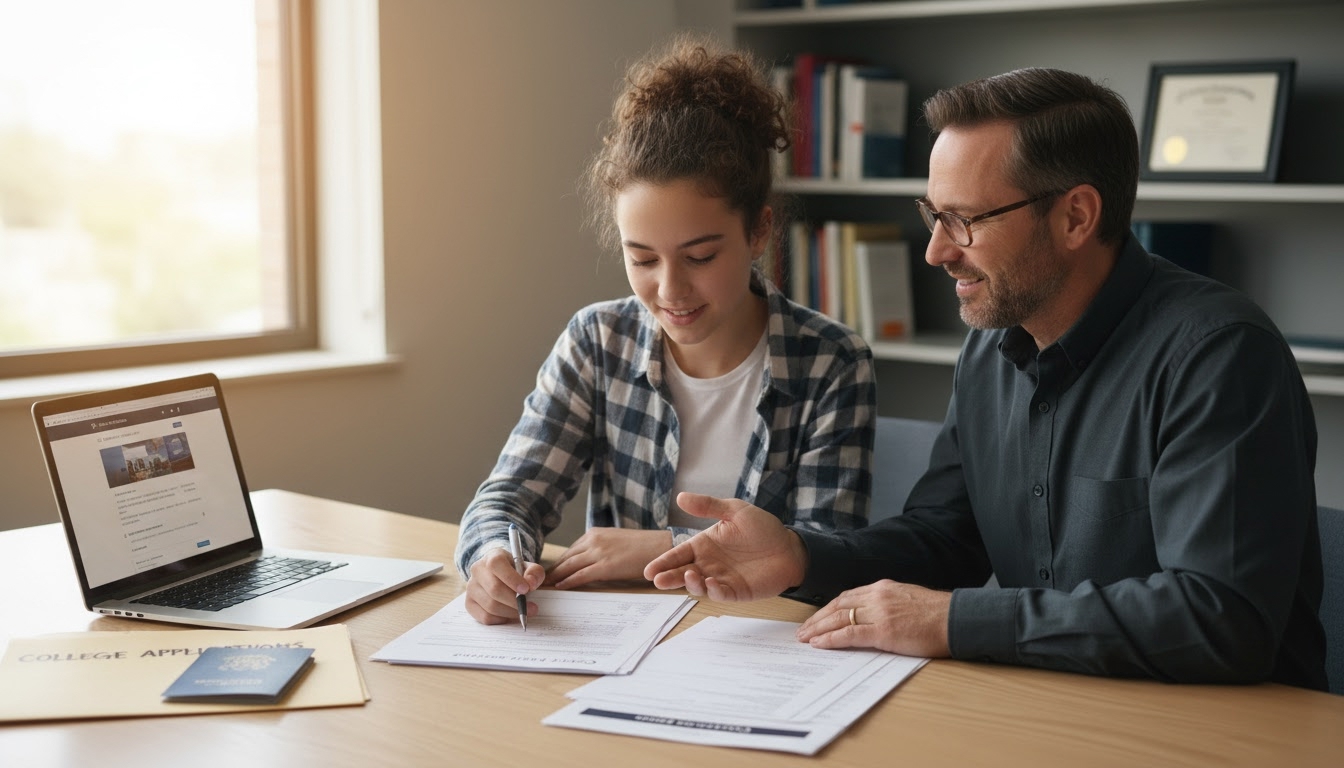
Cost Breakdown: Private High School Tuition, US College Fees, and Visa Considerations
What You're Actually Committing To
You are paying for four years of high school and four years of university.
| School | Annual Tuition (CAD) | Boarding Available |
|---|---|---|
| Crofton House | ~$26,000 | No |
| St. George's | ~$28,000 | Yes |
| Bodwell High School | ~$27,000 | Yes |
| Mulgrave School | ~$29,000 | No |
| Southridge School | ~$30,000–$35,000 | No |
Figures are approximate and subject to change. Confirm current rates directly with each school.
US university costs are much higher.
| Institution Type | Tuition (USD) | Room & Board (USD) | Total (USD) | Approx. CAD (at 1.38) |
|---|---|---|---|---|
| Large State Flagship | $40,000 | $15,000 | $55,000 | $75,900 |
| Liberal Arts College | $60,000 | $18,000 | $78,000 | $107,640 |
| Ivy-Adjacent School | $65,000 | $20,000 | $85,000 | $117,300 |
USD figures reflect recently published rates and are subject to change; CAD conversion uses an approximate 1.38 rate — confirm the current exchange rate when budgeting.
Thing is, the exchange rate heavily impacts tuition fees in CAD and USD. That gap compounds annually. A family budgeting $60,000 USD per year is actually committing to roughly $330,000 CAD over four years before living expenses.
Far too many parents ignore the currency exchange rate until the deposit is due. A $60,000 USD school costs over $82,000 CAD per year.
Note that Canadian applicants are still required to pay the F-1 visa application fee (the MRV fee) to the US Embassy or Consulate, in addition to the separate SEVIS fee. Compare this massive expense to studying locally at the University of British Columbia.
Domestic tuition at UBC runs approximately $6,000 to $9,000 CAD for domestic students; confirm current rates directly with UBC. International students at UBC pay between $42,000 and $55,000 CAD — roughly six times the domestic rate. Review the latest US admissions changes for Canadians and confirm whether any further updates apply to your cycle.
Canadian Universities in Vancouver vs. US Colleges: How to Choose the Right Path
When Staying in Canada Is the Right Call
Honestly?
For most students, staying in Canada is the smarter financial move. The real question is whether your career goals require a US degree specifically.
According to QS World University Rankings, the University of British Columbia ranks among the top 50 globally and consistently places 3rd or 4th in Canada. They offer 256 unique degree programs. The main campus sits roughly 30 minutes away from downtown Vancouver. Historically, roughly 25% of their total student body has consisted of international students.
UBC's global ranking matters more for international employers than for US graduate school admissions — if your student plans to return to Canada after a US undergrad, UBC's name recognition at home is actually stronger than most US schools they'd realistically attend.
Simon Fraser University operates a large Burnaby campus with an acceptance rate of roughly 65%. SFU's co-op program is one of the strongest in North America — relevant if your student is weighing a Canadian degree with US career ambitions. For creative paths, Emily Carr University of Art and Design ranks highly in QS subject rankings for art and design. LaSalle College Vancouver offers alternative design programs, while University Canada West provides business fast-tracks.
| Goal | Better Fit |
|---|---|
| Cost-conscious | UBC or SFU |
| US career ambitions | US College |
| Art/design focus | Emily Carr, LaSalle, or US art schools |
| Business fast-track | University Canada West |
Earning an International Baccalaureate Diploma can yield transfer credits at both Canadian and American schools. Advanced Placement courses offer similar benefits. Many assume AP is better than IB for US colleges. Admissions officers often prefer the IB Diploma because it prevents teenagers from dodging difficult subjects.
Frequently Asked Questions About Vancouver Private Schools and US Colleges
How many universities are in Vancouver?
Vancouver has five major public post-secondary institutions: UBC, SFU, Capilano University, Emily Carr, and Langara College. Several private colleges also operate in the region.
What US universities accept the most Canadian students?
NYU is consistently among the US universities with the largest international student enrollments, according to Open Doors data. USC and Northeastern also attract large numbers of international students. For Vancouver applicants specifically, these schools also have established Canadian student communities, which can ease the transition.
Is Vancouver Community College a private school?
No. VCC is publicly funded by the BC government. It is not a private school. Private post-secondary education in BC includes institutions like University Canada West, while independent K-12 schools operate in an entirely different category.
Do Vancouver private school grades convert to a US GPA?
American admissions offices recalculate BC percentage grades using their own internal scales. IB predicted grades and AP scores provide standardized benchmarks. Check the AP exam dates in BC to plan your testing schedule.
Do Canadian students need a visa to attend a US college?
Yes. You do not need a tourist visa to visit. You absolutely must obtain an F-1 student visa and an I-20 form before enrolling full-time. Read our Vancouver public school US admissions guide.
Key Takeaways
- Independent academies offer distinct advantages for cross-border applications.
- You must carefully manage your timeline starting in Grade 9.
- Currency exchange rates drastically alter your final budget.
- The F-1 visa application process begins after you receive your I-20 from the university. Once you have the I-20, you pay the SEVIS fee, then pay the MRV visa application fee and schedule your consulate interview — these steps are sequential, so start as early as possible and allow several weeks for potential delays.
- Don't leave this until May of Grade 12.
- Book a strategy session at /consultation — we'll map your Grade 9-to-acceptance timeline in one hour.