US Pre-Med for Canadian Students: The Complete 2026 Guide
In a recent admissions cycle, UBC's Faculty of Medicine received 2,847 applications for just 288 seats. That brutal 10:1 rejection ratio pushes hundreds of highly qualified us pre med canadian students to look across the border. The mistakes they make are consistent. We've helped applicants from UBC, SFU, and schools across BC secure acceptances at Tufts, Tulane, and Wayne State. You need to know how American programs actually evaluate your background.
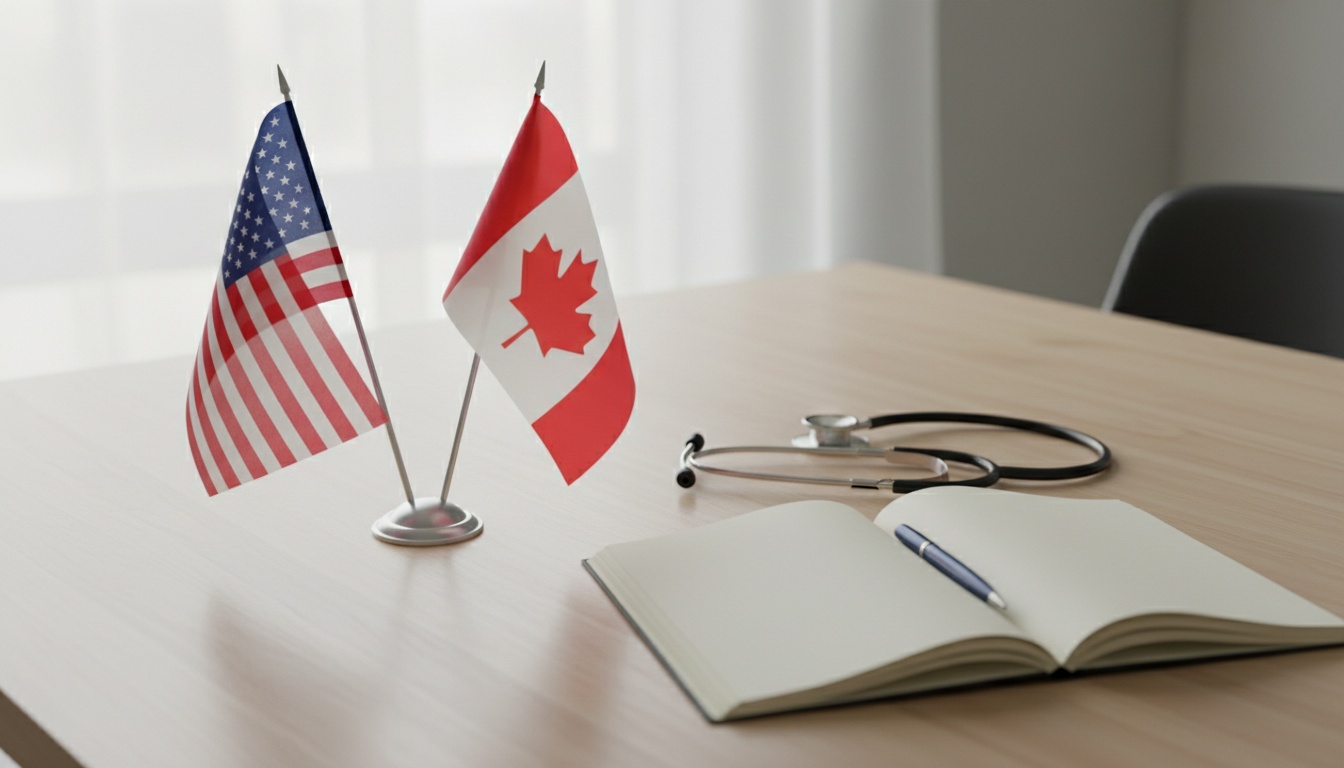
US vs Canadian Medical School Comparison
Can you be a doctor in the US with a Canadian degree?
Yes—if you pass the USMLE exams and secure a US residency through the NRMP match. Many Canadian graduates pursue this route for higher earning potential, though the path requires deliberate planning from your pre-med years onward.
Comparing these two distinct pathways reveals stark differences. Canada artificially limits domestic enrollment. As of the 2023–2024 academic year, the United States had 158 accredited allopathic (MD-granting) medical programs, according to the Association of American Medical Colleges (AAMC), and 41 accredited osteopathic (DO-granting) programs tracked by the American Association of Colleges of Osteopathic Medicine (AACOM).
| Feature | Canadian Medical Schools | US Medical Schools |
|---|---|---|
| Number of Schools | 17 | 199 (158 MD, 41 DO) |
| Domestic Acceptance | Varies by year and program (AFMC) | Varies by year and program (AAMC) |
| Tuition (CAD) | $15,000 - $30,000/yr (varies by province and program) | $50,000 - $100,000+/yr (varies by school type) |
| MCAT Required | Yes (most) | Yes |
| Research Focus | Moderate | High |
| Residency Match | CaRMS | NRMP Match |
| Data reflects most recently available academic year figures; verify current details with each institution. |
Can Canadian Pre-Med Students Get Into US Medical Schools?
Can a Canadian student go to U.S. medical school?
Yes. Canadian students apply to US medical schools as international applicants through the AMCAS application. Public state universities rarely accept non-citizens. Private MD programs at schools like Tufts and Tulane have established track records of Canadian enrollment. A strong GPA is expected, though the competitive threshold varies by program and admissions decisions consider multiple factors.
You do not compete in the domestic pool. US medical schools accept Canadians as international or out-of-state applicants. Overall international acceptance rates sit lower than domestic figures.
Still, at many Canadian-friendly medical schools, tuition is assessed at out-of-state rather than a separate international rate—though policies vary by institution. State schools receive government funding to train local doctors, while private institutions admit top talent regardless of citizenship.
Your background actually offers an advantage. Growing up around universal healthcare provides a unique perspective on patient advocacy. Bilingualism in English and French serves as a massive asset in clinical settings.
The 4-Year Canadian Pre-Med Timeline: Your Roadmap to US Medical School
Students from Sentinel and Burnaby North often start their undergraduate degrees with high hopes but no structured plan.
Year 1: Build Your Foundation
To maximize your chances, choose a university with a dedicated pre-med advisor. UBC's Health Professions Advising office and SFU's pre-health advising program both have established pipelines to US application support. Start your prerequisite coursework immediately.
Year 1 action item: Register for CHEM 121 and BIOL 121 in your first semester. Do not defer prerequisites.
Year 2: Deepen Experience
Begin volunteering in clinical settings around the Lower Mainland. Shadowing is not a requirement in Canadian medical schools, but US programs expect it. Use the Medical School Admissions Requirements (MSAR) database to research specific school prerequisites.
Year 2 action item: Secure at least 50 hours of physician shadowing before the year ends.
Year 3: The Application Year
Canadian applicants often struggle to find US physician recommenders. You must prioritize building strong relationships with local doctors who can speak to your clinical abilities and character—what US schools primarily look for in evaluations.
Year 3 action item: Draft your personal statement by January.
Year 4: Decision and Transition Planning
Prepare a strong waitlist strategy. Compare your acceptances carefully. Apply for your F-1 student visa.
Year 4 action item: Submit your AMCAS application as early as possible once it opens in late May/early June.
These timelines shift based on your specific undergraduate institution and target schools. Our Vancouver-based advisors have mapped this process for students from UBC, SFU, and schools across the Lower Mainland. Book a free 20-minute call to get a timeline built around your actual situation.
Meeting US Medical School Requirements: A Canadian Applicant's Checklist
- GPA and Transcripts: AMCAS calculates your GPA using all undergraduate grades without dropping your lowest scores. How exactly does AMCAS convert a UBC percentage grade into a 4.0 scale? AMCAS applies its own conversion system; as a general approximation, grades of 90%+ at UBC often map to 4.0, while 85–89% may map to 3.7, though the exact mapping can be complex. Confirm your specific conversions through the AMCAS grade conversion guide.
- MCAT Requirements: Thing is, your MCAT score matters less if your prerequisite coursework is incomplete. Median MCAT scores at competitive Canadian-friendly US programs typically fall in the 511–516 range, though this varies by school. A score below 508 can make admission to MD programs significantly more challenging, though admissions decisions always consider the full application. You can use Khan Academy for free official practice material.
- Prerequisite Coursework: Standard pre-med prerequisites include two semesters each of biology and general chemistry, plus organic chemistry and physics. Turns out, many US schools do not accept AP or IB credits from your BC curriculum to fulfill these core science requirements—policies vary widely by institution, so confirm with each program directly. You must take them at the university level.
- The CASPer Test: Beyond coursework, a growing number of schools have added a behavioral assessment layer. Prepare for the CASPer test on the Altus Suite platform. Schools like Tulane and Wayne State have required it for international applicants in past cycles, though CASPer adoption and specific requirements shift regularly. Verify current requirements at each school's admissions page before applying.
Which US Medical Schools Accept Canadian Students?
Most LCME-accredited MD programs accept international applicants, but a specific subset explicitly welcomes Canadians. The catch is, major state schools usually restrict admissions to US citizens or permanent residents because state funding restrictions dictate these policies.
| School Name | Explicitly Accepts Internationals | Canadian Students Enrolled (Approx) | Application Deadline |
|---|---|---|---|
| New York Medical College | Yes | Varies | Verify with school |
| Wayne State University | Yes | Varies | Verify with school |
| Tulane University | Yes | Varies | Verify with school |
| Drexel University | Yes | Varies | Verify with school |
| Georgetown University | Yes | Varies | Verify with school |
| Rush Medical College | Yes | Varies | Verify with school |
| Rosalind Franklin | Yes | Varies | Verify with school |
| Albany Medical College | Yes | Varies | Verify with school |
| Medical College of Wisconsin | Yes | Varies | Verify with school |
| Tufts University | Yes | Varies | Verify with school |
| Deadlines and enrollment figures vary year to year; verify current deadlines and enrollment data directly with each institution. |
DO Schools for Canadian Applicants
Osteopathic medical programs offer an alternative pathway. Schools like PCOM and LECOM have established track records of admitting Canadian students.
Are DO degrees viewed as lesser?
Not even close.
DO degrees are equivalent for residency matching in the US. For primary care and internal medicine, DO programs offer genuinely competitive pathways. On the flip side, for surgical subspecialties, the data still favors MD programs. Check NRMP's published match rates by specialty before choosing this route.

Beyond Tuition: The True Cost of US Medical School for Canadians
Tuition and Fees
Private MD programs charge heavy tuition, while public schools hit out-of-state students with higher rates.
Exchange rates fluctuate, so build a spreadsheet that converts every cost line to CAD at the current rate before comparing programs. At recent exchange rates, a $60,000 USD tuition bill can translate to $80,000 CAD or more annually—a gap that compounds significantly over four years.
Financial Aid and Loans
Most federal US financial aid is completely unavailable to international students. StudentAid BC can provide some funding for eligible students attending recognized post-secondary institutions in the US, though the coverage available may not meet the full cost of attendance at a private US MD program. Review your specific eligibility directly with StudentAid BC before making financial plans.
You must explore international student loans through private lenders. Prodigy Finance and MPOWER Financing are the two primary private lenders serving Canadian medical students at US schools.
Bluntly: if you need to borrow the full cost of attendance at a private US MD program, the math is brutal. At $80,000 USD/year for four years, you're looking at $320,000 USD in debt before residency. That debt sits against a residency salary that pays $60,000–$80,000 USD annually.
Run the numbers before you commit.
Application Strategy: How to Position Your Canadian Experience for US Success
Discuss your experiences with the Canadian healthcare system. Highlight how it shaped your understanding of patient advocacy. Do not treat your Canadian identity as a liability.
Interview Preparation
Canadian schools use the Multiple Mini Interview format heavily. During a medical school interview at a US program, expect questions about your geographic choices. Be prepared to explain why you want to study in the United States. Record yourself on a 2-minute timer responding to ethical scenarios. The playback is brutal and effective.
Networking and Mentorship
The AAMC's MSAR database lists each school's international applicant and matriculant data.
Use it.
Find students who went through this process on the r/premed and r/premedcanada subreddits. Their medical school secondary applications, interview notes, and waitlist experiences are worth more than any guide.
After Medical School: Navigating US Residency and Licensing as a Canadian
The USMLE Licensing Pathway
You must pass the USMLE licensing exams. Step 2 CK scores now carry massive weight for residency applications.
If you want to return to practice in Canada, you must complete the MCCQE (Medical Council of Canada Qualifying Examination), which is required to practice medicine anywhere in the country.
Dual licensing is possible.
US Residency Matching
The residency matching process happens through the NRMP match. You apply through the ERAS application and create rank lists.
Your visa status during residency dictates your long-term options. A J-1 visa requires you to return to Canada for two full years, which delays your US career progression massively while adding complex administrative hurdles. An H-1B visa allows you to stay in the US without the two-year return requirement.
Post-Residency Options
Graduates of US medical schools have historically matched at Canadian residency programs at rates that fluctuate year to year; consult the most current figures at CaRMS.ca for the latest data. Conversely, graduates of Canadian medical schools match at Canadian residency programs at a consistently very high rate, though the exact figure varies by year.
Many Canadian MD graduates from US schools choose to remain in the US.
Key Takeaways
- Canadian applicants are treated as out-of-state or international students by US medical schools.
- Private US medical schools offer significantly better acceptance odds for Canadians than public state schools.
- Shadowing and research experience are critical for US applications.
- Most federal US financial aid is unavailable to Canadian students. StudentAid BC may provide some coverage, but private loans through Prodigy Finance or MPOWER are often necessary, and the debt load requires serious pre-commitment analysis.
- Canadian graduates of US medical schools have strong residency match rates.
Ready to turn this guide into a concrete plan? Our Vancouver-based advisors work specifically with Canadian pre-med students managing US applications, handling everything from transcript conversion to school list strategy. Book a free consultation and get a personalized roadmap for your cycle.