US Boarding School vs Canada: Complete 2026 Comparison Guide
Quick Answer: Modern Boarding School Comparison US boarding schools carry more name recognition and a genuine Ivy pipeline — but you're paying $60K–$75K USD/year or more for top-tier schools. Canadian schools typically run $25K–$40K USD/year, have a cleaner immigration pathway, and honestly? For most families we work with, they're the better call unless Harvard is specifically the goal.
Both countries carry a painful residential school legacy that shapes — and should shape — how modern institutions present themselves.
The phrase "boarding school" carries two entirely different weights depending on who's searching — and pretending otherwise would be dishonest. This guide addresses both: the dark historical record of state-sponsored Indigenous assimilation in North America, and the practical modern question families ask when comparing US boarding school vs Canada for their children today.
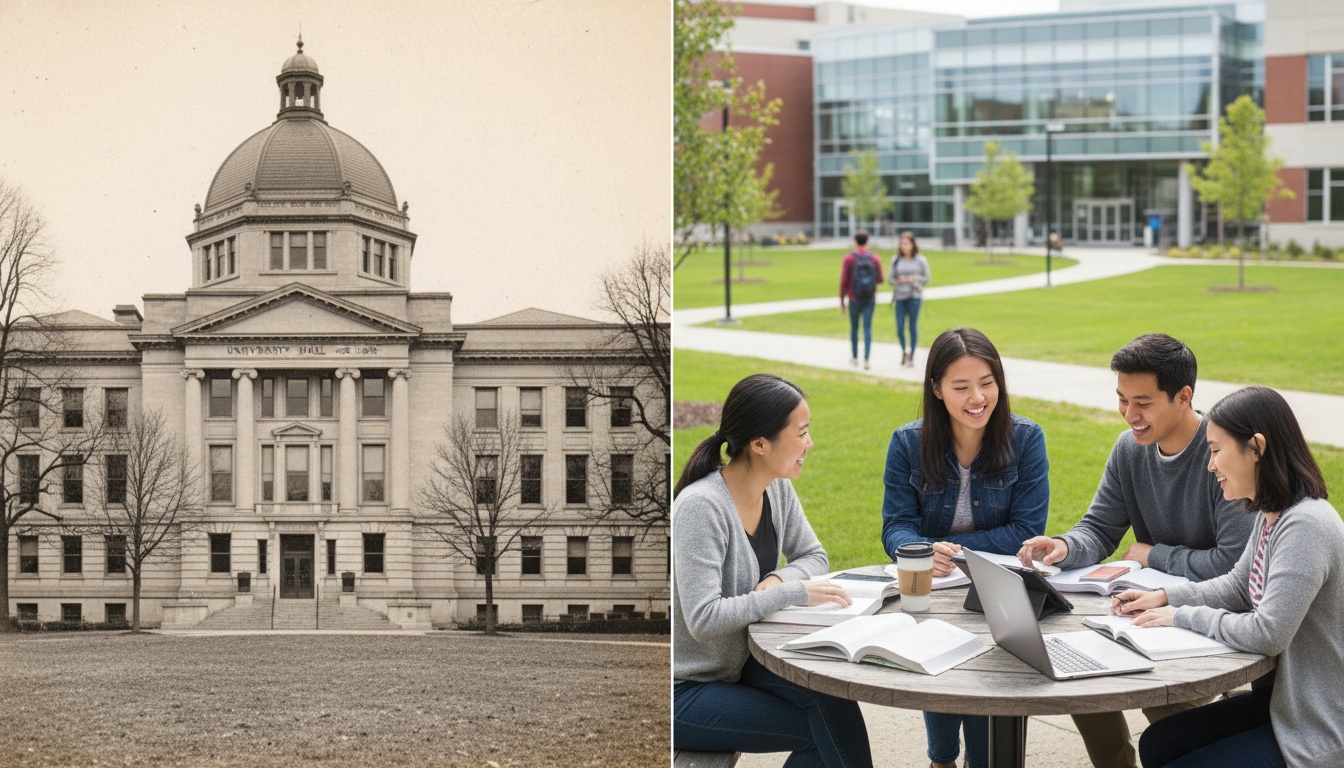
What "US Boarding School vs Canada" Really Means: Two Very Different Questions
This phrase means two different things. Families researching school choice are comparing tuition, visas, and university outcomes. Researchers and Indigenous communities are studying the historical residential school system and its ongoing impact. Both interpretations are valid and deserve serious answers.
Search this phrase and you'll find two completely different groups of people.
Families researching school choice are asking:
- Tuition costs and visa rules
- University outcomes and placement rates
- Immigration pathways and long-term settlement options
Researchers, journalists, and Indigenous communities are asking:
- Historical residential school system scope and harm
- Intergenerational trauma and reconciliation progress
- Unmarked graves investigations and government accountability
The first group is families — many of them Chinese-Canadian parents in Richmond or Burnaby, or South Asian families in Coquitlam — researching whether to enroll their Grade 9 student at a New England prep school or a school in Ontario. They want tuition numbers, visa rules, and university outcomes.
The second group is researchers, journalists, Indigenous community members, and students studying the Canadian Indian residential school system and the Federal Indian Boarding School Truth Initiative in the US. For them, the word "boarding school" doesn't evoke campus tours. It evokes Kamloops.
Both searches deserve serious answers.
This article covers the historical record first (Sections 2–3), because context matters. Then it moves into the modern comparison families are actually making (Sections 4–5), and closes with how reconciliation is reshaping what responsible school choice looks like in 2026 (Section 6).
Skipping the history to get to the tuition tables would be exactly the kind of institutional amnesia that got both countries here in the first place.
The Historical Record: Residential Schools and Indigenous Assimilation in Both Countries
The scale is staggering, even now.
Canada operated 139 federal residential schools, with more than 150,000 Indigenous children forced through the system between the 1870s and 1997, according to ICT News reporting on the official TRC findings. The last school closed in 1996 — not 1896. 1996. Let that land.
Many people alive today attended these institutions.
Compulsory Attendance and the Indian Act: How the System Was Built
The Indian Act, enacted in 1876, gave the federal government sweeping control over Indigenous life. By 1894, it had been amended to require compulsory attendance: Indigenous children between ages 7 and 16 had to attend. Not "were encouraged to." Had to. Families who resisted faced legal consequences.
The Catholic Church ran approximately 70 percent of Canadian residential schools. By 1931, 80 schools were operating simultaneously across the country.
The educational outcomes were deliberately stunted. In 1930, only 3 percent of residential school students progressed past Grade 6, and three-quarters were stuck in Grades 1 through 3. These weren't schools in any meaningful sense. They were cultural suppression facilities with a thin academic veneer.
Government Involvement and Funding: Canada vs. the United States
Canada's per-capita funding model created a specific perverse incentive: schools received more federal money for higher enrollment, which meant direct financial pressure to remove more children from their families. The Bureau of Indian Affairs in the US used mixed federal, state, and missionary funding structures. Both systems used financial incentives to maximize enrollment and assimilation.
The US system had its own brutal logic.
There may have been as many as 400 boarding schools operated by the federal government and Christian missionaries across the United States. By 1900, 20,000 Native children were enrolled. By 1926, an estimated 83 percent of Native children attended boarding schools. Christian missionaries operated more than 25 percent of US schools, with the Catholic Church running approximately 100 of them.
The Carlisle Indian Industrial School in Pennsylvania, founded in 1879, became the model for assimilation policies across the country. Its founder, Richard Henry Pratt, coined the phrase "Kill the Indian, Save the Man." The explicit goal was to erase language, traditional practices, spiritual life, and family connection — replacing them with English, Christianity, and vocational training suited to low-wage labor.
It worked. That was the problem.
The vocational curriculum wasn't benign job training — it was a deliberate ceiling. Indigenous students were prepared for domestic service, farm labor, and trades. Not law. Not medicine. Not the academic tracks available to white students in the same era. The "industrial" in Carlisle Indian Industrial School was a policy statement about who deserved what kind of future.
A note on day schools: the US system eventually made a partial shift toward day schools — institutions where Indigenous children attended during the day but returned home at night — as an alternative to full residential removal. This shift reduced some of the most acute harms of family separation, though assimilation policies remained the explicit goal. Canada's system remained more heavily residential throughout its operation.
The unmarked graves changed everything.
In May 2021, ground-penetrating radar identified 215 missing children buried on the grounds of the Kamloops Indian Residential School in Kamloops, British Columbia. The discovery broke internationally. Subsequent investigations across Canada have uncovered over a thousand unmarked graves, with the documented count continuing to grow as investigations remain ongoing, according to UN-Aligned reporting.
These are missing children — children who died in institutional care and whose families were never properly notified.
The US federal report, released in 2022 under the Federal Indian Boarding School Truth Initiative, identified at least 53 burial sites across the country, with investigators stating they expect that number to grow. Over nine graves of Indigenous children were uncovered at Carlisle alone.
The intergenerational trauma is measurable. Researchers have traced higher PTSD rates, disrupted attachment patterns, and substance use disorders across three generations of survivors. Canada's Indian Residential Schools Settlement Agreement, finalized in 2007, represented the largest class-action settlement in Canadian history at the time. By 1999, 2,500 lawsuits had already been filed over abuse at Canadian schools.
Canada issued a formal federal apology in 2008 under Prime Minister Stephen Harper. Pope Francis visited Canada in July 2022 and issued an apology on behalf of the Catholic Church. The US federal acknowledgment process has moved more slowly, with no equivalent presidential apology as of 2026.
The Truth and Reconciliation Commission of Canada issued its 94 Calls to Action in 2015. The US has the National Native American Boarding School Healing Coalition pushing for parallel accountability, including a formal federal apology and reparations framework. The gap between the two countries' official responses remains significant — and Indigenous advocates have named it explicitly.
Modern Boarding Schools Today: How the Landscape Has Changed
Contemporary private boarding schools in both countries are legally and structurally distinct from the historical residential school system — and ethically different in intent. Enrollment is voluntary. Families choose and pay. Students can leave. That distinction matters. It doesn't erase anything.
The historical reckoning has genuinely reshaped how legitimate boarding schools present themselves, particularly in Canada. TRC Calls to Action #62 through #65 specifically address education, calling for age-appropriate Indigenous curriculum, Indigenous language and culture programs, and educator training. Canadian boarding schools that take this seriously have implemented mandatory Indigenous history units, land acknowledgments that go beyond performative recitation, and partnerships with local First Nations communities.
The modern boarding school market looks like this: several hundred boarding schools operate in the US, concentrated in the New England prep school belt (Exeter, Andover, Choate, Deerfield), the Mid-Atlantic, and parts of the Southeast. Canada has a smaller number of boarding schools — concentrated in Ontario, BC, and Quebec — though exact counts vary by how institutions are classified. The accreditation bodies are NAIS (National Association of Independent Schools) in the US and CAIS (Canadian Accredited Independent Schools) in Canada.
Post-pandemic enrollment trends have shifted international student demand noticeably toward Canada. Lower costs, more flexible study permits, and a clearer post-secondary immigration pathway have made Canadian schools genuinely competitive for families who previously defaulted to US options.
How Reconciliation Is Reshaping Modern School Policies
The most meaningful changes aren't the land acknowledgments at assemblies. They're curriculum integration, hiring practices, and community partnerships.
Schools responding seriously to TRC Calls to Action are embedding Indigenous history into multiple subject areas — not siloing it into a single unit. The National Native American Boarding School Healing Coalition has influenced how US independent schools discuss this history with students, though uptake varies enormously by school and region.
One question cuts through the marketing faster than any campus tour: ask how they teach the history of residential schools.
We've asked this question at roughly a dozen schools across Ontario and BC. The range of answers is striking. One head of school named three specific First Nations partnerships and described curriculum changes made after 2021. Another admissions director pivoted immediately to talking about their "commitment to diversity." You can tell within 30 seconds which kind of school you're in.
Not sure where to start with this decision? Jump to the 5-factor decision framework further down — or keep reading for the full comparison first.
Where US and Canadian Boarding Schools Actually Differ (And Where They Don't)
US boarding schools emphasize AP coursework and Ivy League pipelines, with top-tier schools typically costing $60K–$75K USD/year or more. Canadian schools use provincial curricula or IB, typically cost $25K–$40K USD/year, and offer clearer immigration pathways. The right choice depends on university goals, budget, and whether long-term North American residency is part of the plan.
The marketing materials will tell you the differences are minor. They're not.
| Factor | US Boarding Schools | Canadian Boarding Schools |
|---|---|---|
| Average annual tuition | $60K–$75K+ USD (top-tier) | $25K–$40K USD (typical range) |
| Curriculum | AP/IB/Common App | Provincial (OSSD/Dogwood)/IB |
| Selectivity (varies by school) | High at top schools (often 10–25%) | Moderate at most schools (often 30–50%) |
| International visa | F-1 (restrictive) | Study Permit (flexible) |
| University pipeline | Ivy/T20 focus | U15/UK/US options |
| Class sizes | Typically 12–18 | Typically 10–15 |
| Financial aid | Strong (endowment-based) | Limited |
Canadian tuition converted from CAD; exchange rate varies. Figures are estimates and individual schools vary significantly.
The sections below explain what's behind each of these numbers.
Academic Standards and Curriculum
US boarding schools run heavily on AP coursework. The Common App pipeline is baked into the culture — college counseling at schools like Exeter or St. Paul's is a full department, not an afterthought. SAT requirements for boarding school applicants in 2026 are strongly preferred at many US prep schools, even at institutions with test-optional policies.
The Canadian system works differently. Canadian schools operate on provincial curricula. Ontario students graduate with the OSSD (Ontario Secondary School Diploma) — a credit-based credential that US universities recognize and accept for admissions purposes. BC students earn the Dogwood Certificate, the province's standard graduation credential, which is similarly accepted by US institutions. IB programs are proportionally more common in Canadian boarding schools than in US ones, and standardized testing pressure is lower — a real quality-of-life difference for some students.
The educational outcomes diverge along predictable lines. US boarding schools feed Ivy League and T20 pipelines with infrastructure that Canadian schools simply don't match. That said, Canadian schools have built a genuine track record placing students at strong US universities through the Common App process for Canadian students — and if goals shift toward UK universities, Canadian schools' placement rates are often superior to US equivalents.
Ontario vs. BC Boarding Schools: Not the Same Thing
Canadian boarding schools aren't a monolith. Ontario and BC schools have meaningfully different cultures.
Ontario schools — Appleby College in Oakville, Trinity College School in Port Hope, and Ridley College in St. Catharines — tend toward a more traditional British-influenced academic culture, with strong university placement records into both Canadian U15 schools and US universities. Class sizes are small, campus life is structured, and the academic pressure is real.
BC boarding schools — Shawnigan Lake School on Vancouver Island and Brentwood College in Mill Bay — lean heavily into outdoor education. Proximity to mountains, ocean, and wilderness isn't just a marketing line; it's genuinely integrated into the school culture. For students who need space and nature alongside academics, BC schools offer something Ontario schools don't.
Costs differ too. Ontario boarding schools generally run slightly higher than BC equivalents, and both are lower than comparable US schools.
Tuition Costs and Financial Aid
The numbers are stark.
Top-tier US boarding schools typically run $60,000–$75,000 USD per year or more. Exeter and Andover have substantial endowments and offer need-based financial aid that can make attendance cheaper than a Canadian alternative for families who qualify. Most families don't qualify.
Canadian boarding schools typically cost $35,000–$55,000 CAD per year — roughly $25,000–$40,000 USD depending on exchange rates. Financial aid infrastructure is thinner, but the base cost is low enough that many families come out ahead without any aid at all.
Here's how the four-year cost comparison breaks down:
Total 4-Year Cost Comparison (estimated, 2025–2026 entry):
| US Boarding School | Canadian Boarding School | |
|---|---|---|
| Domestic student (no aid) | $240K–$300K+ USD | $100K–$160K USD |
| International student (no aid) | $260K–$320K+ USD | $120K–$180K USD |
| With strong financial aid | $80K–$160K USD | $80K–$130K USD |
All figures are estimates. US figures reflect top-tier school tuition ranges. Canadian tuition figures converted from CAD; actual costs vary by school and exchange rate. Individual school costs may differ significantly from these ranges.
For most families without a significant aid package, the math strongly favors Canada. The US advantage only emerges when a student qualifies for $20,000+ in annual need-based aid — and competition for those packages is fierce.
A $60,000 USD/year US school offering $20,000 in aid costs $160,000 over four years. A $35,000 USD/year Canadian school with no aid costs $140,000. Run the numbers yourself. The math is brutal for US boarding school marketing once you put it on a spreadsheet.
Admission Requirements and Selectivity
US boarding school admissions require the SSAT or ISEE, teacher recommendations, a student interview, and often a campus visit. Acceptance rates at top schools are typically in the range of 10–20%, though this varies by institution. The process is genuinely competitive in a way that surprises families coming from BC's independent school system.
We've watched students from Crofton House and St. George's — genuinely strong students — score in the 55th percentile on their first SSAT attempt. It's a different test format, not a measure of intelligence, but it requires specific prep that BC schools don't provide. York House and West Point Grey families run into the same gap. The SSAT is a different animal.
The Canadian admissions process is structured differently. Canadian boarding school admissions are less standardized. Most schools use their own entrance exams rather than the SSAT. Acceptance rates at most Canadian boarding schools tend to be more moderate — often in the 30–50% range, though this varies by school. English proficiency requirements also tend to be more flexible — relevant for students whose first language is Mandarin or Cantonese.
International Student Policies and Visa Considerations
This is where the gap is most consequential for families with long-term North American residency goals.
US F-1 visas restrict work rights and offer no direct residency pathway. Students face strict enrollment requirements and no direct pathway to US residency from secondary school. After university, international graduates face the OPT/H-1B lottery — a process that has become less predictable, not more.
(One family we worked with in 2025 had their child graduate from a top-20 US university, land a job offer, and then wait three years in H-1B limbo. They've since moved to Canada. Not a unique story.)
Canada's study permit is more flexible by design. The pathway from Canadian secondary school → Canadian post-secondary → Post-Graduate Work Permit (PGWP) → Permanent Residence is documented, functional, and used successfully by thousands of families every year. That gap is not closing.
For Chinese, Indian, and Korean families with long-term North American settlement goals, this pathway difference alone can justify the Canadian choice. We've seen families make the US boarding school choice based on prestige, then spend years dealing with immigration uncertainty they could have avoided.
Extracurricular Activities and Campus Life
US prep school extracurriculars are high-intensity. Athletics function partly as a college recruiting pipeline — a student playing lacrosse or squash at Deerfield isn't just playing a sport, they're building a college application component. Debate, robotics, and performing arts programs at top US schools are genuinely exceptional.
Canadian boarding schools tend toward smaller cohorts, stronger outdoor education programs, and a community service emphasis that feels less performative. Mental health support infrastructure has improved meaningfully at Canadian schools since 2022. Smaller schools notice struggling students faster. That's not nothing.
Before committing to US boarding school culture, families might consider US summer programs to test boarding school culture as a lower-stakes way to see whether that environment suits their student.
Which Country Has Better University Preparation?
The contrarian take: for most families, Canadian boarding schools provide better value-adjusted university preparation than their US equivalents.
The assumption that a US prep school is necessary to reach a top US university is increasingly outdated. Canadian schools have built Common App infrastructure, and US admissions officers at schools like UChicago, Northwestern, and Georgetown actively recruit from Canadian pipelines. Common App deadline dates for 2026–2027 are identical regardless of where a student attends secondary school.
The Ivy League pipeline advantage is real at the very top US schools. But for families targeting strong US universities rather than specifically Harvard or Yale, the premium is hard to justify.
Choosing Between US and Canadian Boarding Schools: A 5-Factor Framework
Five factors determine the right choice: (1) university goals, (2) budget and financial aid, (3) immigration pathways, (4) student personality, and (5) school values alignment. Most families find Canadian schools offer better value unless Ivy League admission is the specific goal.
After working through this with dozens of families, these five things actually move the needle. (Our team has visited 30+ boarding schools across Ontario, BC, and New England, and worked with families from Richmond, Burnaby, Coquitlam, and across Metro Vancouver through exactly this decision.) The rest is marketing.
Criterion 1 — Your University Goal
Choose US schools if your goal is specifically Ivy League or T20 admission. They have superior alumni networks, college counseling infrastructure, and name recognition with US admissions officers. The college counselors at Andover or Hotchkiss have relationships with admissions offices that no Canadian school can replicate.
Choose Canadian schools if you're targeting strong US universities, UK schools, or Canadian universities. The Ivy advantage is real but narrow. Check the Common App process for Canadian students for how this process actually works.
Criterion 2 — Budget and Financial Aid Needs
If your four-year budget is under $200K USD, Canadian schools almost always offer better value. US financial aid packages rarely overcome the base cost difference unless the student qualifies for significant need-based support.
Run the actual numbers before deciding. The base cost difference is simply too large for most US financial aid packages to overcome. The math strongly favors Canada for most families without substantial aid.
Criterion 3 — Immigration and Long-Term Residency Goals
Canada's pathway (Study Permit → PGWP → PR) is documented and functional. The US F-1 visa offers no residency pathway; graduates face H-1B lottery uncertainty after university graduation.
This matters enormously for families from mainland China, India, and Korea who are weighing not just educational quality but long-term settlement options. For families seeking long-term North American settlement, Canada's immigration advantage alone can justify the choice.
Criterion 4 — Student Personality and Learning Style
Achievement-oriented students who thrive under pressure often do well in US prep school culture. The environment rewards exactly those traits.
Students who need smaller communities, access to nature, or lower-stress social environments frequently do better at Canadian schools. The outdoor education culture in BC boarding schools is genuinely strong — Shawnigan Lake and Brentwood College both integrate wilderness programming in ways that New England prep schools simply can't match geographically. Mental health support has become a real differentiator. Canadian boarding schools have invested heavily in wellness programming since 2022, and the smaller community size means struggling students are less likely to fall through the cracks.
Criterion 5 — Values Alignment and School Culture
Schools responding seriously to reconciliation embed Indigenous history into multiple subjects, name specific First Nations partnerships, and hire Indigenous educators. Schools that pivot to generic "diversity" language haven't done the work. Ask how they teach residential school history — the answer reveals institutional character faster than any campus tour.
Ask every school you visit the same question: how do you teach the history of residential schools and Indigenous assimilation?
A school that gives a confident, detailed answer — naming specific curriculum units, describing actual community partnerships, acknowledging the land they're on with specificity rather than formula — is a school that has done institutional work. A school that pivots to talking about their DEI statement probably hasn't.
Red flags in marketing materials: generic "diversity" language with no Indigenous-specific content, land acknowledgments that name no specific nation, no mention of TRC Calls to Action in Canadian schools. Green flags: named Indigenous community partnerships, specific curriculum commitments, Indigenous staff representation.
Ask anyway. Even if the answer is uncomfortable.
What the Historical Record Means for School Choice in 2026
Canada has moved further, faster — though "further" is relative when measuring against what was done.
The Truth and Reconciliation Commission's 94 Calls to Action, released in 2015, created a public accountability framework. September 30 is now the National Day for Truth and Reconciliation. Orange Shirt Day has become widely observed in Canadian schools. Federal funding for survivor support programs exists, though advocates consistently argue it's inadequate relative to the documented harm.
The ongoing unmarked graves investigations across Canada continue to produce findings that reshape public understanding. The documented count of unmarked graves has grown into the thousands, with investigations ongoing, according to UN-Aligned reporting. Each discovery reopens grief for Indigenous communities and demands renewed institutional response.
The US Federal Indian Boarding School Truth Initiative report, released in 2022 by the US Department of Interior, identified 408 boarding schools and at least 53 burial sites. The National Native American Boarding School Healing Coalition has pushed for a formal federal apology and reparations framework — including funded survivor support and curriculum mandates. As of 2026, the federal apology process remains incomplete.
What This Means for School Choice in 2026
Choosing a boarding school in 2026 is an act that carries historical weight, whether families acknowledge that or not. The boarding schools doing this right are naming specific nations, funding specific programs, and hiring Indigenous educators. They're not just reading a land acknowledgment at assembly.
Indigenous-led schools and programs in both countries represent an alternative model worth knowing about. These institutions — governed by and for Indigenous communities — are reclaiming educational sovereignty in ways that mainstream boarding schools cannot replicate. They're not alternatives for most families reading this guide, but their existence and growth matters as evidence that Indigenous communities are building futures, not only mourning losses.
The intergenerational trauma doesn't resolve through apologies. It requires sustained, funded support for survivors and their descendants, curriculum change, and genuine power-sharing with Indigenous communities in educational governance. Both countries have significant distance still to cover.
The families who work through this decision well are the ones who hold both things at once — the practical question of where their kid will thrive, and the larger question of what kind of institution they want to support. Those aren't separate decisions. They're the same one.
Key Takeaways
- "Boarding school" carries two distinct meanings in North America. One is historical (state-sponsored Indigenous assimilation with documented mass harm); the other is modern (voluntary private schools). Both deserve serious attention.
- Canada's residential school system ran from the 1870s to 1996, forcing over 150,000 Indigenous children through compulsory attendance. Unmarked graves investigations have documented thousands of sites, with the count continuing to grow. The US system involved up to 408 schools and at least 53 identified burial sites.
- Modern private boarding schools are legally and structurally distinct from historical residential schools. Responsible institutions engage with that history rather than distancing themselves from it.
- Top-tier US boarding schools typically cost $60K–$75K USD/year or more; Canadian schools typically cost $25K–$40K USD/year with less aid but a lower base cost. For most families without a significant aid package, the math favors Canada.
- For families with immigration goals, Canada's study permit → PGWP → PR pathway is a structural advantage the US F-1 visa cannot match.
- The Ivy League pipeline advantage at top US schools is real but narrow. For most families targeting strong universities rather than specifically Harvard or Yale, Canadian boarding schools offer better value-adjusted outcomes.
- Ask every school you visit how they teach residential school history. The answer reveals institutional character more reliably than any marketing material.
Ready to work through which option actually fits your student's goals, budget, and long-term plans? Book a free boarding school consultation with our team — we've helped families across Metro Vancouver navigate exactly this decision.