U Hill MIT Math: Who Is Mike Hill and Why He Matters
When Vancouver families type "u hill mit math" into Google, they're usually picturing University Hill Secondary — one of the strongest feeder schools in the Lower Mainland for US university applications. But there's a second U Hill worth knowing: Mike Hill, MIT-connected mathematician, Ordway Professor, and the researcher who helped solve a problem that had been open for 50 years.
Mike Hill is the Ordway Professor of Mathematics at the University of Minnesota and co-founder of Spectra — an association for LGBTQ+ mathematicians. He's best known for the Hill-Hopkins-Ravenel theorem, which resolved the 50-year-old Kervaire invariant problem in algebraic topology.
If your student is aiming for MIT Mathematics, both U Hills matter.
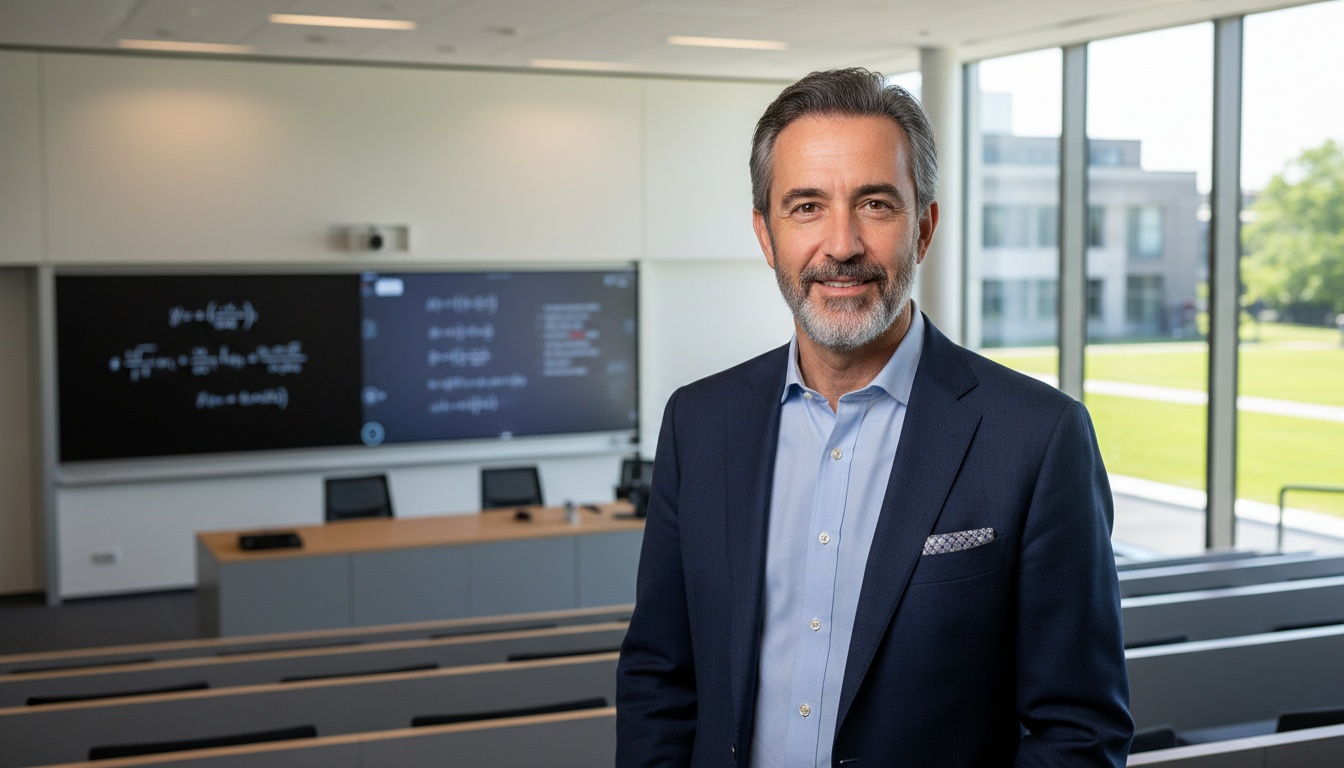
Who Is Mike Hill? His MIT Connection and Why It Matters
Mike Hill is the Ordway Professor of Mathematics at the University of Minnesota — a named chair that places him among the most distinguished faculty in his department.
His academic trajectory:
- PhD, University of Virginia
- J.W. Gibbs Instructor, Yale University
- Assistant Professor, University of Virginia
- Associate Professor, University of Virginia
- Professor, University of Virginia
- Professor, University of Oregon
- Current: Ordway Professor, University of Minnesota
He holds an active NSF grant. His faculty page is at mikehill.math.umn.edu — worth a look if your student is researching the field.
The MIT connection isn't just biographical. Hill has delivered the Rothschild Lecture at MIT — a prestigious invited talk that puts a mathematician in front of the department's full intellectual weight. In pure mathematics, reputation travels through exactly these channels.
Hill's work extends into editorial roles. He serves as managing editor for Advances in Mathematics. He also sits on the Nominating Committee for the American Mathematical Society (AMS).
Perhaps most distinctively, Hill co-founded Spectra, an association for LGBTQ+ mathematicians. His visibility as an openly queer mathematician at the Ordway Professor level has made him a reference point in conversations about inclusive mathematics across elite departments — including MIT's own.
Hill's Research in Equivariant Topology
Equivariant topology studies spaces that carry a group symmetry, asking how that symmetry constrains the shape and structure of the space. Think of it as topology with extra rules baked in.
Hill's most celebrated contribution is the Hill-Hopkins-Ravenel theorem, which resolved the Kervaire invariant problem — a question that had been open for roughly 50 years in algebraic topology. This isn't research that becomes a product or a startup. It's research that permanently changes what mathematicians know is true — which is the only metric that matters in pure mathematics. The result, proved with Michael Hopkins and Doug Ravenel, changed what algebraic topologists believed was possible. That's exactly the type of work MIT's mathematics department prizes.
MIT Mathematics Department: Programs, Rankings, and Specializations
MIT Mathematics consistently ranks in the top three globally (QS World University Rankings, Times Higher Education). That reflects faculty output, PhD placement rates, and the density of landmark results the department has produced over decades. The Fields Medal count alone is a conversation-stopper.
The department runs two main tracks: pure mathematics and applied mathematics. Both are rigorous. Neither is a fallback for the other.
Pure vs. Applied Mathematics at MIT
Pure mathematics at MIT means algebraic topology, number theory, geometry, and representation theory. No immediate application required — and often none intended. Careers from this track run toward academia, research institutes, and occasionally quantitative finance roles where abstract pattern recognition matters.
Applied mathematics covers probability, computation, data science, fluid dynamics, and mathematical biology. MIT's applied math graduates move into tech, policy, biotech, and financial engineering at a high rate.
The honest answer to "which should my student choose?" is: MIT lets you blend them. The undergraduate mathematics program is structured around 18.x MIT courses — numbered sequences that let students move between pure and applied threads depending on where their curiosity lands.
Graduate students in the PhD mathematics program often straddle both, especially as research mathematics increasingly touches machine learning and algorithmic theory.
MIT's pipeline to prize-winning research isn't luck. It's what happens when a department selects for people who treat mathematics as a vocation, not a credential.
MIT Mathematics vs. Harvard, Princeton, and Stanford
This question comes up constantly. The honest answer: all four departments are exceptional, and for pure mathematics research, the differences at the faculty level are marginal.
What makes MIT specifically different for undergraduates is the applied-pure integration. MIT's 18.x course flexibility lets a student move between real analysis and machine learning theory within the same degree. The proximity to CSAIL (MIT's Computer Science and Artificial Intelligence Laboratory) and the broader MIT engineering ecosystem means that even pure mathematics students are constantly brushing up against applied problems.
For a student who isn't certain yet whether they want to do algebraic topology or algorithmic theory (and honestly, for most 17-year-olds, that uncertainty is completely normal) — that flexibility is worth something real.
Stanford and Chicago represent interesting poles of this spectrum. Stanford's mathematics department is strong across both pure and applied areas. Chicago is famously rigorous, famously pure, and known for a demanding culture that challenges students hard in the first year. MIT sits in a distinctive position, which is part of why it attracts such a wide range of mathematics students.
| MIT | Harvard / Princeton | Stanford | Chicago | |
|---|---|---|---|---|
| Undergraduate focus | Applied-pure blend | Strong pure tradition | Notable applied strengths | Primarily pure |
| Course flexibility | High (18.x system) | Moderate | Moderate | Low |
| Adjacent resources | CSAIL, engineering ecosystem | FAS, broader humanities | Engineering, industry | Humanities-focused |
| Culture | Collaborative, interdisciplinary | Traditional | Industry-adjacent | Rigorous, filtering |
Not sure which program fits your student's profile? See how we help Vancouver students choose and apply.
U Hill MIT Math Admissions: Requirements, Acceptance Rates, and What Officers Look For
MIT's overall acceptance rate sits below 4% in recent admissions cycles. For students targeting the mathematics department specifically, the pool is even more self-selected. These are students who've often spent years in competition mathematics before submitting an application.
What does a competitive mathematics applicant look like?
- Strong AMC 10/12 scores (the higher the better — AIME qualification is a recognized benchmark, though thresholds vary by year)
- AIME qualification
- USAMO experience (a meaningful differentiator, though not universal among admitted students)
- Research exposure through RSI (Research Science Institute) or MIT PRIMES
- Proof-based coursework depth — real analysis or abstract algebra completed in high school
Coursework depth matters more than breadth. A student who has genuinely worked through real analysis or abstract algebra in high school signals something that a long course list doesn't.
Does a 750 SAT Math Score Work for MIT?
A 750 SAT math score is on the lower end of MIT's competitive range. MIT's middle 50% SAT math has typically sat between 780 and 800 in recent admissions cycles, which means a 750 puts a student in the bottom quartile of admitted applicants.
That said, the SAT math score is one signal, not the whole picture. Admissions officers are reading for intellectual curiosity and demonstrated depth. A student with a 780 SAT math and a published result in a math journal is more compelling than a student with an 800 and nothing else. Students aiming for top scores should read about what 1570+ SAT coaching actually looks like.
Here's the contrarian point most people won't say aloud: for MIT Mathematics specifically, competition results probably matter more than SAT scores.
We've seen students from Burnaby North and Sentinel with perfect SAT math scores who didn't get in. And students with 790s who did — because the 790 student had USAMO results and a summer at a research program.
The SAT is a floor, not a ceiling.

Who Are MIT's Top Math Faculty? (And Why Strang Still Matters Even Though He Retired)
Short answer on Strang: no, not actively. He stepped back from the classroom around 2023. His 18.06 linear algebra lectures on MIT OpenCourseWare are still live, still free, and widely regarded as the clearest explanation of the subject available. His influence on mathematics education is, if anything, growing. Formally, the man retired from teaching. Practically, he never stopped mattering.
Other faculty worth knowing: Ankur Moitra works at the intersection of algorithms and statistics. His work on learning theory has shaped how the department thinks about applied research.
Jeremy Hahn, a current MIT faculty member, received a 2024 Clay Research Award — shared with Robert Burklund, Ishan Levy, and Tomer Schlank. The work is in homotopy theory, the same broad territory where Hill's equivariant topology lives.
Mike Hill's Rothschild Lecture at MIT placed him in direct conversation with this faculty lineage. His graduate years at UVA and his deep engagement with the MIT mathematical community mean he knows the department's culture well. When he speaks there now, it's not as an outsider.
Does MIT Math Have Tutoring and Support Systems?
Yes. MIT has a genuine culture of mathematical collaboration, including peer tutoring through the MIT Learning Communities program, active office hours, and a departmental culture where asking for help is normalized rather than stigmatized. Students typically declare their mathematics major after working through the 18.x gateway courses, with advising support available throughout to help them assess fit before committing to the specialization.
Specifically: 18.01 and 18.02 are gateway courses. Students who struggle there have real support options before committing to the mathematics major. That's different from the sink-or-swim reputation MIT sometimes gets in popular mythology.
Diversity, Inclusion, and the Future of Mathematics at MIT
The faculty picture at MIT isn't complete without addressing who's in the room — and who's been historically absent.
Here's what Hill has said about founding Spectra: the goal wasn't to create a support group. It was to make visible what was already there — queer mathematicians doing serious work, just without the visibility that changes a grad student's calculation about whether to stay in the field. That's a different argument than "diversity is good." It's an argument about information and role models.
Spectra runs mentorship programs, conference events, and visibility initiatives specifically for LGBTQ+ mathematicians at every career stage. For a graduate student at MIT wondering whether they belong in the room, knowing that an Ordway Professor at a major research university is openly queer and doing landmark work matters. Inclusive mathematics isn't a slogan here. It's a structural argument about who stays in the pipeline.
MIT's mathematics department has its own diversity initiatives, though the department — like most elite math programs — still has work to do on representation at the faculty level. Social justice mathematics as a formal research area asks harder questions. How does mathematical modeling encode bias? How do we build more equitable algorithms? How should statistical models account for structural inequity in the data they're trained on? Hill's advocacy sits adjacent to this work, even if his primary research is in pure topology.
For families in Richmond or Coquitlam watching their students move toward mathematics: the field is changing faster than most high school math departments reflect. The image of mathematics as a solitary, culturally neutral discipline is giving way to something more self-aware. Hill represents that shift at the highest level.
Your Grade-by-Grade Roadmap to MIT Mathematics (And What Comes After)
Start in grade 9. Seriously — students who reach MIT mathematics programs usually began competition math before high school.
Grades 9–10: Write the AMC 10. Take the most advanced mathematics course your school offers — at U Hill, Sentinel, or Magee, that often means getting into AP Calculus BC early. Start working through proof-based resources independently. This is also when a multi-year SAT prep roadmap becomes relevant. Not because the SAT is the priority, but because building the habit of structured preparation early pays off across every application component.
Grades 11–12: Aim for AIME qualification. Apply to summer research programs:
- RSI (Research Science Institute) — most competitive
- MIT PRIMES — specifically for high schoolers doing real math research alongside MIT faculty and graduate students (acceptance is extremely competitive; the number of spots varies by year and program track)
The MIT PRIMES application is worth doing even if your student doesn't get in. It forces them to articulate a mathematical interest clearly, which is exactly what MIT admissions wants to see.
MIT OpenCourseWare is free and genuinely excellent. The 18.01 and 18.02 sequences are available in full. Khan Academy covers foundational gaps. Neither replaces proof-based training, but both help.
What Do MIT Mathematics Graduates Actually Do?
MIT mathematics graduates pursue real careers across multiple sectors: academia and research institutes, quantitative finance (firms that hire for pattern recognition and probabilistic reasoning at scale), tech companies running machine learning research teams, and policy or data science roles in government and research organizations. The alumni network opens doors. And the career outcomes speak for themselves.
Is an MIT math degree worth it? Flip the question: if your student is the kind of person who loses track of time working through a proof, MIT mathematics is worth pursuing regardless of the career outcome. The training reshapes how you think. The network is real.
Key Takeaways
- Mike Hill is the Ordway Professor at UMN, who completed his PhD at the University of Virginia and is co-founder of Spectra — an association for LGBTQ+ mathematicians
- His Hill-Hopkins-Ravenel theorem resolved the 50-year-old Kervaire invariant problem in equivariant topology
- MIT Mathematics runs distinct pure and applied tracks, but undergraduates can blend both through the 18.x course system
- A 750 SAT math score is on the lower end of MIT's competitive range; 780–800 has been typical for admitted students in recent cycles, but competition results carry more weight than most families expect
- Gilbert Strang retired from active teaching around 2023; his OpenCourseWare lectures remain essential resources
- MIT's mathematics department has a strong track record of producing prize-winning researchers, confirming the depth of its research pipeline
- Compared to Harvard, Princeton, and Stanford, MIT stands out for its applied-pure integration, course flexibility, and proximity to its engineering and computing ecosystem
- Preparation for MIT math should start in grade 9, with AMC competition math, proof-based coursework, and summer research programs like MIT PRIMES
Ivy100 has helped students from University Hill, Sentinel, Burnaby North, and across the Lower Mainland navigate applications to MIT and other top mathematics programs. If your student is aiming for MIT Mathematics — or any top-ranked mathematics program — the preparation timeline matters more than most families realize. Book a free consultation to map out a realistic roadmap from where your student is now to where they want to be.