Stanford University Admissions 2026: Complete Guide
Stanford's acceptance rate in recent admissions cycles has hovered around 3.7%. Read that again. One application in twenty-seven. This guide covers what applicants need to know about Stanford University admissions — deadlines, required components, financial aid, and what holistic review actually means when an officer is reading your file at 11 p.m. on a Tuesday.
A note on timing: the 2025–26 application cycle — REA deadline November 1, 2025; RD deadline January 2, 2026 — was for students enrolling in fall 2026, and is now complete. Admission decisions for Regular Decision applicants were released in late March to early April 2026. If you're reading this now, you're either processing a result or planning ahead for the 2026–27 cycle. Either way, the information here applies.
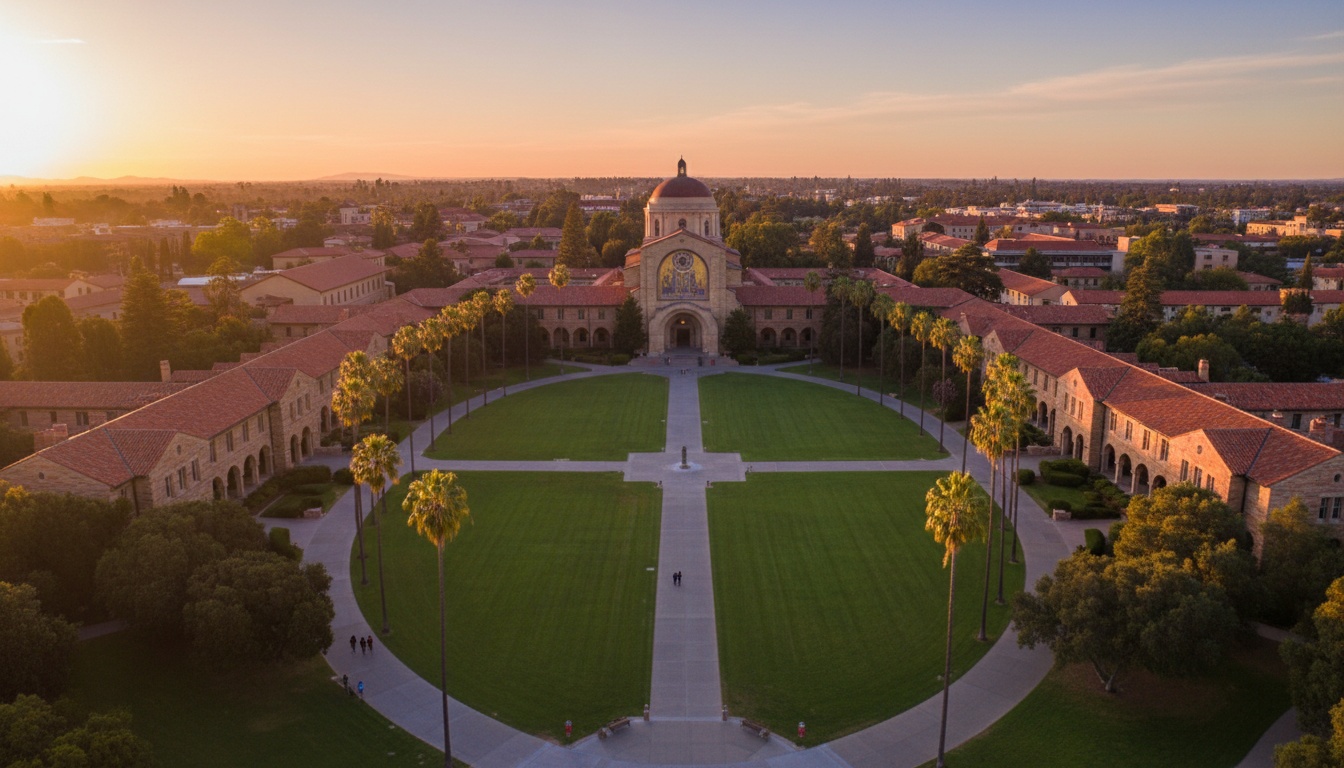
Stanford Admissions: Overview and Acceptance Rate
Before anything else, let's clear up a terminology issue. "Class of 2026" refers to students who matriculated in fall 2022 and graduated from Stanford in spring 2026. Students who applied in the 2025–26 cycle enrolled in fall 2026 — they'll graduate in 2030.
Here's what the numbers actually look like: Stanford received roughly 57,000 applications in recent admissions cycles and admitted approximately 2,100 students, with an enrolled class of around 1,700. Even among admitted students, a notable share chose to go elsewhere.
The undergraduate admission process at Stanford is genuinely holistic — but that word gets misused constantly. Academic statistics are the floor, not the ceiling. The students who get in aren't just the ones with the highest SAT scores. They're the ones who made admissions officers stop and think.
What Was the Acceptance Rate for Stanford in 2026?
Stanford's acceptance rate in recent cycles has been approximately 3.7% overall. Restrictive Early Action historically runs 7–9%; Regular Decision drops to roughly 2–3%. The middle 50% SAT range is 1500–1570; ACT 34–36. Median unweighted GPA among admitted students is typically reported at 3.96 or above, though Stanford does not publish this figure officially.
Applying REA doesn't guarantee admission, but it does offer statistically better odds — and signals real interest. For context: Stanford's ~3.7% rate is comparable to Harvard (~3.6%) and more selective than MIT (~4.7%) based on recently reported cycles. But raw acceptance rates don't capture fit, major, or profile.
Is Stanford or MIT Harder to Get Into?
By acceptance rate, Stanford (~3.7%) is more selective than MIT (~4.7%) based on recently reported data. But "harder" is the wrong frame.
Both schools require exceptional academic achievement and real extracurricular impact. A student with a strong engineering research background might find MIT's culture a better match. Someone with unusual intellectual breadth might fit Stanford's more interdisciplinary environment.
The honest advice: visit. Stanford's culture is more open and cross-disciplinary; MIT's is more intensely technical. The right school is the one where you'd actually thrive — not the one with the lower acceptance rate.
Who Actually Gets In? A Look at the Stanford Class Profile
Behind the ~3.7% acceptance rate is a deliberately constructed class — here's what it actually looks like.
Roughly 20% of admitted students are first-generation college students. International students make up approximately 10% of each class. Geographic spread is intentional — Stanford actively recruits from all 50 states and over 50 countries.
Recruited athletes represent approximately 17% of admitted students. That's public data, and it matters: athletic recruitment is one of the few structured pathways where the admission process works differently.
Stanford announced in 2024 that it would end legacy admissions, effective for the 2025–26 application cycle. First-generation students and those from under-resourced schools receive contextual review — meaning a 3.8 GPA from a school with no AP courses reads differently than a 3.8 from a school with 30.
The class is not built from identical profiles. It's built from people who are each unusual in a specific way.
Application Requirements and Components
Now that you understand who gets in, here's exactly what you need to submit.
Stanford uses the Common App, which means you can reuse most of your application materials across multiple schools — saving hours of redundant work. The application fee is $90. Here's what first-year applicants must submit:
- Common App form plus Stanford-specific short-answer questions
- Official high school transcripts
- School counselor letter of recommendation
- Two teacher letters of recommendation (from different core academic subjects)
- SAT or ACT scores (required; verify current requirements for the 2026–27 cycle on Stanford's admissions website)
- Stanford short essays and longer essay responses
- Arts portfolio (optional, for applicants with significant arts achievement)
One thing that surprises families: Stanford reserves the right to render a final admission decision even if all application pieces haven't arrived. An incomplete application doesn't buy extra time — it just creates risk.
Per Stanford's official admissions page, you may apply for first-year admission only once. If you are not admitted, you may apply for transfer admission in a subsequent year. That policy has real strategic implications if you're considering reapplying after a deferral or denial.
Test policy: Stanford reinstated its standardized testing requirement beginning with the 2024–25 application cycle (for students entering fall 2025), and the requirement remains in place for the 2025–26 cycle. SAT or ACT scores are required for first-year applicants. If you're a student at a BC school like Magee or Sentinel planning ahead for the next cycle, factor this into your timeline. Vancouver test centres at UBC and Richmond sites book up fast for October and November sittings.
International students must submit TOEFL or IELTS scores if English isn't their primary language of instruction. Credential evaluation requirements vary by country — check Stanford's international applicant page directly.
Transfer applicants face a separate deadline, additional college transcripts, and an acceptance rate around 1–2%. Waitlist admission is also rare — Stanford does not typically disclose specific waitlist admission numbers, and the count varies significantly year to year.
Interviews: Stanford does not conduct alumni or admissions interviews for most applicants. Your application materials carry the full weight.
Stanford Essays: What to Expect
Stanford requires three short-answer responses — roughly 250 words each — covering intellectual curiosity, a meaningful activity, and personal identity. The 650-word Common App personal essay is also required.
Stanford's prompts include the well-known "roommate essay": What would your future roommate want to know about you? This is one of Stanford's most distinctive questions and one of the most searched. It's not asking for your resume — it's asking who you actually are when nobody's evaluating you.
The "intellectual vitality" prompt is equally distinctive. Stanford uses that phrase deliberately — they want to see curiosity that exists outside of coursework, not a list of AP classes.
The short answers are where many strong applicants stumble. Generic responses about "passion for science" or "leadership through sports" don't move the needle. What book genuinely changed how you think? Not what sounds impressive — what actually did?
Letters of Recommendation: Who to Ask
Two teacher recommendations from core academic subjects are required, plus the counselor rec. An optional additional letter from a coach, mentor, or employer is permitted.
The quality of the relationship matters far more than the prestige of the recommender. A teacher who watched you spend lunch hours re-deriving proofs for fun will write a better letter than a department head who barely knows your name.
Important Deadlines and Decision Dates
| Application Milestone | 2025–26 Deadline |
|---|---|
| Restrictive Early Action deadline | November 1, 2025 |
| REA decision release | Mid-December 2025 |
| Regular Decision deadline | January 2, 2026 |
| RD decision release | Late March / Early April 2026 |
| Enrollment deposit deadline | May 1, 2026 |
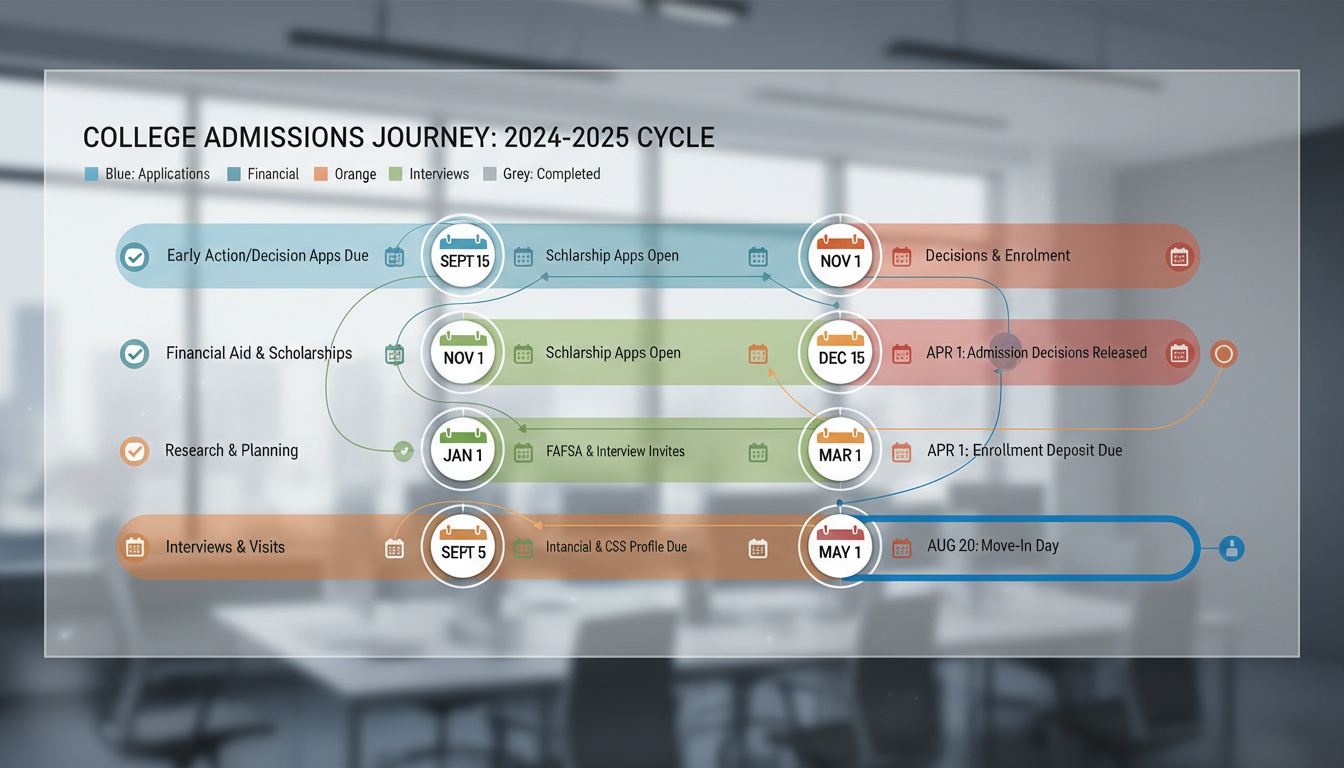
REA comes with a hard restriction: you may not apply Early Decision or Early Action to any other private university simultaneously. US public universities (UCLA, UMichigan) and non-binding EA programs are permitted. Read the fine print before you submit.
Deferred REA applicants automatically enter the Regular Decision pool. If you're deferred, submit a Letter of Continued Interest (LOCI) — one page, concise, adding only genuinely new information. Waitlist decisions typically come in May or June; Stanford does not typically disclose specific waitlist admission numbers, and the count varies significantly year to year.
The enrollment deposit deadline is May 1. Once you pay it, you're committed — withdrawing from other schools at that point is expected.
For comparison on how peer schools structure their timelines, see our Princeton University admissions guide for Canadian applicants.
Can You Go to Stanford for Free If Your Family Makes Under $200,000?
Yes — though the exact income thresholds and coverage levels can shift year to year and depend on assets. This is one of the most underappreciated facts about Stanford's financial aid program.
Stanford meets 100% of demonstrated financial need for all admitted students, with no loans required — meaning your aid package is grants, not debt you'll repay after graduation. Here's how the income thresholds have worked in recent cycles (verify current figures directly with Stanford's financial aid office):
- Under $65,000/year: Families with typical assets typically pay no tuition, room, or board
- $65,000–$150,000: Tuition covered or substantially reduced, with reduced room and board contribution depending on income level
- $150,000–$200,000: Substantial grant aid; families above the $150,000 tuition threshold contribute toward tuition based on individual need calculation
- Above $200,000: Aid still available based on individual need calculation and assets
Verify current thresholds directly with Stanford's financial aid office, as these figures can shift year to year.
The average need-based aid package has been approximately $68,000 per year in recent academic years — which often makes Stanford cheaper than Canadian universities once financial aid is factored in.
In our work with students from Richmond and Burnaby applying to US schools, the financial aid surprise is the most common — and the most welcome. One family from Coquitlam we worked with assumed Stanford was financially out of reach. Their net price after aid: $8,400 per year. UBC's domestic tuition has been over $6,000 in recent years — before housing. This isn't an outlier — many BC families discover Stanford's net cost is lower than Canadian universities once financial aid is factored in.
International students: Stanford meets 100% of demonstrated financial need for admitted international students as well. That's rare among US universities.
Use Stanford's net price calculator for a personalized estimate before assuming you can't afford it.
How to Apply for Financial Aid at Stanford
Submit both the CSS Profile and FAFSA by the same deadline as your application — November 1 for REA, January 2 for RD. Aid is entirely need-based. There are no merit scholarships. No separate scholarship application is needed.
How Does Stanford's Holistic Review Actually Work?
Academic excellence is the baseline, not the differentiator. Every applicant in the pool has near-perfect grades and strong test scores. Full stop.
The real question Stanford is asking: what does this person do with their mind when nobody's grading them?
Here's how admissions officers evaluate applicants beyond the numbers — across roughly five dimensions, based on Stanford's own public statements:
- Intellectual vitality — curiosity that shows up in your search history at midnight, not just your transcript
- Extracurricular depth — real impact and leadership, not a long list of clubs
- Personal qualities — character, resilience, how you treat people
- Context — family background, school resources, obstacles you've faced
- Contribution to campus — what you'll add to Stanford's community
This also means a single weak test score won't disqualify you if you excel in other areas. But don't read that as permission to ignore scores — the 25th percentile is still 1500.
If you're unsure how to identify and articulate your own spike, book a Stanford admissions consultation — that's where most students get stuck.
The Spike Advantage
Here's the contrarian point most guides won't make: being "well-rounded" is actually a liability at Stanford. Admissions officers read thousands of applications from students who are good at everything and passionate about nothing in particular.
The students who get in tend to have a spike.
One area where they've gone unusually deep — and can demonstrate real impact or unusual thinking. A student from Burnaby North who spent three years building water purification systems for rural BC communities is more interesting than someone with 14 clubs and a 4.0. That student has a story. The other has a list.
Can you get into Stanford with a 1400 SAT? Technically possible, but statistically very unlikely. The 25th percentile is 1500; a 1400 falls below that threshold. Extraordinary circumstances or exceptional talent in a specific area could offset lower scores, but applicants should be realistic.
For a deeper look at how peer institutions approach holistic review, our Harvard University admissions 2026 complete guide covers similar ground.
What Are the Most Common Stanford Application Mistakes?
With that framework in mind, here are the errors that derail strong applications.
Most mistakes aren't dramatic. They're quiet — the kind that make an admissions officer move on without quite knowing why.
Mistake 1: Writing a Generic "Why Stanford" Essay
"World-class faculty" is a red flag. Every applicant writes it. Name the actual professor whose research you've read. Name the specific lab. Name the course that doesn't exist at any other school.
Students at IB programs like Crofton House or West Point Grey Academy often have strong academic profiles and still write essays that could apply to any top-ten university. That's the mistake.
Mistake 2: Listing Activities Without Depth
Stanford isn't counting activities. It's looking for evidence that you committed to something hard enough to get good at it. Fourteen clubs with no depth on any of them signals the opposite.
Mistake 3: A Counselor Rec From Someone Who Doesn't Know You
A letter from a department head who knows your name from a spreadsheet is worse than no letter at all. The counselor rec should come from someone who can speak to who you are, not just what you've done.
Mistake 4: Applying REA Without Reading the Restriction
You cannot apply Early Decision or Early Action to any other private university simultaneously. Every year, students apply REA to Stanford and ED to another school without realizing the conflict. Read the fine print before you submit.
Mistake 5: Treating the Roommate Essay Like a Resume
The question is designed to get past your curated self. Students who write about their leadership roles or academic achievements here are missing the point entirely. More on this below.
How to Strengthen Your Stanford Application
On Essays
Here's the mistake that kills more Stanford applications than any other — opening with a thesis. "I've always loved math" tells an admissions officer nothing. "The proof was wrong, and I knew it at 2 a.m. on a Tuesday" does. Start in the scene. The argument can come later.
For essay strategy comparisons across top schools, our Yale University admissions 2026 guide has useful parallel framing.
On the Roommate Essay
Don't perform. Write the thing you'd actually tell a stranger on move-in day — the weird hobby, the strong opinion, the thing that makes you you. It's asking who you actually are, not what you've accomplished.
On Activities
One deep commitment outweighs ten surface-level involvements. Quantify your impact where honest — not inflated, but specific. "Organized club meetings" is weak. "Grew robotics team from 8 to 34 members, placed 3rd at BC provincials" is not.
On Recommendations
Give your recommenders a brag sheet with specific anecdotes they can reference. Waive your right to view the letters. Recommenders write more candidly when they know you won't read it — and admissions officers know this too.
On Test Scores
Target 1500+ SAT or 34+ ACT. Anything within or above the middle 50% range strengthens your file. Anything below the 25th percentile requires an explanation elsewhere in the application.
On Research
Reference specific programs, professors, or research labs in your essays. Generic enthusiasm is not a differentiator.
If You're Deferred
Submit a one-page LOCI by late January. Include only meaningful new information — a significant award, a new research publication, a notable update. Don't restate your original application. One page. New information only.
Frequently Asked Questions About Stanford Admissions
Does Stanford offer interviews? No. Stanford does not conduct alumni or admissions interviews for most applicants. Your application materials carry the full weight.
Is Stanford test-optional? No. Stanford reinstated its standardized testing requirement beginning with the 2024–25 application cycle (for students entering fall 2025), and the requirement remains in place for the 2025–26 cycle. SAT or ACT scores are required for first-year applicants. Check Stanford's admissions website for the most current policy as you plan ahead.
When does Stanford release Regular Decision results? For the 2025–26 cycle, results were released in late March to early April 2026. Stanford typically follows a similar timeline each year — check Stanford's admissions website for the official release date as it approaches.
Can international students receive financial aid? Yes. Stanford meets 100% of demonstrated financial need for admitted international students, which is uncommon among US universities.
What is Stanford's transfer acceptance rate? Approximately 1–2%, lower than the first-year rate. Transfer admission to Stanford is extremely competitive.
How many students does Stanford admit each year? Approximately 2,100–2,200 students per class, with enrolled class sizes typically around 1,700.
Can I reapply if I wasn't admitted? Per Stanford's official admissions page, you may apply for first-year admission only once. If you are not admitted, you may apply for transfer admission in a subsequent year.
What happens if I'm waitlisted? Waitlist admission decisions typically come in May or June. Stanford does not typically disclose specific waitlist admission numbers, and the count varies significantly year to year — and there's no guarantee the list will be used at all.
What is the Stanford roommate essay? One of Stanford's short-answer prompts asks: What would your future roommate want to know about you? It's asking who you actually are — not what you've accomplished. Write the thing you'd actually tell a stranger on move-in day: the weird hobby, the strong opinion, the thing that makes you you.
Key Takeaways
- Stanford's acceptance rate in recent admissions cycles has been approximately 3.7% overall; REA historically runs 7–9%
- Middle 50% SAT scores: 1500–1570; ACT: 34–36; median unweighted GPA typically reported at 3.96+
- The REA deadline for the 2025–26 cycle was November 1, 2025; RD closed January 2, 2026 — for students enrolling in fall 2026
- Stanford reinstated its SAT or ACT requirement beginning with the 2024–25 application cycle (for students entering fall 2025) — the test-optional period has ended
- Stanford ended legacy admissions beginning with the 2025–26 application cycle
- Financial aid is need-based only; families earning under $65,000/year with typical assets typically pay nothing for tuition, room, or board; families earning up to $150,000 with typical assets typically pay no tuition
- Identifying your "spike" — the one area of unusual depth — is the single most important positioning decision you'll make
- Holistic review means intellectual curiosity and depth of commitment matter as much as your GPA
- Per Stanford's official policy, you may apply for first-year admission only once; if not admitted, you may apply for transfer admission in a subsequent year
- The roommate essay and intellectual vitality prompt are distinctive to Stanford — treat them that way
If you've read this far, you already know the standard advice isn't enough. The students who get into Stanford aren't the ones who followed a checklist — they're the ones who had something real to say. If you want help figuring out what that is for you, book a Stanford admissions consultation — we'll start with your actual story, not a template.