SAT Two-Month Plan for Grade 12: A Week-by-Week Guide That Actually Works in 2026
Two months is enough time to gain 100–150 points — but only if you know what you're actually fixing from Day 1. Most Grade 12 students who start SAT prep in September spend the first three weeks doing random practice questions and wonder why their score barely moves.
This guide gives you that structure. Start here, follow the SAT prep schedule, and you'll enter your fall 2026 test date with a real plan behind you.
Is Two Months Enough? Realistic Score Expectations for Grade 12
Yes — if you start with a diagnostic test and follow a structured plan. Score improvement depends on your starting point: students below 1000 can gain 150–200 points; the 1000–1200 range typically gains 100–150 points; 1200–1400 gains 80–120 points; above 1400 gains 40–80 points.
These ranges reflect commonly reported outcomes among structured SAT prep programs and are consistent with College Board's published score distribution data — but individual results vary based on study consistency, starting point, and available prep time.
We've worked with students from Burnaby North, Sentinel, and U Hill through two-month intensive SAT prep windows. The gains are real. One student from Sentinel started at 1050 in early August, followed this plan, and scored 1210 in October — a 160-point gain. Her single biggest lever: the error log. She caught a pattern where she was consistently misreading "which of the following is NOT" questions, costing her 4–6 points per section.
Above 1400, you're fighting for incremental gains. Those points require surgical focus on specific error patterns — 40–80 points is a realistic ceiling.
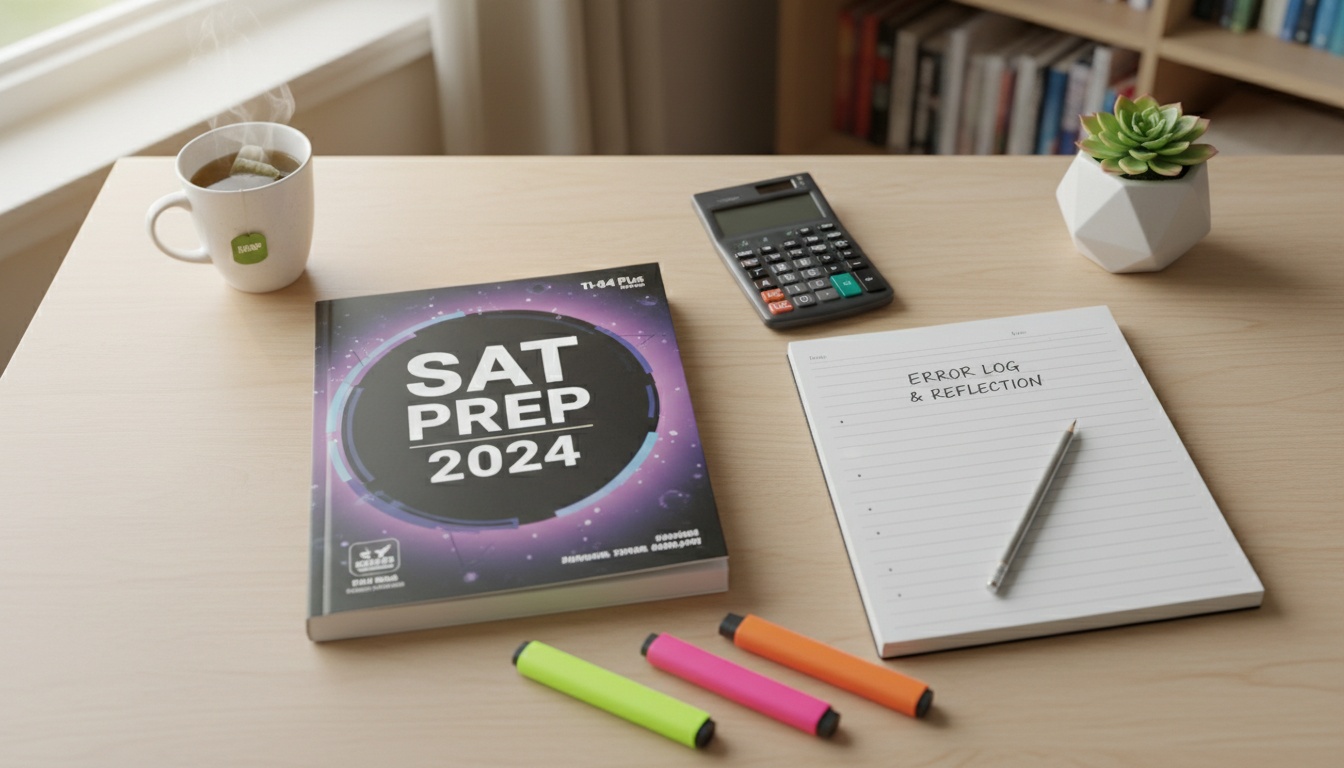
Grade 12 is the hardest time to prep. Not because the SAT gets harder, but because your calendar is already full.
College applications, teacher rec letters, and BC graduation requirements all compete for the same hours. Students balancing APs or IB coursework at schools like York House or Crofton House should target the middle of those improvement ranges, not the ceiling.
Test date selection matters more than people realize. For students applying through Common App with a November 1 early decision deadline, an October 2026 SAT sitting is the target. That means prep starts no later than the first week of August.
UC deadlines cluster around November 30, giving you slightly more flexibility — a November test date works if you start mid-August. Vancouver test centres fill up; register early, before you even open a practice test.
Study consistency, not calendar weeks, drives score gains.
SAT Diagnostic Assessment: Know Your Starting Point Before Week 1
Before you write a single study schedule, take a full-length official Digital SAT practice test. Not a short quiz. Not a section sampler. A full test.
The College Board's Bluebook app includes free full-length practice tests that simulate the actual Digital SAT format. (And yes, I mean the actual Bluebook app — not a third-party simulator that doesn't replicate the adaptive module structure.) Khan Academy SAT also offers free diagnostic options through the official College Board partnership.
How Long Does the Diagnostic Take?
A full diagnostic takes roughly 2.5 hours to complete. Budget additional time — typically 60–90 minutes — to review answers and read explanations. Most students underestimate how long the review takes and close the tab after 20 minutes. That's a Saturday morning investment that shapes the next eight weeks.
How to Interpret Your Diagnostic Score Report
Your College Board score report includes section scores, subscores, and cross-test scores. Focus on subscores — they reveal your exact weak spots. For Math, check algebra/linear equations, advanced math, and data analysis separately. For Reading & Writing, review Command of Evidence, Words in Context, and Standard English Conventions performance. Your three weakest subscores per section become your study priorities.
Most students look at their total score, feel something, and close the tab. That's the wrong move.
For Math, flag your performance on algebra/linear equations, advanced math, and data analysis separately. For Reading & Writing, check your scores on Command of Evidence, Words in Context, and Standard English Conventions questions. Your three weakest subscores per section become your study priorities.
Use those results to set your daily time commitment. These are general guidelines that vary by student: if you're within 80 points of your goal, 45 minutes daily is often enough. A 100–150 point gap typically calls for 60 minutes. Anything larger generally means you need the full 90 minutes — though your own pace and starting point will shape the right commitment for you.
Start tracking errors in a dedicated log from Day 1 — a simple Google Doc works fine. We have a free SAT error log template you can copy and use immediately.
Your SAT Two-Month Plan: Grade 12 Week-by-Week Breakdown
The core commitment is five days of focused study per week, with every other Saturday reserved for a full practice test. Here's how the eight weeks break down.

Weeks 1–2: Foundation. Study 45–60 minutes daily. Return to your three weakest diagnostic areas and work through them concept by concept. No timed pressure yet. This is the phase where most students want to skip ahead — resist it.
Weeks 3–4: Skill Building. Bump to 60 minutes daily. Introduce timed mini-sections (one module at a time). Start tracking errors in a dedicated log — a simple Google Doc works fine.
Weeks 5–6: Practice Integration. Move to 60–75 minutes. Run full timed sections and spend equal time on error analysis afterward. The review session matters as much as the practice itself.
Weeks 7–8: Test Simulation. Full practice tests every weekend — and I mean full, not "I did one section and called it a day." Follow each test with 75–90 minutes of focused review on weekdays. This is where eight weeks of error logging starts paying dividends.
Here's what a typical Monday looks like:
- 20 min: Math concept review (one topic, worked examples)
- 20 min: 8–10 practice problems on that topic
- 10 min: Error log — write down every wrong answer and why it was wrong
That 10-minute error log is the most skipped step. It's also the highest-leverage one.
Here's what a useful entry looks like: "Q14 (Words in Context): Chose 'demonstrate' — correct answer was 'suggest.' Lesson: re-read the sentence with each answer choice substituted before selecting. Pattern: I'm rushing this step." Thirty seconds per error. Eight weeks of entries. You'll start seeing your own patterns by Week 4.
If a school deadline or senior event lands mid-plan, shift your practice test to the following weekend. Don't try to compress two weeks into one — that's how burnout starts.
Math Section — The Skill Order That Moves Your Score Fastest
Weeks 1–2: Algebra first — it's the highest-frequency topic on the Official Digital SAT, and if you're weak here, everything else suffers.
Working through 75–100 algebra practice questions typically takes several hours total, though pace varies by student. Spread that across four days, pairing each session with a short review of worked examples before you start the problems.
Weeks 3–4: Shift to advanced math. Nonlinear functions require substantial practice — plan on 80–100 questions spread across multiple sessions, and don't rush it. Word problems and data analysis follow: percentages, ratios, proportional relationships, statistics, and probability each need dedicated practice time that will vary based on your familiarity with the material.
Weeks 5–8: Mixed practice across all categories, with deliberate attention to calculator vs. no-calculator strategy and timed drills under real test conditions. For a deeper breakdown of the math section specifically, see our guide on how to maximize your Digital SAT Math score.
Reading & Writing Section — What to Focus on Each Week
Weeks 1–2: Command of Evidence and Words in Context. These two question types appear throughout the section, so getting them right early compounds. Plan on working through roughly 40 Command of Evidence questions and 50 Words in Context questions — the time this takes will vary by student. Vocabulary review (around 100 high-frequency words) is best done in small chunks over ten days rather than all at once.
Weeks 3–4: Rhetoric, transitions, and Standard English Conventions. Work through transition words and complete practice questions on that topic before moving to punctuation and grammar (Boundaries questions). Build fluency across 100–150 practice questions in this phase.
Weeks 5–8: Full passage timing using Khan Academy SAT modules and process of elimination strategies. Aim for two Reading & Writing practice modules per week in this phase.
How to Balance SAT Prep with School, Applications, and Senior Year Life Without Sacrificing Your GPA
Here's the part most SAT guides skip entirely.
The frustration is real. You're trying to write a college essay about your most meaningful experience while simultaneously memorizing the difference between a semicolon and an em dash. Both matter. Neither can wait.
The solution isn't time management advice. It's honest priority mapping.
Sit down at the start of your two-month window and mark every high-load week on a calendar: midterms, application deadlines, tournament weekends, school performances. Those are your reduced-effort weeks — and in Grade 12, that's basically every week with a major deadline. Mark them before they arrive, not after you've already burned out.
If you're not sure how to map your specific school calendar against your application deadlines, a 30-minute consultation can do that work in one session.
During normal weeks, stick to the full schedule. During high-load weeks, drop to micro-sessions: 20–25 minutes of Khan Academy SAT drills, focused only on your single weakest skill area. Skipping entirely is the enemy of study consistency. Twenty minutes isn't.
Burnout Prevention: What Actually Works in Grade 12
Cap your combined study-plus-homework time at 3.5 hours per evening. Past that threshold, retention drops and you're just logging hours.
Use 25-minute Pomodoro blocks for SAT sessions — set a timer, close everything else, then take a real 5-minute break. This structure prevents the mental fatigue that kills retention after 45+ minutes of continuous study. If you're not familiar with the method, our study session structure guide walks through exactly how to set it up.
The difference between productive fatigue (tired but satisfied) and burnout (dreading opening a practice test) is real. If you hit three consecutive days where you can't make yourself start a session, that's a signal to drop to micro-sessions for a week. Not push harder.
Build in one full rest day per week. Students who don't take rest days don't outperform students who do — they just feel worse while performing the same.
One More Thing on Transcript Considerations
Grade 12 first-semester grades matter for early decision and early action applications. A school like St. George's or West Point Grey Academy that sees your grades drop in October while your SAT score rises by 80 points is not going to be impressed.
Don't sacrifice GPA for SAT points. The senior year timeline has to balance both.
If your Common App deadline is November 1, your SAT plan should target an October 2026 test date — meaning prep starts in early August. If you're applying to UBC or SFU alongside US schools, their deadlines give you slightly more runway, but the October date still makes sense.
What to Do During High-Stress School Weeks
Minimum viable plan: three days of study, 25 minutes each, focused exclusively on your weakest remaining skill area. Skip full practice tests during exam weeks entirely. Resume the following weekend.
This isn't giving up. It's protecting the eight-week arc.
Essential Study Materials: Free vs. Paid Resources (And Why Most Students Buy Too Much)
Here's a contrarian take: most students buy too many resources. Depth beats breadth every time.
| Tier | Resource | Cost | Best For |
|---|---|---|---|
| 1 — Free | Khan Academy SAT, College Board Bluebook app, official practice tests | Free | All students |
| 2 — Low cost | Official Digital SAT Study Guide, Reddit r/Sat | $20–30 | Students wanting physical materials |
| 3 — Paid | Commercial test-prep platforms | $300+ | Students targeting 1500+ |
Tier 1 — Free: Khan Academy SAT is the official College Board partner — and it's free, which matters when you're also paying application fees. The College Board's Bluebook app is required for Official Digital SAT practice regardless of what else you use; it's the only platform that fully replicates the adaptive test format, meaning you can practice under real test conditions without paying for expensive prep materials.
As of 2026, the Bluebook app has been updated to include full adaptive module simulation — the second module difficulty adjusts based on your first module performance, just like the real test. If you downloaded Bluebook more than a year ago, update it before your first practice test. Earlier versions didn't replicate this accurately.
Four full-length practice tests are available free through College Board's Bluebook app.
Tier 2 — Low cost: The Official Digital SAT Study Guide is worth it if you want physical practice materials. The r/Sat community on Reddit provides peer strategies and real score reports from recent test-takers.
Tier 3 — Paid platforms: Commercial test-prep providers add value primarily for students already scoring above 1400 who are targeting 1500+. For moderate improvement goals, free resources are sufficient. Don't spend money on a paid platform before exhausting Khan Academy SAT and the official practice tests.
I've seen students drop $300 on a prep course and score lower than their friend who used Khan Academy for free. The platform isn't the variable. The hours are.
One resource to skip: multiple prep books. Pick one and use it completely. Students who own four prep books and sample all of them consistently underperform students who finish one.
For students who need foundational context before starting the plan, our complete beginner's Digital SAT roadmap covers tool setup and format orientation.
Weekly Checkpoints and Contingency Plans: How to Adjust Your Plan If You're Behind
At Week 4, take a full practice test and compare it to your diagnostic. "On track" means you've captured 30–50% of your target improvement — if you're aiming for 120 points, 40–60 points gained by Week 4 means you're on pace. If you've gained fewer than 20 points, narrow focus to two highest-impact skills and increase practice test frequency to every weekend.
Maintain the current schedule and shift focus to your weakest remaining sub-skill if you're on pace.
If you're significantly behind (less than 20% of target improvement after four weeks), have an honest conversation about test date strategy. Submitting a score that doesn't reflect your ability isn't a neutral decision — it becomes part of your application.
Score Choice and Test Date Strategy
Most US universities accept Score Choice, which means Grade 12 students can send only their best SAT sitting rather than all scores. Check each school's policy individually, though — a small number still request all scores. This means taking an October test when you're not fully ready is less costly than it used to be, because a stronger November score can replace it.
Postponing to a December test date, if your school and application timeline allows it, is a strategic choice, not a failure. Know your options before you commit to a date.
For a fuller breakdown of how to sequence your test dates around your application calendar, see our SAT score improvement guide by starting band.
Understanding the Adaptive Format During Practice
Getting a harder second module in the Official Digital SAT means you performed well on the first module — the test adapts upward. Students who don't know this misread a difficult second module as a sign they're doing poorly, and lose focus at exactly the wrong moment.
If your second module feels harder than the first, that's a good sign. Keep going.
Test Week Protocol
The week before your test is not the time to cram. It's the time to consolidate.
Do light review only — 30 minutes daily, focused on your strongest skill areas, not your weakest. Confirm your test centre location, check-in time, and what ID you need to bring. Check College Board's current requirements for your specific test centre — acceptable ID can vary, and policies are updated periodically, so don't assume your student card is sufficient.
Sleep matters more than one extra practice session. Seriously.
The accumulated pattern recognition from eight weeks of error logging is already in your head. Your job in test week is to show up rested and ready to use it.
Key Takeaways
- Score improvement ranges by starting point: below 1000 (+150–200), 1000–1200 (+100–150), 1200–1400 (+80–120), 1400+ (+40–80)
- Take a full official diagnostic before Week 1 — it determines your study intensity and focus areas
- Five days of study per week, with full practice tests every other Saturday, is the core SAT prep schedule structure
- Math priority order: algebra first, then advanced math and data analysis, then mixed timed drills
- Reading & Writing priority order: Command of Evidence and Words in Context first, then conventions and rhetoric
- Free resources (Khan Academy SAT, Bluebook, College Board practice tests) are sufficient for most Grade 12 students
- Build reduced-effort weeks into your plan before high-load school weeks hit — protect study consistency before burnout forces it
- At Week 4, take a checkpoint test — if you're significantly behind, adjust the plan rather than pushing harder on a broken approach
- Score Choice means you can send only your best sitting to most US schools — factor this into your test date decisions
- Grade 12 GPA still matters; don't sacrifice first-semester grades for SAT points
- Save or print this schedule at the start of your two-month window so high-load weeks are visible before they arrive
Ready to map out exactly which fall 2026 test date fits your application timeline — without sacrificing your GPA or burning out? Book a free SAT prep consultation and we'll build your plan around your diagnostic score, school calendar, and application deadlines.