Cornell vs Dartmouth vs Duke: Which School Fits You? (2026)
A student from St. George's came to us with three offer letters — Cornell engineering, Duke Trinity, Dartmouth undeclared — and no idea which to accept. That's the real Cornell Dartmouth Duke comparison problem. These schools are all elite, but they're built for entirely different people.
Let's break down the data.
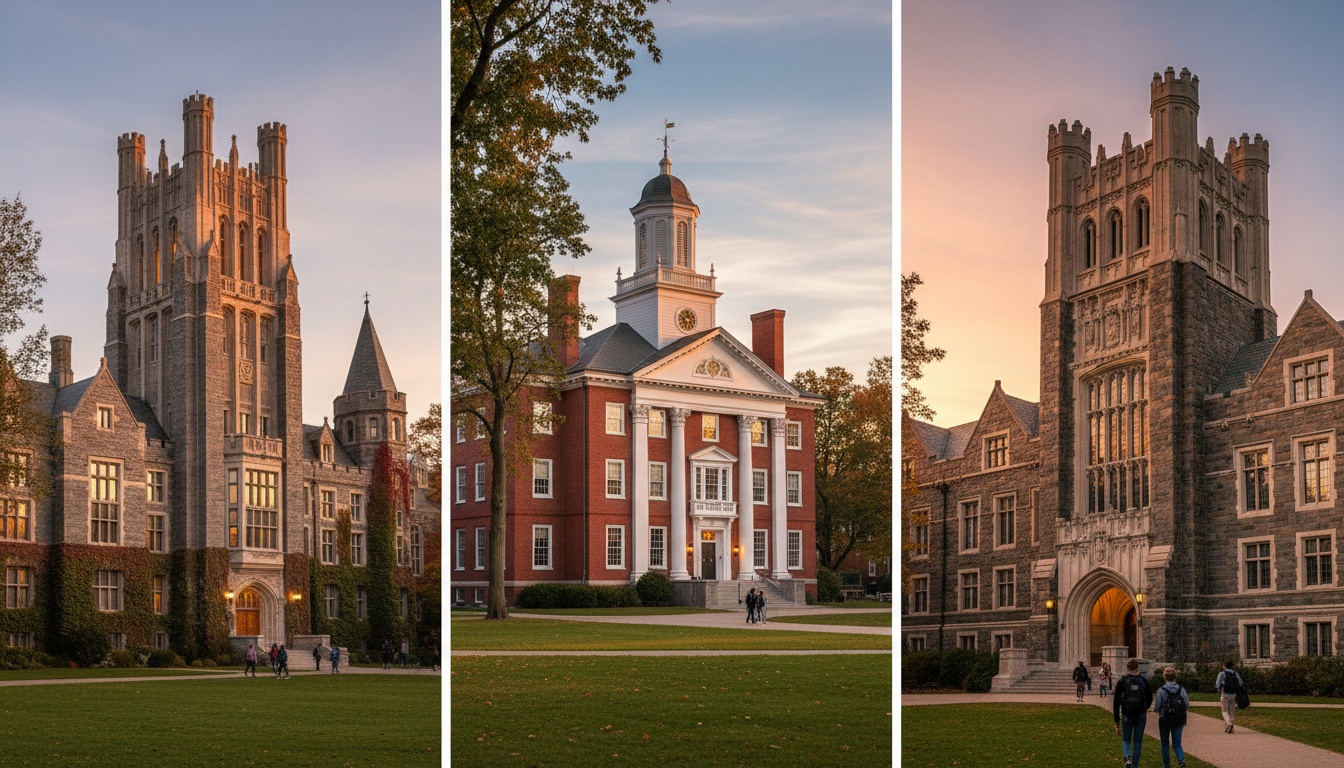
Cornell vs. Dartmouth vs. Duke: At-a-Glance Comparison
| Feature | Cornell University | Duke University | Dartmouth College |
|---|---|---|---|
| Acceptance Rate | ~7–9% (verify latest with institution) | ~5–6% (verify latest with institution) | ~5–6% (verify latest with institution) |
| Undergrad Enrollment | ~15,700 (verify current figure with institution) | ~7,000 (verify current figure with institution) | ~4,500 (verify current figure with institution) |
| Tuition and Fees | ~$68,000 (verify current figure with institution) | ~$66,000 (verify current figure with institution) | ~$66,000 (verify current figure with institution) |
| Location | Ithaca, NY | Durham, NC | Hanover, NH |
| Founding Year | 1865 | 1838 (chartered as Duke University in 1924) | 1769 |
| Student/Faculty | ~9:1 (verify with institution) | ~6:1 (verify with institution) | ~7:1 (verify with institution) |
| Endowment | ~$10B (verify current figure with institution) | ~$11.6B (verify current figure with institution) | ~$8B (verify current figure with institution) |
| Financial Aid Policy | Need-based only | Need-based + Merit | Need-based only |
Admissions Strategy: What the Acceptance Rate Data Actually Means
Selectivity remains brutal across all three schools. In recent admissions cycles, Dartmouth has admitted roughly 5–6% of applicants and Duke has posted acceptance rates in the 5–6% range. Check each institution's admissions office for the most current published figures, as newer cycle data may now be available.
Cornell's acceptance rate has hovered around 7–9% in recent cycles; check Cornell's admissions office for the latest published figure.
Early Decision Strategy for Each School
Early decision alters your odds. Cornell fills roughly 40–45% of its incoming class through early applications. Dartmouth and Duke ED I both capture around 50% of their cohorts by December.
We've seen students from Crofton House and St. George's commit ED to Cornell CS under pressure from school counselors, only to regret it when financial aid packages arrived. Apply early only if the school is your genuine first choice and aid is secondary.
Commercial test-prep providers often push Burnaby North students into premature commitments. Applying ED to Cornell's selective computer science programs can still provide a statistical advantage, as it does at most highly selective institutions — but it only makes sense if the school is your genuine first choice.
ED strategy is school-specific and high-stakes. Talk to an admissions advisor before you commit.
What is considered the easiest Ivy to get into?
Cornell carries this label due to its higher overall acceptance rate — but it's misleading. Engineering, CS, and business programs admit well below the university average, closer to Dartmouth's range. Applying to a less competitive major to game the system doesn't work.
Beyond the Brochure: Academic Strengths & Research Opportunities
Undergraduate Business & Program Structure
If you want a direct-entry undergraduate business degree, Cornell's Dyson School is your only option among these three. You specialize from day one rather than routing through economics.
For undergrads who want business exposure without a dedicated program, both Duke and Dartmouth route students through economics. Graduate business schools (Fuqua and Tuck) are reserved for post-work MBAs.
For undergraduates seeking an immersive experience, Dartmouth's D-Plan allows you to strategically schedule terms off for corporate internships. This gives you a head start on career experience while still in school.
Research Access by School
Research opportunities matter. Cornell undergraduates often assist at the Weill Institute. Duke students utilize Bass Connections for interdisciplinary projects. Dartmouth offers the Women in Science Project.
Understanding which programs align with your long-term goals is key. Explore our personalized college counseling services to find your best fit.
Your Home Away From Home: Residential Life & Campus Community
How Each School Structures Residential Life
Cornell features 11 residential colleges and a distinct West Campus system for upperclassmen. Duke houses all freshmen together on East Campus. Later, students transition to selective living groups or independent housing options.
Dartmouth uses a unique cluster housing system. Freshmen often live in the Choates cluster, which reinforces the tight-knit community.
The cluster system pushes students to build cross-disciplinary networks early — a genuine differentiator from Cornell's residential college system, which is organized by academic affiliation.

Beyond Academics: Campus Culture, Location & Your Social Scene
Cornell's Ithaca campus is spread across a dramatic landscape of gorges and hills. That physical isolation forces students to build their entire social lives on campus.
Dartmouth's different. Hanover's Main Street is literally the social hub — bars, restaurants, and the college bookstore share the same block.
Duke's location inside the Research Triangle means internships at Cisco, Biogen, and SAS aren't just possible during summers. Students land term-time roles while enrolled, creating a structural career advantage.
Social scenes vary by geography. Greek life encompasses roughly 60% of the student body at Dartmouth. Duke offers SLGs, while Cornell hosts over 1,000 student organizations.
For Vancouver students accustomed to mild winters, Durham's climate is a genuine quality-of-life factor. Ithaca and Hanover winters are brutal by comparison.
Investing in Your Future: Cost, Financial Aid & Long-Term ROI
Tuition, room, and board at all three schools has exceeded $85,000 annually in recent years (per each institution's published Cost of Attendance; verify current figures directly with each school, as costs change annually). Both Cornell and Dartmouth meet 100% of demonstrated financial need with no-loan packages.
Both Cornell and Dartmouth have announced free-tuition thresholds for lower-income families — Cornell for families earning under $60,000 with typical assets, and Dartmouth for families earning under $65,000 — policies comparable to those at Harvard, Yale, and Penn. Confirm each school's current aid policies directly, as thresholds and income cutoffs can change year to year.
The catch is, families earning above each school's aid thresholds will pay significantly out of pocket for annual tuition costs. This reality affects dual-income households in Richmond, BC. (We see this).
Duke's Robertson Scholars Leadership Program is the flagship merit award, covering full tuition and housing costs. It also includes a semester exchange at UNC Chapel Hill — a genuine differentiator from need-based-only Ivy aid.
Duke also offers the Karsh Institute scholarships and the A.B. Duke Scholars program. Ivy League financial aid packages are strictly need-based for all admitted students, meaning Cornell and Dartmouth offer zero merit aid.
Career Outcomes: Where Each School's Network Actually Opens Doors
Industry Placement by School
Post-graduation outcomes justify the costs. Dartmouth consistently places 30%+ of graduates into finance roles annually, with Goldman Sachs, Blackstone, and KKR all recruiting directly on campus. The alumni network density in NYC finance is unmatched.
On the flip side, Duke feeds graduates into tech. Google, Microsoft, and Amazon all recruit engineers at Duke's Pratt School.
Cornell's alumni base concentrates in Silicon Valley and NYC. The School of Industrial and Labor Relations maintains a direct pipeline to corporate HR, while the Hotel School feeds the global hospitality industry.
Is Cornell More Prestigious Than Dartmouth?
In many global rankings, Cornell's research output and name recognition internationally tend to outpace Dartmouth's. But in investment banking recruiting, Dartmouth's alumni density on Wall Street means a Dartmouth degree often opens more doors than a Cornell one. It depends on your intended industry.
Is Duke More Prestigious Than Dartmouth?
Duke lacks the Ivy League label. However, it rivals Dartmouth in national rankings across the entire board. Duke has particular strengths in medicine and tech, while Dartmouth has well-established finance and private equity recruiting pipelines.
Is Duke More Prestigious Than Cornell?
These two universities trade places constantly in annual national rankings. Cornell wins on undergraduate engineering. Duke's Sanford School of Public Policy is among the most highly regarded in the country for undergraduates, making direct comparisons difficult.
Frankly, the Cornell-vs-Dartmouth-vs-Duke prestige debate is the wrong question for most students — it's a proxy for anxiety, not a useful decision framework.
Which School Is Right for You? The Fit Framework
Choosing the right school requires honesty. We built a simple framework for you to use right here.
| Priority | Cornell | Duke | Dartmouth |
|---|---|---|---|
| Large Scale | Best Fit | Good Fit | Weaker Fit |
| Intimate Vibe | Weaker Fit | Good Fit | Best Fit |
| Finance Career | Good Fit | Good Fit | Best Fit |
| Tech/Engineering | Best Fit | Good Fit | Weaker Fit |
| Alumni Network Density | NYC/Silicon Valley | Research Triangle/DC | Wall Street/PE |
One student we worked with — a Crofton House grad with a 1560 SAT and a passion for environmental policy — initially targeted Cornell's CALS. After mapping her actual career goals, we redirected her to Duke's Nicholas School of the Environment feeder pipeline. She is now finishing her first year in Durham.
Another student from West Van chose Dartmouth specifically for its Wall Street pipeline, leveraging the D-Plan to secure an off-cycle private equity internship. The fit mattered more than the Ivy label.
Need help mapping your profile to the right school? Take our school-fit assessment to clarify your targets.
Choose Cornell for specialized colleges and scale. Choose Duke for warmer weather and the Research Triangle. Choose Dartmouth for a tight-knit community.
The student who agonizes longest over this choice is usually the one who hasn't yet asked the right question. It isn't 'which school is more prestigious?' but 'which environment will make me work harder than I thought I could?'
Ready to turn this comparison into your college acceptance? Book a free strategy session with our Vancouver team to craft your winning application.