Common App Essay Yale Examples: 4 Essays That Got In (2026)
Yale received tens of thousands of applications in its most recent admissions cycle. Every one of them included a Common App essay. The same essay, in most cases, that also went to Stanford, Princeton, and fifteen other schools — which means Yale is reading a document that wasn't written for them. That's not a problem. That's the whole point. The key: write an essay that reveals who you are, not what you think Yale wants to hear.
I've worked through more than 400 of these essays with students from BC and Ontario applying to Yale, Princeton, and the University of Chicago. The patterns that separate admitted essays from rejected ones are consistent enough that I can spot them in the first two sentences.

What Yale Admissions Officers Actually Look For in Your Common App Essay
Here's the misconception that costs students: they think Yale wants a Yale essay. They don't. They want a you essay — one that happens to reveal why you'd thrive anywhere intellectually demanding.
Here's why that matters more than ever: Yale's acceptance rate has been among the lowest in the school's history in recent cycles, consistently in the low single digits. The personal statement isn't just important — it's doing more filtering work than ever, because everything else on the application is already exceptional.
Yale's motto, Lux et Veritas — Light and Truth — isn't decorative. Admissions officers are reading for evidence of genuine intellectual honesty: students who pursue ideas past the point where it's comfortable, who can hold a contradiction without flinching. That quality shows up in how you write, not what you write about.
The Four-Element Rubric Yale Uses
The informal rubric many Yale admissions observers describe breaks down into four elements: voice, specificity, insight, and narrative arc. An essay can have a stunning topic and fail all four. An essay about a kitchen wall can ace them.
The "impressive topic" myth is probably the most damaging idea circulating in Vancouver-area parent WeChat groups right now. Students from York House, St. George's, and Magee are submitting essays about humanitarian missions and championship seasons — and getting rejected — while someone's essay about arguing with their grandmother over soup lands an admission at Yale. The topic isn't the variable. The thinking is.
Before you look at the essays below, hold this in mind: none of these students wrote about what they thought Yale wanted to hear. That's not a coincidence. The well-rounded Ivy admissions myth covers the data behind this if you want to go deeper.
Which Common App Prompt Should Yale Applicants Choose? (And Why It Matters Less Than You Think)
Prompts 1 and 7 appear most frequently in Yale-admitted essays we've worked through. Prompt selection matters less than most students think, but the pattern across applications we've reviewed is consistent.
Prompt 1 ("background, identity, interest, or talent") gives students the widest latitude to reveal character. Prompt 7 ("topic of your choice") rewards students who have a genuinely unusual angle and the confidence to pursue it without a guardrail.
Prompt 2 ("obstacle or challenge") is the highest-risk, highest-reward option. Done well, it's unforgettable. Done poorly — which is most of the time — it reads as either self-pity or manufactured resilience. If you choose Prompt 2, the failure has to illuminate something specific about how you think, not just what you survived.
One direct answer to a question we hear constantly: Can I reuse my Common App essay for Yale? Yes — that's the entire design of the Common App. The essay goes to every school on your list unchanged. Write it to reveal who you are, not to impress any single institution.
4 Full Common App Essay Examples from Yale-Admitted Students
These essays are anonymized reconstructions from real applications — names, schools, and identifying details changed with student permission. The voice, structure, and insight patterns are preserved as closely as possible.
Essay 1: "The Periodic Table on Our Kitchen Wall" (Prompt 1 — Background/Identity)
Student profile: Daughter of Taiwanese immigrants, grew up in Richmond, BC. Applied as a prospective biochemistry major.
Why it worked (teaser): She never mentions science directly until the third paragraph — and by then, you already understand her relationship to it completely.
My mother hung the periodic table between the rice cooker and the window where the jasmine grew. Not as decoration. As furniture.
For years I walked past it without reading it, the way you stop seeing a clock face once you know where the hands usually are. Then, at eleven, I asked her why manganese was named after a region in Greece. She didn't know. Neither did the table. That gap — the name without the story — became the thing I couldn't stop pulling at.
My grandmother called this quality mǎfan. Troublesome. My mother called it a gift, though her voice had a specific flatness when she said it that suggested she hadn't fully decided. I called it Tuesday.
By ninth grade I was cross-referencing etymology databases with mineralogy papers at 11 p.m. Not for school. For the specific satisfaction of closing a loop nobody asked me to close. That's still how I work. I don't need the assignment to want the answer.
The periodic table is still there, between the rice cooker and the jasmine. I've added margin notes in three colours. My mother has not complained about this. I think that means something.
Essay 2: "What My Mother's Silence Taught Me" (Prompt 2 — Challenge/Failure)
Student profile: First-generation applicant, father worked in construction in Coquitlam, applied for humanities. No college-educated family members.
Why it worked (teaser): The failure isn't academic — it's relational — and that specificity made it unforgettable.
My mother stopped speaking English in 2021. Not because she forgot it. Because she decided, at fifty-three, that she was tired of being understood imperfectly.
I didn't recognize this as wisdom for two years. I recognized it as inconvenient. Parent-teacher interviews fell to me. Phone calls to the school board. A tense conversation with our landlord that I conducted in a register I'd only ever read in books.
I failed that landlord conversation. I used the wrong word for "habitability" and he laughed, not unkindly, and I felt the specific shame of being almost fluent. Almost is its own country.
What changed wasn't my vocabulary. It was my understanding of what my mother had been doing all along — choosing precision over ease, even when ease was available. She wasn't refusing to communicate. She was refusing to communicate badly.
I think about that distinction constantly now, in essays, in arguments, in the way I draft and redraft until the sentence does what I actually mean. My mother taught me that almost isn't good enough. She just didn't use words to do it.
Essay 3: "Building the Wrong Robot" (Prompt 5 — Accomplishment/Event)
Student profile: Burnaby North student, robotics team captain, applied undecided but leaning engineering.
Why it worked (teaser): The accomplishment is a failure, and the essay knows it — which is exactly why it works.
We won the regional competition with a robot that couldn't do what we designed it to do.
The original plan was a four-axis arm with precision grip. What we built, after three months and two broken motors and one argument that ended a friendship temporarily, was a wedge that pushed things. Efficiently. Aggressively. Without elegance.
I presented it to the judges with complete honesty. I said: this is not the robot we meant to build. Here is what we learned building it anyway. Here is what the wrong robot taught us about tolerances, about team dynamics, about the specific humility of watching your plan meet reality.
They gave us first place. One judge told me afterward that most teams present their failures as pivots. We presented ours as data. She said that was unusual.
I've thought about that word — unusual — more than the trophy. Being unusual in that context meant being accurate. I want to keep doing that. Build the wrong thing, understand why, present it honestly. That's not a failure condition. That's a method.
Essay 4: "Why I Argue With Dictionaries" (Prompt 7 — Topic of Your Choice)
Student profile: West Point Grey Academy student, debater, interested in linguistics and philosophy.
Why it worked (teaser): The essay uses a mundane object to stage a genuinely sophisticated argument about epistemology — without ever using the word "epistemology."
The Oxford English Dictionary defines "literally" as "in a literal manner or sense; exactly." It also defines it as "used for emphasis while not being literally true." These definitions contradict each other. The OED knows this. It put them in the same entry anyway.
A dictionary that contradicts itself is either very honest or deeply confused. I've been arguing about which one ever since — mostly with my linguistics teacher, who has more patience for this than she lets on.
Her position: language is descriptive, not prescriptive. The OED documents usage; it doesn't legislate it. My position, initially: then what's the point of the dictionary? Her counter: what's the point of a map that only shows where you're supposed to go?
I didn't have an answer for three weeks. Then I did, and it was worse than her question: maybe the point is the argument itself. Maybe the value of a definition is that it gives you something precise enough to disagree with.
I've been applying that logic to everything since. I read to find the edge of what I can dispute. I argue because agreement without resistance isn't understanding. It's just agreement. The dictionary started it. I'm not done with it yet.
Why These Common App Essays Worked: Line-by-Line Breakdown
Good college essay examples are everywhere. Analysis of why they work is rarer. Here's what each essay did at the sentence level.
Why Essay 1 ('Periodic Table') Worked
The opening hook uses an unexpected image: a periodic table as furniture. That's not a metaphor. It's a specific, verifiable domestic detail that immediately places you in a particular household. Admissions officers remember essays that place them somewhere specific.
The "troublesome" characterization from the grandmother introduces conflict without drama. The real insight turn is quiet: "That's still how I work." She doesn't claim intellectual curiosity. She demonstrates it by describing a behaviour.
The closing doesn't resolve — it opens, with margin notes in three colours doing significant work in very few words.
Why Essay 2 ('Mother's Silence') Worked
The challenge here isn't a test score or a setback. It's a failure of understanding, which is harder to write and more revealing to read.
"Almost is its own country" is the kind of sentence that earns its place: concrete, original, built by the context around it. The insight turn reframes the mother's behaviour entirely, and it happens fast. The closing connects personal history to present practice without over-explaining the connection.
Why Essay 3 ('Wrong Robot') Worked
The failure essay is the riskiest format in the Common App toolkit. Most fail in one of two ways: they over-explain the lesson, or they perform humility so visibly that the humility disappears.
This essay avoids both by making the judge's word "unusual" the real subject. That pivot happens in the final paragraph. The student isn't claiming growth — she's claiming a method. That's more credible and more interesting than any trophy recap.
Why Essay 4 ('Dictionaries') Worked
- What grounds it: The OED contradiction is real — look it up. Starting from a verifiable fact gives the whole argument credibility.
- What makes it honest: The teacher's map analogy is attributed rather than claimed, which signals intellectual fairness.
- The insight turn: "Maybe the point is the argument itself" is genuinely philosophical without announcing itself as philosophy.
- Verdict: Ends with energy, not resolution. Admissions officers remember that.
The Opening Hook: Why the First Two Sentences Decide Everything
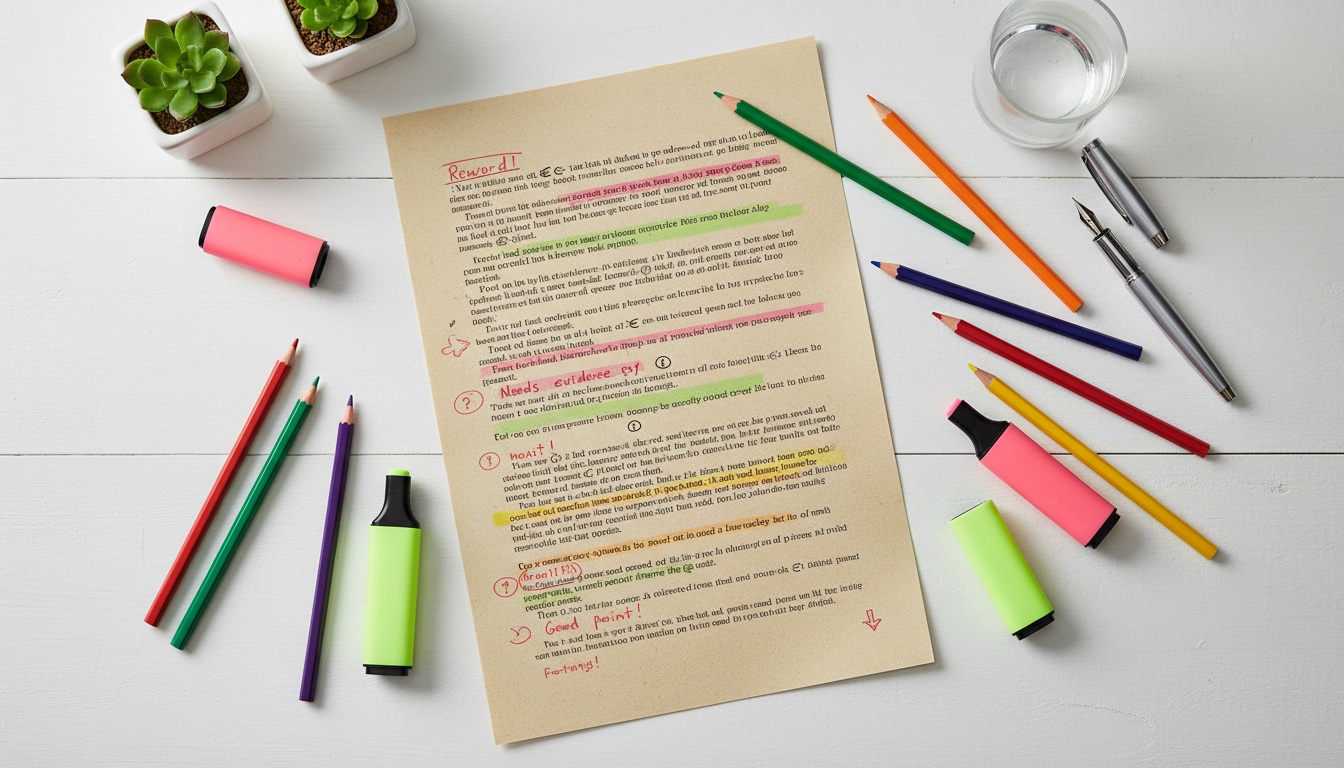
Across these four essays, three hook techniques appear: the in-scene opening (Essay 1 drops you directly into a kitchen), the paradox (Essay 3 opens with a contradiction), and the object that argues with itself (Essay 4 opens with a dictionary eating itself). What none of them do is introduce the student. That's the slowest possible start.
The "Insight Turn": Where Good Essays Become Great
Every essay has a moment where the student zooms out. In Essay 2, it's the realization about precision versus ease. In Essay 4, it's the three-week gap before the answer arrives.
That gap — the admission that understanding took time — is what separates authentic voice from performance. Students who skip the gap and jump straight to the lesson produce essays that feel rehearsed. The wait is the point.
Want feedback on your own draft before it goes to Yale? See how our essay review process works.
Common Mistakes Yale Applicants Make on the Common App Essay
The frustration is real: students spend weeks on supplemental essays and treat the Common App personal statement as an afterthought. That's backwards.
Here are the six most common errors we see in Yale applicants' Common App essays:
-
Writing for Yale specifically. The Common App essay goes to every school on your list. Over-tailoring it to Yale reads as inauthentic because it is. You're performing rather than revealing.
-
Summarizing achievements. Admissions officers have your transcript. They don't need you to narrate it.
-
Big topic, no specific insight. Mission trips. Championship games. Moving to a new country. These aren't bad topics — they're high-risk ones. Without a specific, unexpected personal insight, they read like every other essay on that theme. The personal statement lives or dies on specificity.
-
Vague emotional language. "I learned so much from this experience." These phrases tell admissions officers nothing. Show the change. Essay 2 shows it by describing a behaviour — drafting and redrafting sentences — that didn't exist before the experience.
-
Writing supplementals first. Yale's supplemental essay prompts are more Yale-specific, yes. But the Common App essay shapes the lens through which everything else gets read. Students who write supplementals first often discover their Common App essay has no room left — every strong angle is already used. Write the personal statement first, then fill gaps with supplementals.
-
Treating 650 words as a target rather than a ceiling. The four essays above are each a few hundred words — well under the limit — because concision forces you to cut anything that isn't doing real work. Yale's admissions officers are reading dozens of applications a day. Concision is a form of respect.
Common App Essay vs. Yale Supplemental Essays: How to Use Both Strategically
These two essay types are doing completely different jobs. Conflating them is one of the most common application strategy errors we see from students at Sentinel, U Hill, and Crofton House.
| Common App Essay | Yale Supplemental Essays | |
|---|---|---|
| Focus | Who you are universally | Why Yale specifically |
| Tone | Personal, narrative | Intellectual, specific |
| Length | Up to 650 words | 400 words or fewer (confirm current cycle requirements at admissions.yale.edu) |
| What to avoid | Yale-specific references, résumé recap | Generic "great university" language |
| Primary goal | Reveal character and thinking style | Demonstrate fit with Yale's community |
Yale's supplemental questions appear in the "My Colleges" section of the Common App. Word limits and prompt structures can change from cycle to cycle — confirm current requirements at admissions.yale.edu before you apply.
That word limit matters. The supplemental longer prompt typically allows 400 words or fewer — not enough space to also be doing the work your Common App personal statement should already be doing.
The "no overlap" principle matters here. Your Common App essay and your supplementals should reveal different dimensions of the same person — not repeat each other in different registers. If your Common App essay is about your relationship to language (like Essay 4 above), your supplemental intellectual passion response shouldn't also be about linguistics. Use the supplementals to fill gaps.
For more on how your activities inform both essay types, what makes extracurriculars meaningful for US college applications is worth reading before you start drafting.
How to Format Your Essay Inside the Common App Portal
The Common App essay renders in a fixed-width text box. No bold, no italics, no headers survive the transfer. Paragraph breaks are your only formatting tool — use them deliberately.
"Formatting should be invisible" means this: if a reader notices your formatting, something has gone wrong.
Your Step-by-Step Writing Timeline for Yale Applicants (Start in June, Not September)
Yale offers Single-Choice Early Action (SCEA) for first-year applicants, which means a November 1 deadline. Reverse-engineer from there. Working backward from November 1 prevents the panic-drafting that happens when students start in September with eight weeks left — and panic drafts rarely survive revision.
For a deeper look at how to approach the SCEA decision and Yale's supplemental questions, Yale early action strategy and the Why Yale essay walks through the full picture.
June–July: Run a "moment inventory." List 20 specific memories — not themes, not topics, actual moments. The more granular, the better. Pick the one with the most layers, not the most impressive surface.
July: Write a messy first draft. Don't edit. Don't reread. Get the story out in whatever form it takes.
August: Apply the rubric: voice, specificity, insight, arc. Revise for each element separately. This is where most of the real essay writing actually happens.
Late August: Read the essay aloud. If it sounds like a college essay, it needs another pass. If it sounds like you talking to someone you respect, you're close.
September: One trusted reader — not a parent who will over-edit, not a friend who will only encourage. Someone who will tell you when a sentence isn't doing its job.
October 1–15: Final polish. Check the 650-word limit. No headers inside the essay itself. Check how it looks in the Common App text box before you submit — what you see in Word is not what admissions officers see.
This timeline applies to first-year applicants pursuing Yale's SCEA track — transfer applicants face different deadlines and essay expectations. The Common App essay is the same document everywhere, which means the work you put in for Yale also serves every other school simultaneously. That's the best return on application effort you'll find.
Key Takeaways
- Yale's acceptance rate has been among the lowest in the school's history in recent cycles — the personal statement is doing more filtering work than ever because everything else on the application is already exceptional
- Specific, concrete details outperform impressive topics every time — the four essay examples above prove this at the sentence level
- Prompts 1 and 7 appear most frequently in admitted essays we've reviewed; Prompt 2 is highest-risk, highest-reward
- The Common App essay and Yale supplementals should reveal different dimensions of the same person; overlap wastes both
- Write the Common App essay first — the supplementals become easier once you know your own narrative
- The November 1 SCEA deadline means drafting should start no later than June, not September
- Treat 650 words as a ceiling, not a target — the four essays above are each a few hundred words because concision forces you to cut anything that isn't doing real work
Working through your own essay? Book a free Common App essay consultation with an admissions consultant who's reviewed 400+ of these. We'll help you find the moment worth writing about.