Burnaby North to UC Berkeley CS: The 2026 Canadian Student Guide
Burnaby North students can get into UC Berkeley CS — but the international acceptance rate sits below 5%, and EECS is closer to 2-3%. Burnaby North sends maybe two or three students in a good year. I know this because I've tracked it. The question families ask me is always the same: what did those students do differently? This guide answers that.
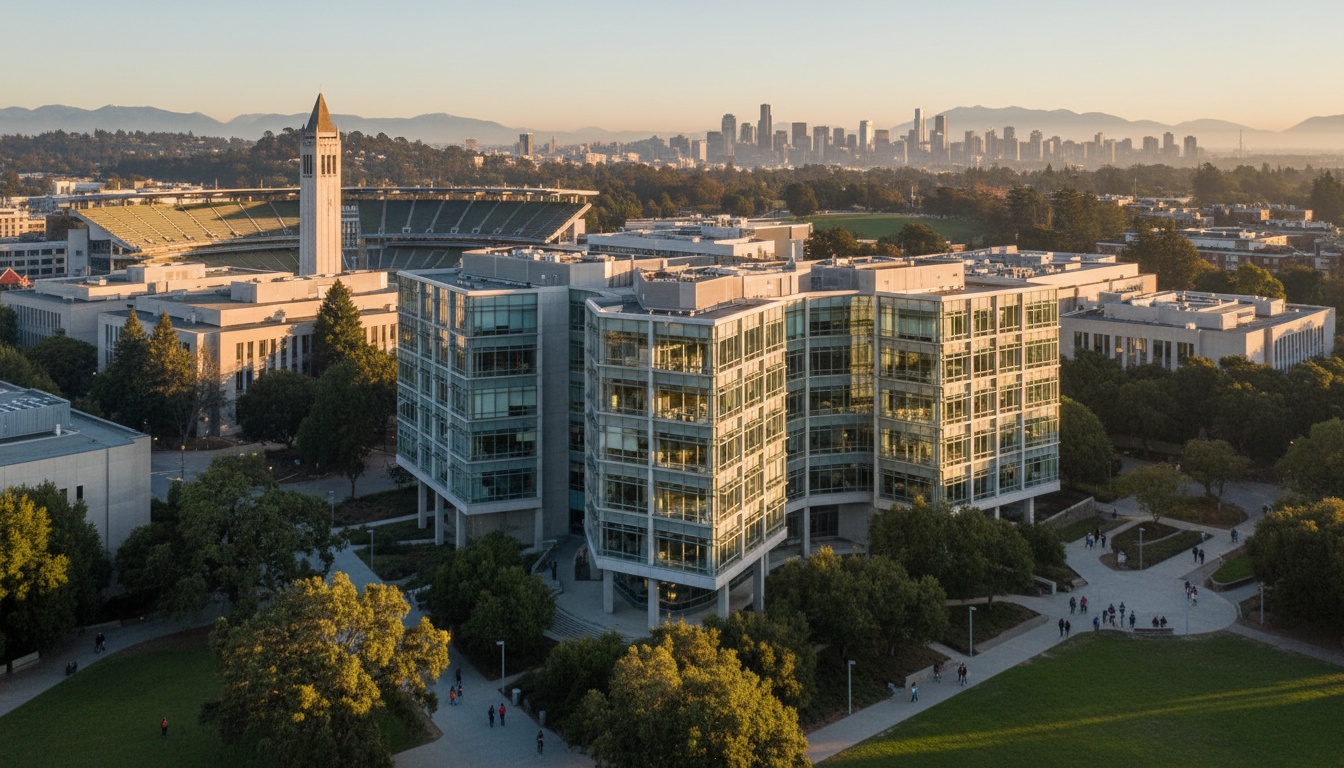
Is UC Berkeley CS Right for Burnaby North Students?
The conversation has shifted. For years, most Burnaby North families with strong CS students defaulted to UBC Computer Science or Waterloo CS as the obvious ceiling. That's changed significantly.
I've had this conversation with families from Burnaby North, Moscrop, and Burnaby Mountain — and the shift is real. A few years ago, Berkeley CS wasn't on the whiteboard. Now it's often the first thing Grade 11 parents ask about.
The appeal is obvious. Berkeley's CS program is consistently ranked among the top programs in computer science by U.S. News (most recent published rankings). For students who've already decided they want to be in the room where foundation models get built, Berkeley isn't just prestigious — it's specifically relevant.
The problem is the numbers. International acceptance rates for high-demand majors at Berkeley are extremely low — well below 5% by most estimates, though UC does not publish program-specific international admit rates. Canadian students applying as international applicants don't get the domestic admit rates you'll see quoted in general Berkeley statistics.
There are also two distinct entry points into Berkeley CS: the BA Computer Science route through the College of Letters and Sciences, and the EECS program in the College of Engineering. Choosing between them isn't just an academic preference — it's a strategic admissions decision that Canadian families often get wrong.
This guide covers the programs, what we know about admission numbers, how BC coursework translates, and a year-by-year preparation strategy built specifically for Burnaby North students.
Understanding Berkeley's Two CS Programs: CS vs. EECS
Most families discover this split late — sometimes after they've already submitted an application to the wrong program.
Berkeley offers two primary CS pathways. Here's what each one actually means:
- BA Computer Science (L&S): Liberal arts-framed. As of Fall 2023, UC Berkeley's College of Letters & Science implemented a capped major policy for Computer Science — direct declaration is no longer standard for incoming freshmen. Students must apply to the major after meeting specific course and GPA requirements, and admission to the major is competitive. More flexibility in breadth requirements and electives than the engineering option.
- EECS (Engineering): Integrated electrical engineering and computer science. Direct admit only. Most selective. The pathway most serious CS students are targeting — it produced a disproportionate share of Berkeley's most recognized alumni in tech.
Which Is Harder to Get Into: CS or EECS at Berkeley?
EECS. That's not a close call. Estimated admit rates for EECS are in the 2-3% range for all applicants; international students face steeper odds still. CS via L&S offers a marginally wider door — but "marginally wider" still means an extremely selective process for international students, and the capped major policy means admission to Berkeley through L&S does not guarantee you will ultimately be able to declare CS.
When I'm working through this with a student, I ask one question first: do you want to build chips or ship software? If the answer is software, L&S CS is the smarter application bet — but go in with eyes open about the major declaration process.
One thing Canadian families must understand: switching between colleges after admission is difficult, not guaranteed, and requires a separate competitive application process. If you're admitted to L&S and want to study EECS, that's not a simple transfer — it's a separate inter-college transfer application with specific requirements and no guarantee of success.
⚠️ Choosing CS (L&S) vs. EECS is a consequential decision. Switching colleges after admission requires a separate, competitive inter-college transfer application with no guarantee of success. Additionally, CS in L&S is a capped major — admission to Berkeley does not guarantee you can declare it.
Pick wrong and fixing it is far from straightforward.
| Program | Selectivity | Curriculum Structure |
|---|---|---|
| BA CS (L&S) | Very High (international rates lower than domestic; major declaration is also capped and competitive) | Flexible, breadth-heavy |
| EECS (Engineering) | Extremely High (least accessible for international) | Integrated EE+CS, intensive |
The decision framework is simple: if you're genuinely interested in hardware-software integration or want the EECS brand specifically, apply EECS and accept the odds. If your focus is pure software and you want any possible edge in admission, CS in L&S is worth considering — with the understanding that you'll need to meet the capped major requirements once enrolled.
UC Berkeley CS Curriculum and Major Requirements
The Berkeley CS curriculum is not designed to ease you in gently.
Lower-Division: The Filter Sequence
The lower-division sequence — CS 61A (Structure and Interpretation of Computer Programs), 61B (Data Structures), 61C (Computer Architecture), Math 1A/1B (Calculus), and CS 70 (Discrete Mathematics and Probability Theory) — represents a genuine filter. Students who coasted through high school CS find 61A humbling within the first three weeks.
CS 61A uses Python and Scheme to teach abstraction at a depth that surprises most incoming students. By the time you reach 61C, you're writing assembly and reasoning about cache performance. These aren't classes designed to pad a transcript — they're the foundation for everything that follows.
Upper-Division: Where the Depth Becomes Visible
Upper-division specialization is where Berkeley's depth becomes genuinely impressive. The AI/ML track runs through CS 188 (Intro to AI), CS 189 (Machine Learning), and feeds directly into Berkeley AI Research (BAIR) lab work. The systems track covers distributed systems, operating systems, and networking.
For Burnaby North students familiar with UBC CS or Waterloo CS as benchmarks: Berkeley's computer science major requirements are comparable in technical depth to Waterloo's co-op stream. The key difference is that research replaces co-op as the primary experiential credential. Labs like BAIR, RISELab, and the Sky Computing Lab produce work that appears in NeurIPS, SOSP, and OSDI — the venues that matter for graduate school and research careers.
One practical note on pace: Berkeley runs on semesters, but the course load feels compressed compared to most BC high school experiences — plan for that gap.
That's what Berkeley CS teaches. Now let's talk about how hard it is to get in.
Admission and Acceptance Rates for International Students
Berkeley's overall acceptance rate gets cited a lot. The international-specific rate for high-demand majors like CS and EECS is a different number entirely — and it's the one that matters for Burnaby North families.
Berkeley CS admission for international students sits below 5% by most estimates, though UC does not publish program-specific international admit rates. EECS is estimated closer to 2-3% — and that number has remained broadly stable in recent years, though it should be verified against the most current UC data available.
A notable development reported in a March 2026 article in The Daily Californian: Berkeley CS enrollment was projected to drop significantly between the 2025-26 and 2026-27 academic years — the CS department was expected to graduate approximately 350 students in 2027, down sharply from prior years. These figures are projections reported at the time of publication; families should verify current enrollment data directly with Berkeley.
Fewer graduates. Same number of applicants. Do the math.
GPA Conversion
BC percentage grades are converted to the UC GPA scale using UC's established conversion process. AP and IB courses carry additional weight — IB HL courses are particularly valuable for Burnaby North students in the Diploma Programme. Check UC's published freshman admission requirements directly for the exact conversion formula, as it's specific and matters.
SAT/ACT
For the 2026-27 application cycle, Berkeley has confirmed it remains test-optional — but submitting strong scores still helps international applicants. It provides a standardized data point that admissions readers can use alongside BC grades.
Extracurriculars That Actually Move the Needle
USACO (USA Computing Olympiad) participation at Silver or Gold level signals serious algorithmic ability. Math competitions (AMC/AIME) matter. A genuine research project — not a summer program certificate, but actual output — carries real weight.
Burnaby North students have access to SFU's undergraduate research programs and UBC's NSERC USRA pathway for senior students; these are underutilized by local applicants.
Financial Reality
International students are not eligible for UC need-based financial aid. Total cost of attendance is substantial — tuition, housing, and living expenses combined. Check UC Berkeley's official cost of attendance page for current figures, as these shift year to year. The honest number is significant. Plan accordingly before applications go in.
Scholarships for Canadian Students at Berkeley
Merit scholarships at Berkeley are scarce for international undergraduates. The Regents' and Chancellor's Scholarship — Berkeley's most prestigious merit award — is technically open to international applicants, though competition is brutal.
Outside Berkeley, Canadian students applying to US schools should note that the Loran Award is restricted to study at partner universities in Canada and does not support study in the US. The Schulich Leader Scholarships are STEM-focused but also restricted to Canadian universities — worth knowing the landscape regardless.
The honest answer: budget the full cost of attendance and treat any scholarship as a bonus, not a plan.
Not sure if Berkeley CS is realistic for your profile? Get a free profile assessment →
Is Berkeley CS Prestigious? Rankings, Research, and Reputation
Yes. Unambiguously. But let's be specific about why it matters for your career path.
UC Berkeley CS is consistently ranked among the top programs in computer science by U.S. News (most recent published rankings). On CSRankings.org — which measures research output rather than reputation surveys — Berkeley consistently places at or near the top globally in AI, systems, and theory. These aren't vanity metrics. They reflect where the faculty are publishing and where the graduate students doing foundational work are being trained.
Berkeley CS Career Outcomes
Berkeley CS graduates recruit heavily into Google, Meta, Apple, and the major AI labs — OpenAI, Anthropic, DeepMind. The Berkeley AI Research (BAIR) lab offers strong undergraduate research opportunities, as do top labs at peer institutions — the difference at Berkeley is the density of those opportunities and the lab's direct connections to industry research teams.
For Canadian students specifically: Berkeley CS graduates are highly regarded by major tech employers globally, including those in the Vancouver ecosystem. The degree is immediately legible to Canadian hiring managers — no translation required. That said, Canadian companies primarily recruit from Canadian universities for entry-level roles, so Berkeley's advantage tends to be strongest for students targeting US-based positions or research roles.
Starting compensation for Berkeley CS graduates at top US companies is publicly tracked on Levels.fyi — figures shift with market conditions, so check current data there directly. The numbers are strong, but they reflect US market rates. For students returning to Canada, salaries will typically be lower in CAD terms — still competitive, but worth factoring into the ROI calculation on a Berkeley education.
Berkeley CS alumni density in top-tier tech companies rivals Stanford's. The Berkeley brand carries specific weight in Vancouver's growing tech sector and in Silicon Valley, where Berkeley CS alumni networks are active and genuinely useful for early-career recruiting.
Here's what nobody tells Burnaby North families: for students who want to stay in BC's tech ecosystem, Waterloo CS co-op may actually produce better early-career outcomes than Berkeley CS. The co-op network is deeply embedded in Canadian tech hiring, and the structured experience removes a lot of the uncertainty that Berkeley students work through independently. Berkeley wins on research prestige and US career access. Waterloo wins on structured Canadian industry entry. Know which one you actually want before you apply.
I've seen students apply to EECS because it sounds more impressive and regret it when they realize they wanted to build apps, not circuits.

What Happens If You Don't Get In?
This is the question Burnaby North families don't ask until they need to. Worth asking now.
Berkeley CS rejects are not weak applicants. They're often students with 95%+ averages, USACO Silver, and strong PIQs who ran into a 2-3% admit rate on a bad draw. The realistic fallback landscape for a strong Burnaby North CS applicant:
- UBC Computer Science — competitive but achievable with strong grades
- Waterloo CS — requires strong math and a compelling AIF
- SFU Computing Science — underrated, strong co-op infrastructure
- UC San Diego or UC Santa Barbara — strong CS programs, more accessible international admit rates than Berkeley
SFU CS deserves more credit than it gets in Metro Vancouver conversations. The program is technically rigorous, the co-op placements are real, and the proximity to Vancouver's tech sector means recruiting relationships are strong. It's not Berkeley. It's also not a consolation prize.
From Burnaby North to UC Berkeley CS: Your Year-by-Year Application Strategy
Grade 9-10: The foundation years. If Burnaby North offers IB enrollment decisions in Grade 9 or 10, take the IB Diploma pathway seriously. UC's weighted GPA calculation rewards IB HL courses, and the IB Extended Essay builds the kind of sustained intellectual project that Personal Insight Questions reward later. Start programming seriously, not just school assignments. USACO Bronze is a reasonable early target for students who practice consistently.
Grade 11: The year that actually determines your application. Key actions:
- Begin SAT preparation — target a March or May sitting
- Enroll in AP Computer Science A at your high school
- Participate in AMC 10/12 math competitions — a useful standardized signal for Berkeley readers alongside BC grades
- Work toward USACO Silver level
- Pursue research exposure now — SFU's programs, a UBC lab connection, or a substantive independent project. Don't wait until Grade 12 when you're buried in applications.
Grade 12 (September–November): The UC application opens August 1, with the submission window running from October 1 through November 30. That deadline is firm for international applicants — there are no extensions. UC does not have Early Decision or Early Action for its main undergraduate admissions process. You apply once, to the regular cycle, and you wait.
The Personal Insight Questions (PIQs) are Berkeley's version of essays. You answer four of eight prompts, 350 words each.
PIQ: What Not to Do
- Don't open with "I've always been passionate about computer science since I was eight years old." Berkeley readers see that sentence thousands of times a cycle. I've read a lot of PIQs from Burnaby North applicants. That sentence appears in most of them.
PIQ: What Works
- A specific problem you got stuck on for three weeks
- A project that failed in an interesting way
- What it means to grow up in a multicultural city like Burnaby — and how that shapes the problems you want to solve
One thing that surprises Canadian families used to Common App schools: UC does not accept letters of recommendation for freshman applicants. None. The application is grades, test scores (optional), PIQs, and activities.
One tactical tip Canadian students miss: The UC application includes an Additional Comments section. UC admissions has its own established methods for evaluating international transcripts, so use this space for information genuinely not covered elsewhere in your application — not to explain grading conventions, which UC readers are equipped to interpret.
A student I worked with from a Burnaby school applied to EECS with a strong average and USACO Gold. She was waitlisted. She's now in Waterloo's co-op program and doing well. Berkeley's selectivity isn't a verdict on your ability — it's a numbers problem.
Financial planning: The CSS Profile is not required for UC. FAFSA is designed for US citizens and eligible non-citizens — Canadian citizens will not qualify. Research private scholarships early — options for students studying in the US are limited, so start that search in Grade 11, not the fall of Grade 12.
Families weighing private school pathways alongside US university targets may find our West Point Grey Academy vs. Princeton guide useful for the broader strategic context — though the CS-specific calculus here is different. Students considering economics-adjacent programs alongside CS should read the St. George's to Columbia Economics pathway guide for a parallel framework.
UC Berkeley EECS admissions information CSRankings.org — Berkeley CS research output rankings by subfield The Daily Californian — Berkeley CS enrollment projected to drop sharply by 2026-27 academic year, March 2026
Key Takeaways
- Berkeley CS and EECS are separate programs — CS in L&S is a capped major requiring a competitive declaration process after enrollment; switching colleges after admission requires a separate inter-college transfer application with no guarantee of success
- International acceptance rates for Berkeley CS sit below 5% by most estimates; EECS is estimated at 2-3% — UC does not publish program-specific international admit rates
- IB HL courses receive weighted credit in UC GPA calculations — a structural advantage for BC students
- UC accepts no letters of recommendation — the application is PIQs, grades, and optional test scores
- Berkeley CS enrollment is projected to contract significantly through 2027; verify current figures directly with Berkeley
- Check UC Berkeley's official cost of attendance page for current figures — international students receive no UC need-based aid
- USACO, math competitions, and genuine research output differentiate Burnaby North applicants from the international pool
- The Loran Award is restricted to Canadian universities and does not support study in the US
- For students committed to BC's tech ecosystem, Waterloo's co-op model may produce better early-career outcomes — Berkeley wins on research prestige and US career access
- Use the UC application's Additional Comments section for information genuinely not covered elsewhere — UC has its own methods for evaluating international transcripts
Ready to build a realistic application strategy for Berkeley CS? Book a free consultation to assess your Berkeley CS profile — and work through your specific coursework, timeline, and odds with someone who's helped Metro Vancouver students navigate this exact process.