BC Public School Students' Guide to Cornell Brooks School (2026)
There are roughly 3,500 spots in Cornell's incoming class. Brooks School fills a small share of them — and most BC public school counsellors have never mentioned it.
Most students from Magee or Burnaby North default to the UC system or the usual suspects: NYU, McGill, maybe UBC's American-facing programs. Cornell's Jeb E. Brooks School of Public Policy rarely comes up in undergraduate counselling sessions. If you're a Grade 11 or 12 student from a BC public school with a serious interest in policy, governance, or health systems, Brooks deserves your full attention.
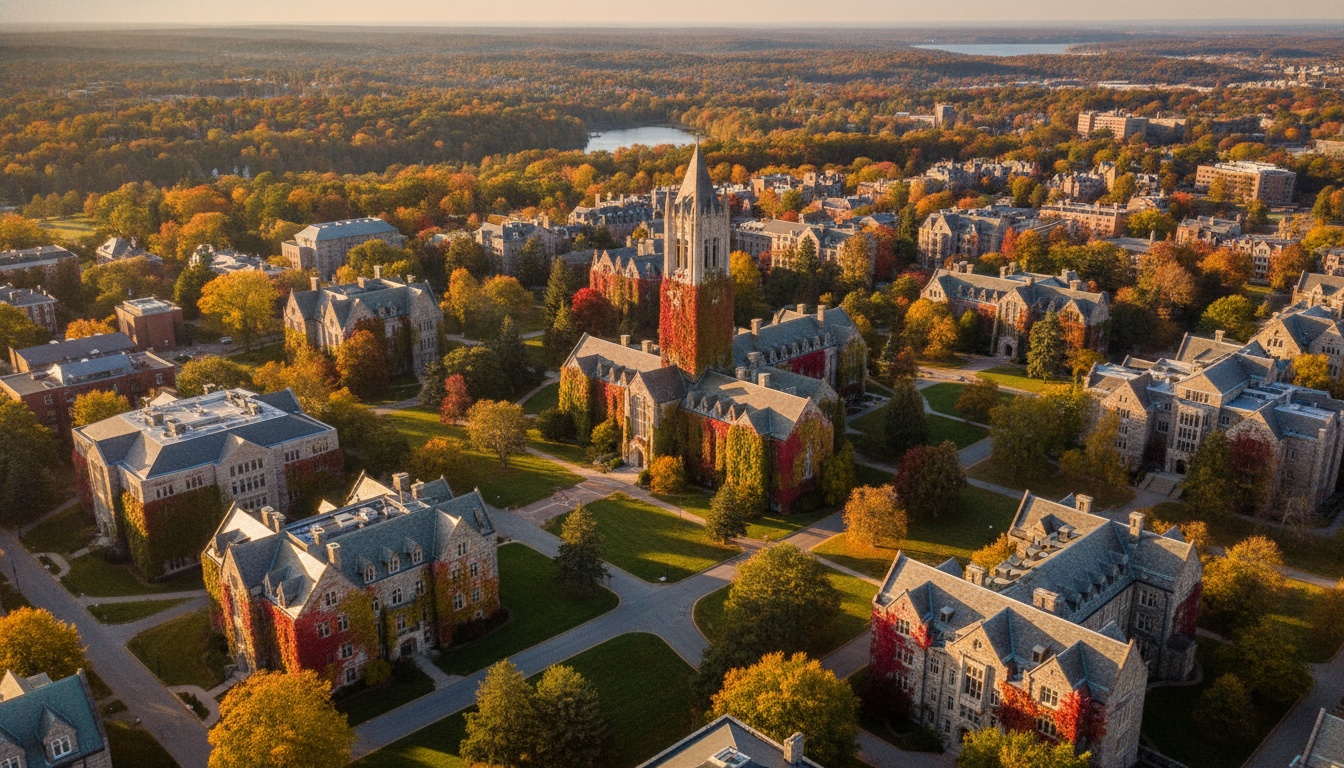
What Is Cornell's Jeb E. Brooks School of Public Policy?
The Jeb E. Brooks School of Public Policy is one of the only Ivy League institutions with a standalone undergraduate school dedicated entirely to public policy. Two majors — public policy and health care policy — sit across six research areas: data science and technology policy, environmental and sustainability policy, health policy, human security, politics and economics of development, and race, racism, and public policy.
That's a more specific research mandate than most peer programs carry. Brooks has its own dean, faculty, research centres, and residential programs. This is not a concentration buried in a liberal arts catalogue.
Both majors are built around applied analysis — economics, quantitative methods, social science — not abstract theory. You're learning the tools that Canadian federal agencies and international organizations actually use to design policy.
What Makes Brooks Unique Compared to Other Policy Schools?
Brooks is among a small number of Ivy League institutions with a standalone undergraduate school dedicated entirely to public policy. Not a concentration, not a track — a full school with its own dean and research mandate.
Dual-degree pathways with Cornell's Dyson School and ILR extend the options further for students whose interests span policy and business or policy and labour relations.
Why BC Public School Students Are Well-Positioned for Cornell Brooks
Here's the contrarian take: BC public school graduates are often better positioned for Brooks than students from private schools like St. George's or Crofton House — not worse. Brooks specifically values civic engagement, community context, and evidence of genuine policy interest. A student from Sentinel Secondary who spent two years organizing climate advocacy in West Vancouver tells a more authentic policy story than a private school applicant padding an application with manufactured leadership titles.
Why BC public school graduates are competitive at Brooks:
- BC's Socials 11 and Economics 12 build analytical writing and civic reasoning relevant to Brooks' first-year curriculum
- Authentic policy engagement — climate advocacy, school board delegations — reads more credibly than manufactured leadership titles
- BC percentage grades are generally understood by American admissions offices; Cornell has processed Canadian applications for many years
Consider a student from Burnaby Mountain Secondary who spent two years as a youth delegate to Metro Vancouver's climate action committee. That's not a hobby — that's evidence of sustained policy engagement in a real governance context. Brooks admissions readers recognize the difference.
Students who've completed AP Macroeconomics or IB Economics at schools like U Hill or Burnaby North arrive with quantitative foundations that align well with Cornell's first-year methods sequence.
In practice, Cornell's admissions office evaluates international transcripts on a holistic basis. BC's percentage-based grades translate clearly — though exact conversions vary by institution and context, a strong percentage average in core courses is generally recognizable as competitive by American admissions standards.
One practical note on standardized testing: Cornell's test-optional policy has continued into the 2026 cycle for most applicants — confirm current policy at Cornell's admissions site before submitting, as test-optional policies can change cycle to cycle. BC students who've written the SAT and scored well should still submit. Strong scores remove one variable from an already competitive review. Students without scores aren't penalized, but a strong result helps.
For a parallel look at how BC public school students approach US admissions in a different discipline, the UC Berkeley CS guide for BC students covers the broader Canadian applicant experience in detail.
Admission Requirements and Process for Canadian Applicants
The application process runs through the Common App. BC students submit their provincial transcripts through their school counsellor, who also completes the school profile — a document that contextualizes BC grades for American admissions readers who may not know how Burnaby North's grade distribution compares to a US high school.
English proficiency testing (TOEFL or IELTS) is generally not required for students who've completed their full secondary education in English-medium BC public schools. That said, if you've transferred from a non-English program — say, a Richmond Mandarin immersion school where core courses were taught in Chinese — confirm your exemption status directly with Cornell's admissions office before submitting. A missing exemption can delay your application review by weeks, and it's not a step to skip.
On numbers: Cornell's middle 50% for admitted students typically sits around 3.8–4.0 unweighted GPA and 1480–1560 SAT (33–35 ACT); verify current ranges at Cornell's admissions site, as these figures shift each cycle. For BC students, that translates to roughly 92–98% in core courses, though conversions are approximate. If you're below that range, you're not automatically out — but you'll need exceptional policy engagement or a compelling personal narrative to offset the gap. Cornell's overall acceptance rate has historically been in the mid-single digits; verify the most current figure at Cornell's admissions site, as rates shift each cycle. Brooks, as a smaller school within Cornell, has its own selectivity profile that may differ from the university-wide figure.
"Demonstrated interest in public policy" is the phrase Brooks uses, and it means something specific. Admissions readers want to see that you've actually engaged with policy problems, not just listed Model UN on a Common App activity.
Key point: Demonstrated interest means actual engagement with policy problems — not just Model UN on a Common App activity. Think school board delegations, climate action youth councils, BC legislative internships, or community health advocacy with organizations like the BC Poverty Reduction Coalition.
Your supplemental essays are where you demonstrate this interest concretely. Approach them from your actual Canadian experience — don't pretend to be an American student. Writing about BC's housing affordability crisis, the opioid response in the Downtown Eastside, or First Nations treaty negotiations in the Interior gives you material that most American applicants simply can't access. Policy leadership rooted in a specific place is more compelling than generic civic interest.
Early Decision vs. Regular Decision: ED deadline is November 1; RD deadline is January 2. ED is binding, so only apply ED if Cornell Brooks is your clear first choice and your family has done the financial math honestly.
One hard truth on financial aid: Cornell meets 100% of demonstrated financial need for US citizens and permanent residents. For international students, including Canadians on study visas, need-based aid is extremely limited. Go in with eyes open.
Step-by-Step Application Timeline for BC Students
This timeline is written for students finishing Grade 11 and entering Grade 12 in fall 2026, targeting a September 2027 Cornell start.
- Grade 12 (Summer 2026): If you haven't already, research Brooks programs, attend Cornell virtual info sessions, pursue policy internships, community organizing, or research assistant opportunities in Metro Vancouver
- Grade 12 (September 2026): Open Common App, request official BC transcript from your school counsellor, begin supplemental essay drafts
- Grade 12 (October 2026): Finalize Brooks supplemental essays, confirm counsellor letter and teacher recommendations are on track
- November 1, 2026: Early Decision deadline
- January 2, 2027: Regular Decision deadline
- March–April 2027: Decisions released; begin your F-1 student visa application through the US embassy in Vancouver. Canadian citizens can use the Student Direct Stream (SDS) process, which has typically processed in a matter of weeks — confirm current processing times with IRCC before planning, as timelines can vary — budget time for this between April and August, well before the fall semester begins in September
- May 1, 2027: Enrollment confirmation deadline
Undergraduate Programs: Public Policy and Health Care Policy Majors
Brooks offers two majors. Here's how they compare:
| Public Policy Major | Health Care Policy Major | |
|---|---|---|
| Core focus | Economics, quantitative methods, policy analysis | Health systems design, economics, public health |
| Year 4 capstone | Policy analysis project | Health policy analysis project |
| Best fit | Environmental, social, tech, development policy | Health systems, comparative policy, Canadian healthcare |
| Dual-degree options | Dyson, ILR, Arts & Sciences | Dyson, ILR, Arts & Sciences |
The public policy major builds from an economics foundation in Year 1, moves into quantitative methods and policy analysis in Years 2 and 3, and culminates in a capstone policy analysis project in Year 4. Students choose a policy focus area — environmental, social, technology, or development — and develop depth alongside the breadth of the core policy coursework.
The health care policy major sits at the intersection of economics, public health systems, and policy design. For BC students who've grown up watching Canada's single-payer system strain under pandemic pressure and surgical backlogs, this major offers a genuinely comparative analytical lens. You're not just studying American healthcare — you're studying health systems design, which makes Canadian experience an asset.
Dual-degree options exist with Cornell's Dyson School of Applied Economics and Management, the ILR School (labour relations), and the College of Arts and Sciences. These pathways take five years and require separate admission, but they're worth knowing about if your interests span policy and business or policy and law.
Faculty research areas that students may engage with as undergraduates include labour policy, environmental regulation, health systems financing, and social equity analysis. Undergraduate research assistantships are available — not just a recruiting talking point.
One faculty member whose work is particularly relevant for BC students is Professor Jamila Michener, whose research on Medicaid, poverty, and racial health equity maps directly onto Brooks' race, racism, and public policy focus area. She holds appointments at both the Brooks School of Public Policy and Cornell's Department of Government in the College of Arts and Sciences — her research is publicly available through Cornell's faculty pages and Google Scholar and is worth an hour before you write your supplemental essays.
Student Life at Brooks and in Ithaca
Brooks has its own student organizations: the Brooks Student Government, the Cornell Policy Review (an undergraduate policy journal that publishes student research), and issue-specific clubs in environmental and health policy. These aren't decorative — they're how students build research experience and policy impact outside the classroom.
Ithaca is a small city, very different from Metro Vancouver. The campus is dense with programming, and the Brooks community is tight enough that faculty office hours are genuinely well-attended. That's not a given at larger research universities.

Brooks vs. UBC vs. Munk: Which Program Actually Fits Your Career Goals
BC students are often weighing Brooks against UBC's School of Public Policy and Global Affairs and U of T's Munk School. Both are strong programs. The comparison is worth making carefully.
| Cornell Brooks | UBC SPGA | Munk School (U of T) | |
|---|---|---|---|
| Network | US federal + international | BC/Canadian | Ontario/Canadian |
| Annual cost | ~CAD $135–145K | ~CAD $8–12K domestic | ~CAD $8–15K domestic |
| Best for | US/international policy careers | BC provincial/municipal roles | Ontario/federal Canadian roles |
UBC SPGA and Munk offer strong Canadian networks, lower cost, and proximity to the BC and Ontario policy ecosystems. If your goal is BC provincial government or Vancouver municipal policy specifically, a UBC degree with local network ties may serve you better.
Know what you're optimizing for.
Where Brooks pulls ahead: US network access, Ivy brand recognition in American federal hiring, and faculty who are actively shaping US and international policy debates — with undergraduates able to engage with that research directly.
If your career ambitions include international organizations, US-based policy work, or federal roles in Ottawa where Ivy credentials carry weight, Brooks opens doors that a Canadian program typically doesn't. The honest answer is that these programs are optimized for different outcomes, and the right choice depends on where you want to work in ten years.
The Real Cost of Cornell for BC Students (And How to Fund It)
Honesty first: Cornell's financial aid generosity does not extend to most international students the way it does to American families. The university meets full demonstrated need for US citizens and permanent residents. Canadian applicants on F-1 student visas should expect to fund most of their education through family resources, external scholarships, and on-campus work.
Cornell's total cost of attendance for international undergraduates in 2026–27 is projected at approximately USD $97,000–$103,000 annually (tuition, housing, meals, fees) — the CAD equivalent will depend on the exchange rate at the time of payment; verify both the USD figure and current exchange rates before financial planning. Verify current figures at Cornell's student services cost of attendance page before financial planning.
Seriously.
To offset these costs, several Canadian scholarships are worth investigating:
- Loran Award — one of Canada's most prestigious undergraduate scholarships; confirm portability to US institutions directly with the Loran Scholars Foundation
- TD Scholarship for Community Leadership — merit-based; confirm portability to US study directly with TD
- StudentAidBC provincial bursaries — income-tested; confirm US portability with StudentAidBC directly
- First Nations band education authorities — some BC bands fund US study; confirm with your band's education coordinator
On-campus work is available. BC students on F-1 visas can work during the academic year at Cornell — dining services, research assistant positions, and library roles are common entry points. That won't cover tuition, but it covers groceries and textbooks.
Curricular Practical Training (CPT) and Optional Practical Training (OPT) allow F-1 students to work off-campus in policy-related roles during and after their degree. For Brooks students, this often means DC-area internships during the school year and policy organization roles after graduation.
For a comparison of how private school applicants approach the financial positioning question differently, the St. George's to Columbia pathway covers that angle in detail.
Where Brooks Graduates Work (And Why Canadian Employers Recognize the Credential)
Brooks' own alumni data shows a meaningful share of graduates entering government roles within two years of graduation (based on Cornell's most recently published outcomes data; verify current figures with Cornell's Common Data Set). Canadian federal agencies have hired from Ivy policy programs.
A Cornell policy degree signals quantitative and analytical training that is emphasized explicitly in Brooks' curriculum.
Typical career trajectories include federal and provincial government policy analyst roles, international organizations (UN agencies, World Bank, IMF), management consulting with a policy practice, healthcare administration, and NGO program leadership.
Canadian-specific pathways are realistic. BC Ministry of Health, Environment and Climate Change Canada, Global Affairs Canada, and Ottawa think tanks like the C.D. Howe Institute or the Institute for Research on Public Policy are among the types of employers that hire policy graduates with strong analytical training. Developing evidence-based policy solutions for Canadian institutions is a realistic outcome — not an aspirational one.
Once you graduate, Canadian citizens have several options for continuing to work in the US. OPT provides US work authorization after graduation. After that, some Canadian citizens pursue the TN visa for roles that fall within its eligible profession categories under USMCA — note that "policy analyst" is not explicitly listed as a TN-eligible profession, so whether a specific role qualifies depends on the job description and how it maps onto categories like Economist or Management Consultant. Confirm your situation with an immigration attorney before relying on this pathway. Alternatively, returning to Canada with a Cornell degree and an American professional network is an outcome that most Canadian policy graduates simply don't have access to.
Key Takeaways
- Brooks is among a small number of Ivy League schools with a dedicated undergraduate policy school — not just a major
- BC public school students with strong Socials, Economics, and English grades are competitive on paper and in practice
- Two majors: public policy and health care policy — both reward Canadian comparative perspective
- Annual costs projected at approximately USD $97,000–$103,000 for 2026–27; verify CAD equivalent at current exchange rates; need-based aid for international students is extremely limited
- Career outcomes include Canadian federal government roles, international organizations, and US policy careers — Cornell's credential is well recognized in Ottawa and internationally
- Early Decision deadline: November 1; Regular Decision: January 2
Ready to build a Brooks application that actually reflects your BC public school experience? Book a free consultation — we'll map your profile against Brooks' competitiveness, identify your strongest policy narrative, and clarify whether ED or RD timing works for your family's financial situation.